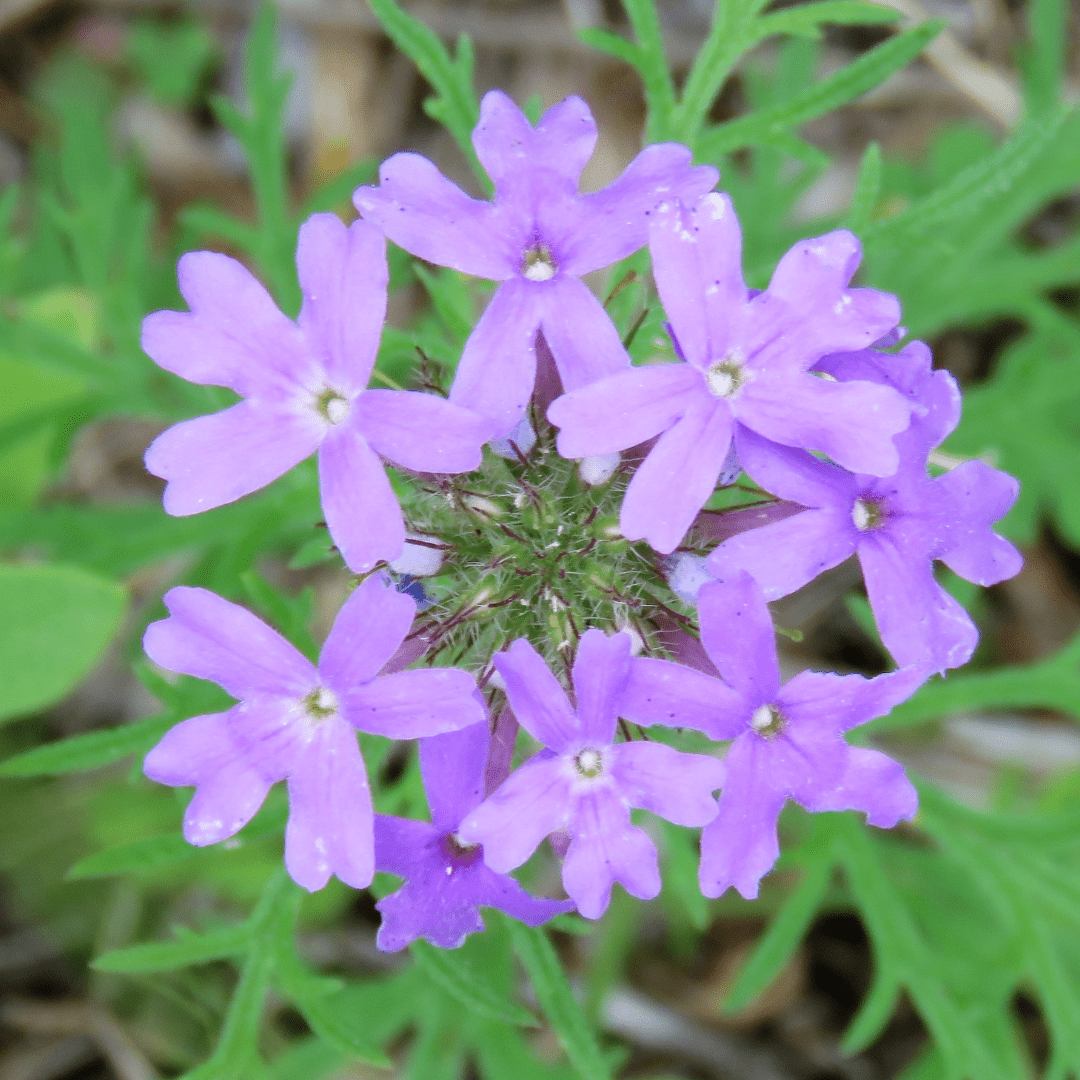


Gooding's Verbena
Gooding's Verbena
Couldn't load pickup availability
Phoenix's Toughest Native Groundcover for Slopes, Washes & Desert Borders
Gooding's Verbena (Verbena gooddingii) is the Phoenix Valley's most resilient native groundcover, delivering soft lavender-pink blooms from late winter through spring and reblooming after monsoon rains. A true Sonoran Desert native, it's extraordinarily heat- and drought-tolerant once established — growing naturally along desert washes, rocky slopes, and roadsides throughout Arizona without any supplemental water. Whether you're restoring a natural desert landscape in Scottsdale, planting a water-wise pollinator garden in Tempe, or adding color to a rocky border in Chandler, Gooding's Verbena thrives where other groundcovers fail.
Gooding's Verbena Plant Details
| Attribute | Detail |
|---|---|
| Scientific Name | Verbena gooddingii |
| Common Names | Gooding's Verbena, Desert Verbena, Southwestern Verbena |
| Mature Height | 1–2 ft |
| Mature Width | 2–4 ft (sprawling spread) |
| Growth Rate | Moderate — establishes readily in desert conditions |
| Sun | Full sun (6+ hrs). Handles reflected heat and rocky desert exposures. |
| Water | Very low once established. True desert-adapted xeriscape plant. |
| USDA Zones | 8–11 (Phoenix is Zone 9b–10a) |
| Soil | Rocky, well-draining. Grows in Arizona caliche soils with minimal amendment. |
| Foliage | Deciduous to semi-evergreen — may go dormant in winter cold |
| Bloom Color | Lavender-pink; late winter through spring; rebounds after monsoons |
| Native Status | Native to Arizona and the Sonoran Desert — supports local pollinators |
| Wildlife Value | Excellent — attracts native bees, butterflies, and hummingbirds |
Gooding's Verbena Uses in Phoenix Landscapes
Native Desert Landscapes & Restoration
As a true Sonoran Desert native, Gooding's Verbena is the gold standard for natural desert landscape design in the Phoenix area. It pairs authentically with Palo Verde trees, Saguaro, Brittlebush, and Desert Marigold to create ecologically rich, maintenance-free landscapes that look at home in the Arizona environment. Plant 2–3 feet apart for a naturalistic desert floor planting; it will self-seed and spread over time to fill in naturally.
Water-Wise Pollinator Gardens
Few plants attract as many native pollinators as Gooding's Verbena. Its blooms are a magnet for native bees, painted lady butterflies, swallowtails, and hummingbirds — particularly during the critical spring bloom period when many other desert plants haven't yet flowered. Mass plantings of 5–10 plants in a sunny bed create a spectacular wildlife habitat with essentially zero water after establishment.
Rocky Slopes & Erosion Control
Gooding's Verbena naturally grows on rocky desert slopes and wash banks, making it exceptionally well suited for erosion control in challenging rocky or gravelly Phoenix landscapes. Its spreading root system stabilizes loose soils while the sprawling stems cover the surface. Space 2–3 feet apart on slopes; established plants will fill in and naturalize over multiple seasons.
Low-Water Borders & Xeriscape Beds
With its low mounding habit and striking spring bloom display, Gooding's Verbena works beautifully as a front-of-border accent in xeriscape beds throughout the Phoenix Valley. Its fine-textured foliage provides a soft, naturalistic look between blooms, and the rebloom after monsoon rains extends the season of interest into late summer and fall. Pair with Texas Sage, Ruellia, and Blackfoot Daisy for a polished desert cottage garden look.
Best Time to Plant Gooding's Verbena in Phoenix
Fall planting (October–November) is ideal — warm soil promotes rapid root development while cooling air temperatures reduce transplant stress. The plant has all winter and spring to establish before summer heat arrives. Spring planting (February–April) is excellent for catching the first full bloom season. Avoid summer planting in June–August; this drought-adapted native can handle summer once established, but newly planted specimens need frequent watering during the hottest months.
How to Plant Gooding's Verbena
- Dig wide, not deep — 2–3x the root ball width, same depth. Verbena roots spread shallowly in desert soils; wide planting holes are more beneficial than deep ones.
- Check for caliche — break through any hardpan layer to ensure drainage. Gooding's Verbena is native to well-draining desert soils and will not tolerate waterlogged conditions.
- Backfill with native soil — little to no amendment needed. This plant is adapted to lean, rocky, alkaline Arizona soils. A light 10–15% compost blend is fine, but avoid over-amending.
- Spacing — 2–3 ft apart for groundcover and pollinator beds; 3 ft for natural desert plantings where you want a looser, naturalistic look.
- Water basin — build a 3–4 inch ring of soil around the plant to capture rainfall and direct irrigation to roots during the establishment period.
- Mulch — 2–3 inches of decomposed granite or gravel mulch (not wood chips) to match the desert aesthetic and retain soil moisture.
Watering Gooding's Verbena in Phoenix
First Year Watering Schedule
- Weeks 1–2: Every 2–3 days, deep and slow (20–30 min drip)
- Month 1–2: Every 4–5 days
- Month 3–6: Every 10–14 days (every 7–10 days in peak summer heat)
- After Year 1: Established plants survive on natural rainfall alone in most Phoenix years; supplemental water every 3–4 weeks in summer extends the bloom season.
Drip Irrigation
Place drip emitters 18–24 inches from the crown. Use 1 GPH emitters. Once established (6–9 months in Phoenix), Gooding's Verbena is one of the most drought-tolerant plants available — it can survive extended dry periods without supplemental irrigation, though occasional deep watering encourages better blooming in summer.
Is Gooding's Verbena truly drought tolerant?
Yes — it's one of the most drought-tolerant groundcovers available for Phoenix. In its native habitat it survives entirely on seasonal rainfall, including through Arizona's summer dry spells before monsoon season. Once established in your landscape, it can go months without supplemental watering.
When does Gooding's Verbena bloom in Phoenix?
The primary bloom is late winter through spring — typically February through April in the Phoenix area. It often reblooms after monsoon rains in August–September. Providing supplemental water in early summer can extend or trigger additional bloom cycles.
Does it spread or self-seed?
Yes — Gooding's Verbena spreads by both sprawling stems and self-seeding, which is part of what makes it effective for naturalistic desert plantings. In a contained bed, manage spread by trimming back occasionally. In open natural areas, let it naturalize freely.
Can it handle Phoenix summer heat?
Absolutely — it's native to the Sonoran Desert and evolved to handle extreme summer heat. Established plants may go partially dormant during the hottest, driest weeks but recover readily with monsoon moisture.
What's the difference between Gooding's Verbena and Moss Verbena?
Gooding's Verbena is a native Arizona species with a more open, naturalistic sprawling habit and superior drought tolerance; it's the choice for natural desert landscapes. Moss Verbena (Verbena tenuisecta) is more compact and floriferous with a finer texture, better for manicured borders and mass groundcover plantings.
You May Also Like
- Moss Verbena — More compact native verbena with finer texture and denser bloom coverage
- Mexican Evening Primrose — Pink flowering native groundcover with exceptional heat tolerance
- Purple Trailing Lantana — Fast-spreading purple groundcover for slopes and borders
- Ground Morning Glory — Silver-leaved desert native sprawler for naturalistic landscapes
How Many Gooding's Verbena Do I Need?
This is a sprawling groundcover that fills by both stems and self-seeding, so plant by area and let it knit together. Space plants about 2.5 feet on center (each covers roughly 6 square feet) for naturalistic beds and slopes; tighten to 2 feet for faster cover. Use the coverage table below to estimate counts.
| Area to cover | Plants needed (about 2.5 ft on center) |
|---|---|
| 50 sq ft | 8 plants |
| 100 sq ft | 16 plants |
| 150 sq ft | 24 plants |
| 200 sq ft | 33 plants |
Gooding's Verbena Season-by-Season in Phoenix
- Spring (Feb to Apr): Primary bloom season, with a lavender-pink flush that feeds pollinators early when little else is flowering. Strong second planting window.
- Summer (May to Sep): Handles extreme and reflected heat and may go partially dormant in the driest weeks, then rebounds and reblooms after the monsoon rains (Jul to Sep).
- Fall (Oct to Nov): Best planting season, with scattered rebloom and light self-seeding to fill bare spots.
- Winter (Dec to Jan): May drop foliage or go dormant in cold snaps, but it is root-hardy in the Valley and returns in late winter with its first blooms. No frost protection needed.
At a Glance
✔ Arizona Native ✔ Pollinator-Friendly ✔ Hummingbird-Friendly ✔ Heat-Loving (Reflected-Heat Tolerant) ✔ Drought-Tolerant ✔ Low-Maintenance ✔ Cold-Hardy to 15°F
Plant It With
- Mexican Evening Primrose: pink-flowered native sprawler that blooms alongside it in spring.
- Ground Morning Glory: silver-leaved desert sprawler for naturalistic texture contrast.
- Texas Sage: silvery purple-blooming shrub for height behind the groundcover.
- Desert Ruellia: tough purple-flowered companion for a layered desert border.
Is Gooding's Verbena Right for Your Yard?
It thrives in full sun, reflected heat, and rocky, fast-draining or caliche soil on very little water, sprawling 2 to 4 feet wide. Not a fit for shady spots, wet or heavy clay soil, or tidy formal beds, since it grows open and self-seeds. Choose the more compact Moss Verbena if you want a manicured look.
Share