

Goldeneye
Goldeneye
Couldn't load pickup availability
Arizona's Brightest Native Wildflower Shrub — Goldeneye
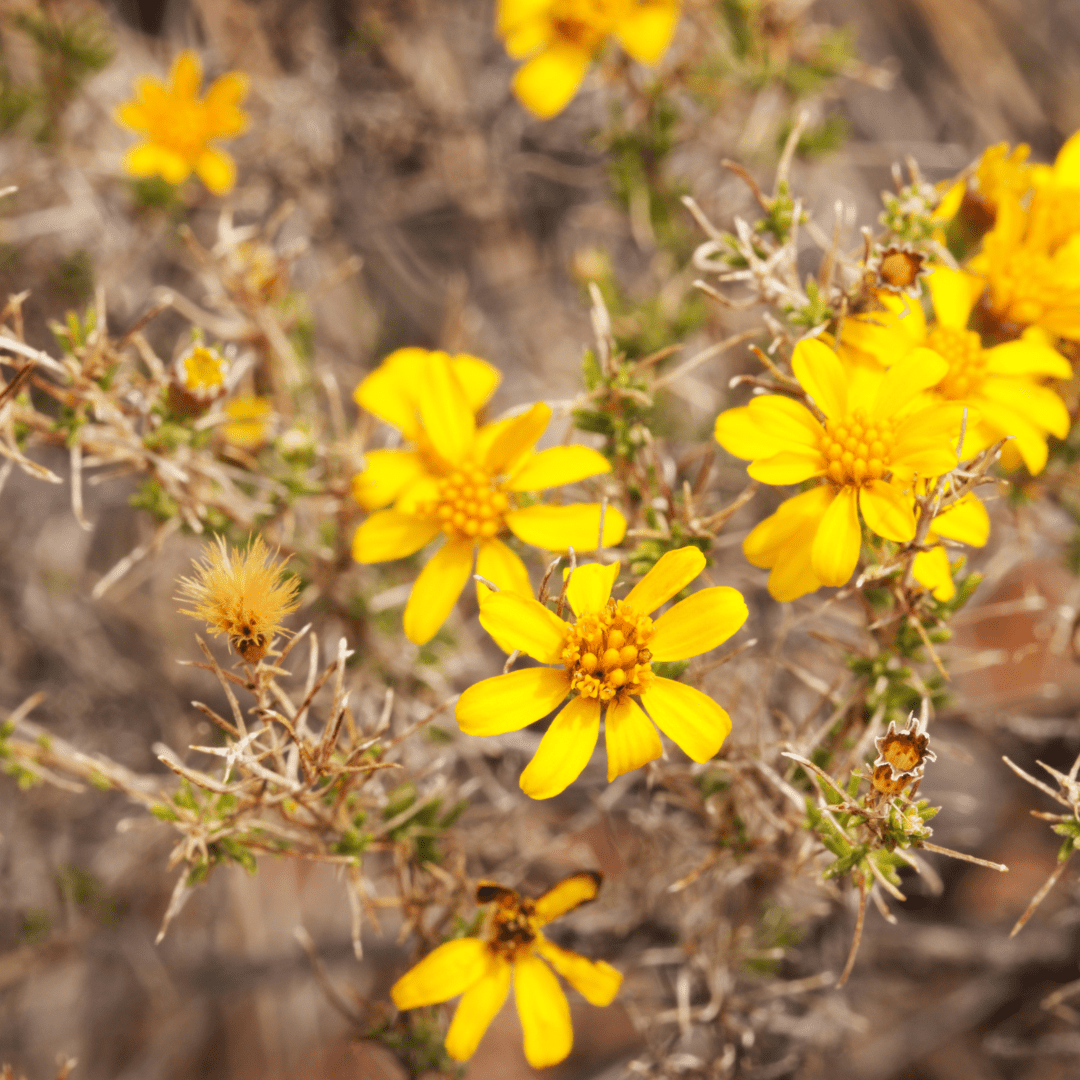
Goldeneye (Viguiera dentata) is one of the Phoenix Valley's most spectacular drought-tolerant shrubs, erupting in bold golden-yellow daisy-like flowers from late summer through fall and beyond. Growing 3–6 feet tall and 2–4 feet wide, this fast-growing native wildflower shrub is a powerhouse pollinator magnet, drawing butterflies, bees, and hummingbirds to your garden from Scottsdale to Mesa. Exceptionally heat-tolerant and low-maintenance, Goldeneye thrives where other flowering shrubs struggle — in full reflected sun, caliche soil, and minimal water. Whether you're designing a wildlife garden in Tempe, a drought-tolerant border in Chandler, or a Southwest landscape in Peoria, Goldeneye delivers season after season.
Goldeneye Plant Details
| Attribute | Detail |
|---|---|
| Scientific Name | Viguiera dentata |
| Common Names | Goldeneye, Bush Zinnia, Toothleaf Goldeneye |
| Mature Height | 3–6 feet |
| Mature Width | 2–4 feet |
| Growth Rate | Fast — 2–3 feet per year in Phoenix |
| Sun | Full sun (6+ hrs). Handles reflected heat from walls and pavement. |
| Water | Low once established. Extremely drought-tolerant. |
| USDA Zones | 8–11 (Phoenix is Zone 9b–10a) |
| Soil | Well-draining. Adapts to Arizona caliche soils — thrives in native desert conditions. |
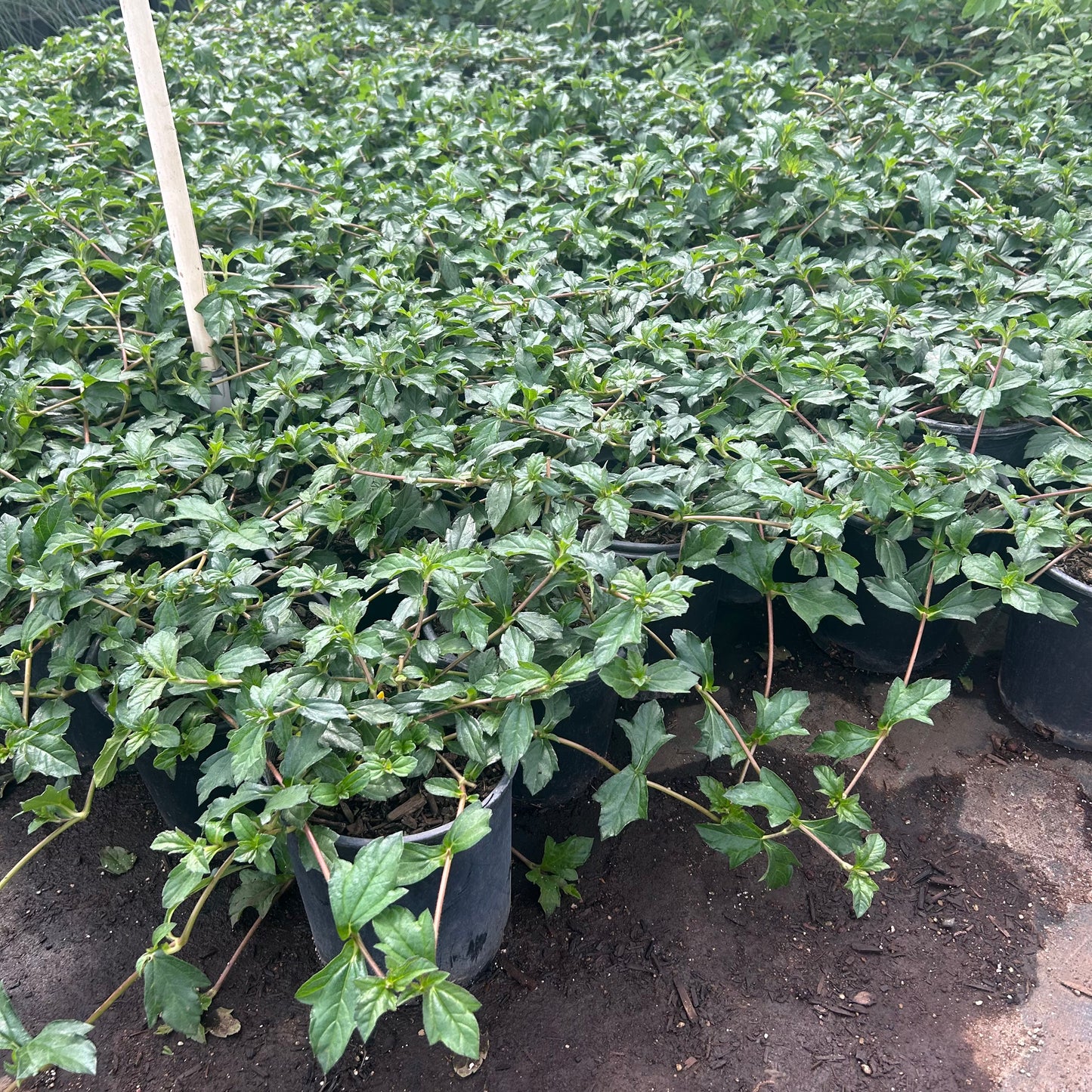
| Foliage | Deciduous — drops leaves in winter; re-leafs vigorously in spring |
| Bloom Color | Bright golden-yellow daisy flowers with yellow centers |
| Native Status | Native to the Sonoran Desert — Arizona, New Mexico, Texas, and Mexico |
Goldeneye Uses in Phoenix Landscapes
Pollinator Garden Anchor Plant
Goldeneye is one of the single best pollinator plants for Phoenix Valley gardens. When it blooms in late summer and fall — exactly when most plants are struggling — it becomes a beacon for monarch butterflies, painted ladies, native bees, and hummingbirds. Plant 3–5 Goldeneye shrubs together for maximum wildlife impact. Pair with Desert Marigold, Globe Mallow, and Autumn Sage for a four-season wildlife corridor in Scottsdale and Phoenix landscapes.
Drought-Tolerant Desert Border
With its naturally rounded form and brilliant yellow flowers, Goldeneye provides excellent texture in xeriscape borders and dry stream beds. At 3–6 feet, it's an ideal mid-height layer plant. For a 20 ft border — use 4–6 plants spaced 3–4 ft apart. Pair with shorter Desert Marigold in front and taller Desert Willow behind for a layered naturalistic look requiring almost no supplemental water.
Late-Season Color When You Need It Most
Most flowering plants in Phoenix wind down by August. Goldeneye is just getting started. Its peak bloom runs August through November, providing color when most Arizona gardens go quiet. This makes it invaluable for fall seasonal interest in Mesa, Gilbert, and Chandler yards. Even after blooming, the seed heads attract finches and sparrows through winter.
Slope Stabilization and Erosion Control
Goldeneye's vigorous root system and fast growth make it an excellent erosion control plant on slopes and hillsides. It naturalizes quickly in full-sun locations and requires no supplemental fertilizer. Once established, it essentially maintains itself — cut back lightly in late winter to encourage fresh spring growth.
Best Time to Plant Goldeneye in Phoenix
Fall planting (October–November) is ideal. Cooler air temperatures reduce transplant stress while warm soil encourages root development. Plants get 6–8 months of root establishment before their first Phoenix summer. Spring planting (February–April) also works well. Avoid summer planting if possible — if you must plant in summer, provide afternoon shade and water every 1–2 days for the first month.
How to Plant Goldeneye
- Dig wide, not deep — excavate 2–3x the root ball width, same depth as the container.
- Check for caliche — break through any hardpan layer for proper drainage.
- Backfill with native soil — no amendments needed. Goldeneye prefers lean native Arizona soil.
- Spacing — 3–4 ft apart for borders; 5–6 ft for specimen planting.
- Water basin — build a 3–4 inch soil ring around each plant to direct water to the root zone.
- Mulch — 2–3 inches of gravel mulch to retain moisture and regulate soil temperature.
Watering Goldeneye in Phoenix
First Year Watering Schedule
Weeks 1–2: Water every 1–2 days, deep and slow (20–30 min drip). Month 1–2: Reduce to every 3–4 days. Month 3–6: Water every 7–10 days (every 5–7 days during peak summer). After Year 1: Every 14–21 days in summer; every 4–6 weeks in winter. Goldeneye is extremely drought-tolerant once established — it's a native Sonoran Desert plant.
Drip Irrigation
Place emitters 18–24 inches from the center of each plant. Use 1–2 GPH emitters running 30–45 minutes per cycle. Once established, Goldeneye survives on natural rainfall alone in most years, needing only occasional supplemental irrigation during extreme heat.
Does Goldeneye bloom in Phoenix's extreme summer heat? Goldeneye's peak bloom is late summer through fall — it thrives in exactly the conditions that stress other plants. Expect heaviest flowering August through November, often triggered by monsoon rains.
How tall does Goldeneye get in Phoenix? Goldeneye typically reaches 4–6 feet tall and 3–4 feet wide within 2–3 growing seasons. Cut back hard in late winter to control size and encourage a dense flush of growth.
Does Goldeneye need fertilizer? No — Goldeneye is a native plant adapted to lean desert soils. Fertilizer can cause excess leafy growth at the expense of flowers. Plant in unamended native soil for best results.
Is Goldeneye a good pollinator plant for Phoenix? Goldeneye is one of the best pollinator plants available for Phoenix-area landscapes. It attracts monarch butterflies, painted ladies, native bees, and hummingbirds during its August–November bloom season.
You May Also Like
If you love Goldeneye, you might also enjoy: Desert Marigold (Baileya multiradiata) — a compact yellow-blooming native perennial that pairs beautifully in low-water borders. Sandpaper Verbena — a spreading ground-level companion with purple flowers. Texas Sage (Leucophyllum frutescens) — another native-adapted shrub that blooms after monsoon rains alongside Goldeneye.
How Many Goldeneye Do I Need?
Goldeneye matures to 2 to 4 feet wide, so space plants about 3.5 feet on center for a connected mid-height border or pollinator drift. Use this guide for a single run:
| Run Length | Plants Needed (3.5 ft spacing) |
|---|---|
| 10 ft | 3 plants |
| 20 ft | 6 plants |
| 30 ft | 9 plants |
| 40 ft | 12 plants |
For the biggest wildlife impact, plant in odd-numbered groups of 3 to 5 rather than singly. As a specimen, give each plant 5 to 6 feet so its rounded form stands clear.
Goldeneye Season-by-Season in Phoenix
- Spring (Feb to Apr): Re-leafs vigorously after winter dormancy and builds its frame. Strong second planting window once soil warms.
- Summer (May to Sep): Thrives in extreme and reflected heat. The monsoon (Jul to Sep) triggers its signature late-summer flowering when most of the garden has gone quiet.
- Fall (Oct to Nov): Peak bloom and best planting season together. Golden daisies blanket the plant and feed migrating pollinators, then seed heads draw finches.
- Winter (Dec to Jan): Deciduous: it drops its leaves and rests. Root-hardy to about 15°F, it resprouts in spring. Cut back hard in late winter for a dense flush.
At a Glance
✔ Arizona Native ✔ Pollinator-Friendly ✔ Hummingbird-Friendly ✔ Heat-Loving (Reflected-Heat Tolerant) ✔ Drought-Tolerant ✔ Low-Maintenance ✔ Cold-Hardy to 15°F
Plant It With
- Desert Marigold: a compact yellow native perennial that layers in front of Goldeneye in a low-water border.
- Autumn Sage: long-blooming red salvia that extends nectar through the seasons alongside it.
- Texas Sage: a purple-blooming desert shrub that flowers with the same monsoon rains.
- Brittlebush: a spring-blooming yellow native that pairs for a season-long golden succession.
Is Goldeneye Right for Your Yard?
Goldeneye is an excellent fit for a full-sun, low-water pollinator garden, xeriscape border, or slope in lean, fast-draining native soil, and it takes reflected heat and Valley frost in stride. It is one of the best late-season nectar sources you can plant. It is not the right choice if you want a tidy evergreen shrub that holds its leaves through winter, since it goes fully deciduous and benefits from a hard late-winter cutback.
Share