
Golden-Tooth Aloe sizes, side by side
Typical height of the plants we have in stock now, measured from the soil to the top. Every plant is a little different.
| Size | At delivery | Price |
|---|
Golden-Tooth Aloe
Golden-Tooth Aloe
Couldn't load pickup availability
Compact, Colorful Aloe for Phoenix Desert Gardens
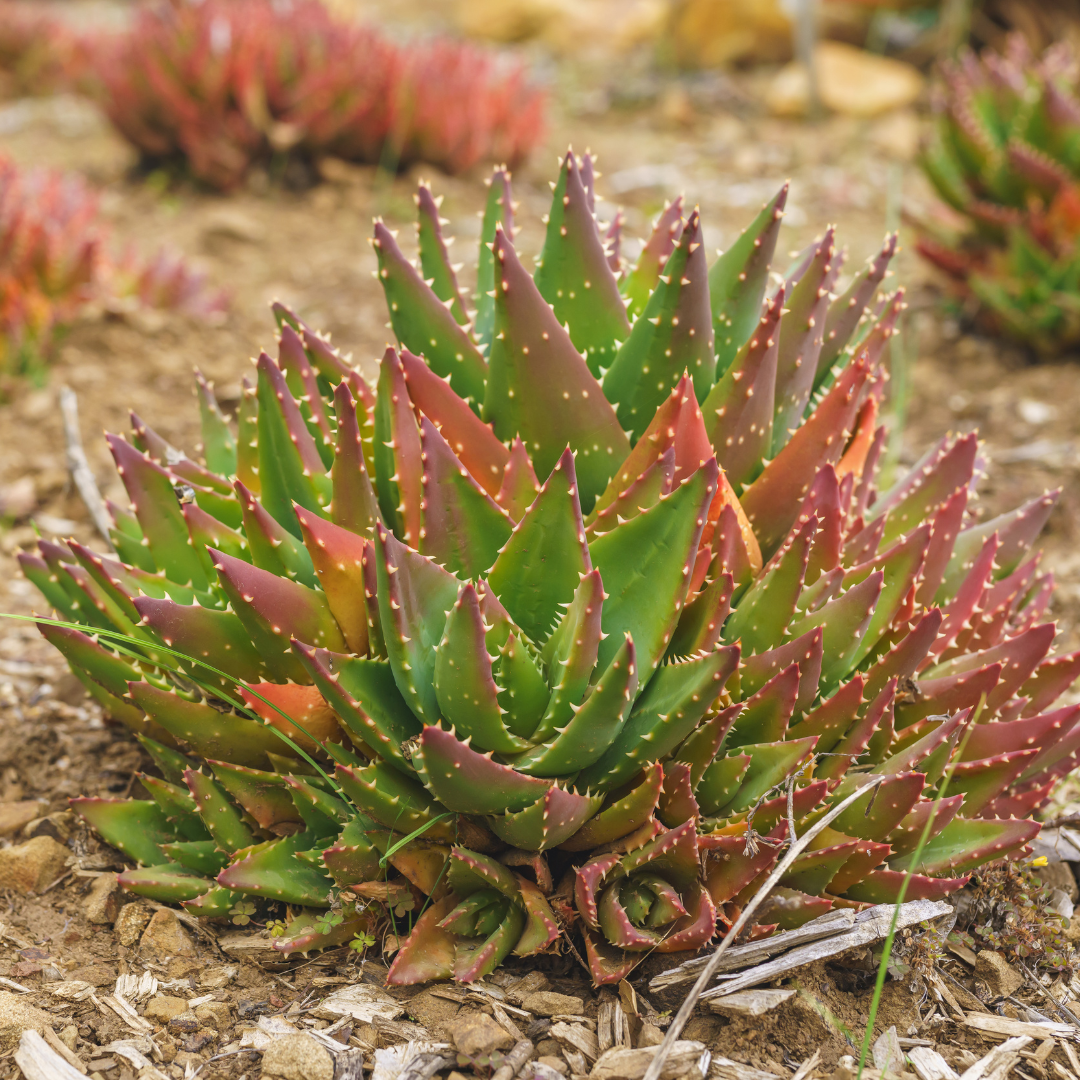
Aloe nobilis, commonly known as Golden-Tooth Aloe, is one of the most decorative and easy-care succulents for Phoenix Valley landscapes. This compact aloe forms dense rosettes of fleshy green leaves edged with distinctive golden-yellow teeth — a striking textural accent that looks good year-round. Growing about 1 foot tall in clumps 1 to 2 feet wide, Golden-Tooth Aloe produces showy spikes of orange-red tubular flowers that attract hummingbirds and bees. Whether you're filling a rock garden in Scottsdale, adding texture to a succulent border in Chandler, or creating a low-water container display in Mesa — Golden-Tooth Aloe delivers color and character with virtually zero effort.
Golden-Tooth Aloe Plant Details
| Attribute | Detail |
|---|---|
| Scientific Name | Aloe nobilis |
| Common Names | Golden-Tooth Aloe, Gold-Tooth Aloe |
| Mature Height | 8–12 inches (flower spikes to about 2 feet) |
| Mature Width | 1–2 feet (clumping, spreads wider with offsets over time) |
| Growth Rate | Moderate — offsets freely to form attractive clumps |
| Sun | Full sun to partial shade. Handles reflected heat. |
| Water | Very low once established. Extremely drought-tolerant. |
| USDA Zones | 9–11 (Phoenix is Zone 9b–10a) |
| Soil | Well-draining. Thrives in Arizona caliche soils and rocky ground. |
| Foliage | Evergreen — green rosettes with golden tooth-like margins year-round |
| Bloom Season | Late spring through summer |
| Bloom Color | Orange-red tubular flowers on tall spikes |
| Wildlife | Attracts hummingbirds and bees |
Golden-Tooth Aloe Uses in Phoenix Landscapes
Rock Garden & Succulent Beds
Golden-Tooth Aloe is a natural fit for rock gardens and succulent beds throughout the Phoenix Valley. Its compact rosette form and golden-edged leaves create eye-catching texture among boulders and decomposed granite. Plant in groups of 3–5 with Coral Aloe, Hercules Tree Aloe, and Euphorbia for a diverse succulent garden in Gilbert and Tempe that looks like a curated botanical collection.
Container & Courtyard Planting
The manageable size, about 1 foot tall, makes Golden-Tooth Aloe perfect for containers, raised planters, and courtyard displays. Use decorative pots on patios and courtyards in Scottsdale and Paradise Valley for a sculptural accent that needs watering only occasionally. The clumping habit fills containers naturally over time, creating fuller displays each season.
Low-Water Border & Mass Planting
Space plants 18–24 inches apart for a low-growing border along walkways and garden beds in Peoria and Glendale. Golden-Tooth Aloe's spreading, clumping habit creates a continuous groundcover effect over time, and the golden-toothed leaf margins catch sunlight beautifully. Pair with Blue Yucca or Desert Spoon for dramatic scale contrast.
Best Time to Plant Golden-Tooth Aloe in Phoenix
Fall (October–November) and spring (March–April) are both excellent planting windows. Warm soil promotes fast root establishment, and the moderate temperatures reduce transplant stress on this succulent. Golden-Tooth Aloe is tough enough to plant almost any time in Phoenix, but avoid mid-summer transplanting if possible — let new plants establish roots during cooler months.
How to Plant Golden-Tooth Aloe
- Dig wide, not deep — 2x the root ball width, same depth. Aloe roots are shallow and spread laterally.
- Check for caliche — break through any hardpan layer. Aloes absolutely require fast drainage.
- Backfill with native soil — add perlite or coarse sand if drainage is questionable. Skip heavy compost.
- Spacing — 18–24 inches apart for borders; 2 feet for individual specimens that will clump over time
- Water basin — build a shallow ring for initial watering only; remove after establishment
- Mulch — 1–2 inches of decorative gravel. Keep gravel away from the rosette center to prevent rot.
Watering Golden-Tooth Aloe in Phoenix
First Year Watering Schedule
- Weeks 1–2: Every 3–4 days, light soak
- Month 1–3: Every 7–10 days
- Month 3–6: Every 14–21 days
- After Year 1: Monthly in summer; no supplemental water in winter
Drip Irrigation
Place 1 emitter 6–12 inches from the base, delivering 0.5–1 GPH. Established Golden-Tooth Aloe is extremely drought-tolerant and overwatering is the number one cause of aloe failure in Phoenix. When in doubt, keep it dry — the fleshy leaves store plenty of moisture.
How does Golden-Tooth Aloe spread?
It produces offsets (pups) from the base, gradually forming attractive clumps 1–2 feet wide. These pups can be separated and replanted to expand your collection or share with friends. The clumping habit makes it an excellent groundcover over time.
Can Golden-Tooth Aloe handle full Phoenix sun?
Yes — it thrives in full sun and handles reflected heat from walls and concrete. In extremely hot, south-facing exposures, leaves may develop a reddish-bronze tint during summer, which is a natural stress response and not harmful. It also grows well in partial shade if you prefer greener foliage.
Is Golden-Tooth Aloe cold hardy in Phoenix?
Golden-Tooth Aloe handles Phoenix winters easily, tolerating brief dips to about 20°F. It's one of the most cold-hardy aloes, making it reliable throughout the Phoenix Valley without winter protection.
Are the teeth sharp?
The golden teeth along the leaf margins are firm but not dangerously sharp like agave spines. They're more decorative than defensive. Still, plant away from high-traffic walkways where people might brush against them.
You May Also Like
- Coral Aloe — stunning blue-gray aloe with coral-colored flower spikes
- Hercules Tree Aloe — tall single-trunk tree aloe for architectural desert gardens
- African/Tiger Aloe — compact spotted aloe for borders and containers
- Bird's Nest Sansevieria — compact rosette succulent for shaded areas
- Desert Rose Agave — colorful compact rosette for rock gardens
How Many Golden-Tooth Aloe Do I Need?
Golden-Tooth Aloe clumps to 1 to 2 feet wide, so plan on about 24-inch centers for a continuous mass or low border. Use this guide to estimate counts by area:
| Area to Cover | Plants Needed (24-inch spacing) |
|---|---|
| 25 sq ft | 6 plants |
| 50 sq ft | 13 plants |
| 100 sq ft | 25 plants |
For a border line, set plants every 24 inches: a 15-foot run needs about 8 plants. For specimen clumps in a rock garden, plant in odd-numbered groups of 3 to 5 spaced 2 feet apart so each rosette has room to pup and spread.
Golden-Tooth Aloe Season-by-Season in Phoenix
- Spring (Feb-Apr): New growth flush and the start of the bloom run. A strong planting window in the cooler weeks.
- Summer (May-Sep): Peak bloom of orange-red spikes that draw hummingbirds and bees. Thrives in full sun and reflected heat. Leaves may take a reddish-bronze stress tint in extreme exposure, which is normal. Keep water sparse.
- Fall (Oct-Nov): Prime planting season. Warm soil and mild air give the fastest root and offset development.
- Winter (Dec-Jan): Evergreen green-and-gold rosettes hold all winter. One of the hardier aloes, good to brief dips near 20F, so it usually rides out Valley winters without protection. Cover container plants in a hard frost.
At a Glance
✔ Hummingbird-Friendly ✔ Pollinator-Friendly ✔ Heat-Loving (Reflected-Heat Tolerant) ✔ Drought-Tolerant ✔ Evergreen ✔ Low-Maintenance ✔ Deer & Rabbit-Resistant ✔ Cold-Hardy to 20°F
Plant It With
- Coral Aloe: smooth blue-gray rosettes with coral spikes for a cohesive aloe grouping.
- Hercules Tree Aloe: a taller single-trunk tree aloe for scale contrast behind the clumps.
- African / Tiger Aloe: a compact banded aloe for the front of a succulent border.
- Desert Spoon: a silvery fountain form that frames the low aloe clumps beautifully.
Is Golden-Tooth Aloe Right for Your Yard?
Golden-Tooth Aloe is a great pick for full-sun rock gardens, succulent beds, low borders, and containers with sharp drainage, including amended caliche, and it needs almost no care once established. The golden teeth are firm, so keep it a step back from pool decks and busy walkways. It is not a fit in a wet, poorly draining low spot, where the fleshy rosettes are prone to rot.
This plant in real Valley yards
Photos from our own drops, so you can see exactly what shows up.