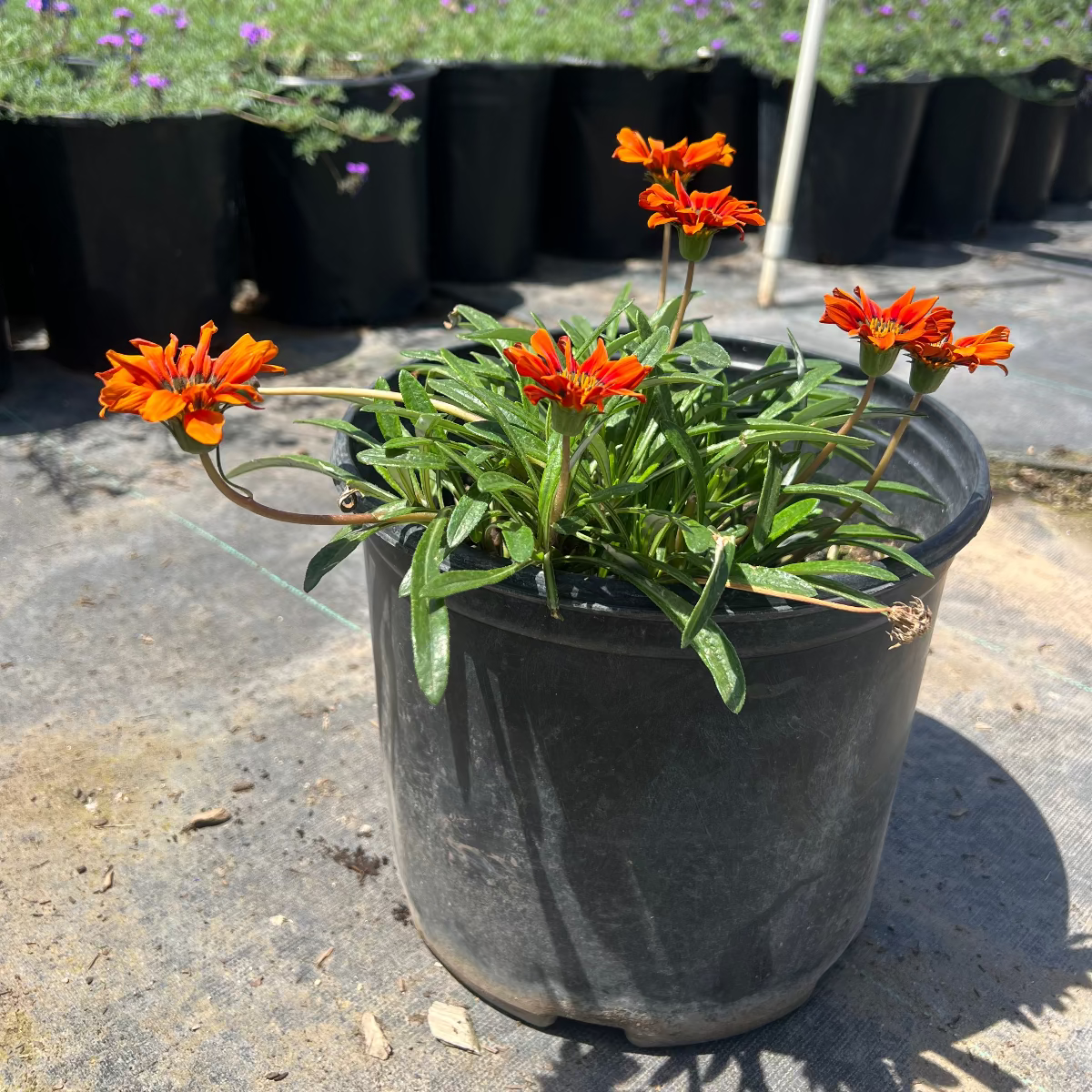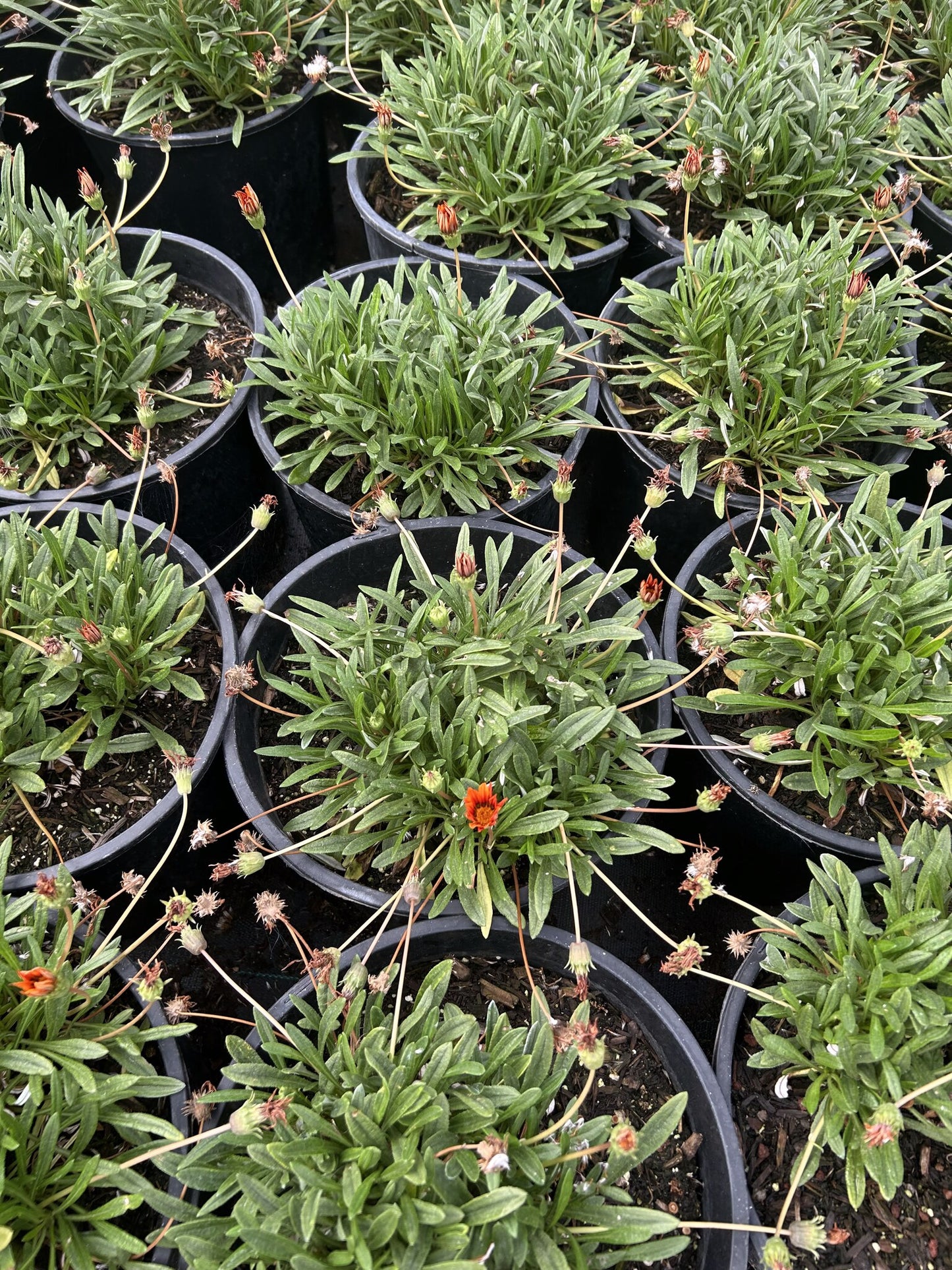


Gazania-Red
Gazania-Red
Couldn't load pickup availability
Blazing Red Groundcover That Loves Phoenix Sun
Red Gazania (Gazania rigens) is one of the most vibrant and carefree groundcover plants you can grow in the Phoenix Valley. These sun-worshipping perennials produce bold, daisy-like red blooms that open wide every morning and keep coming from early spring through late fall. They thrive in full Arizona sun, handle reflected heat like champions, and need almost no water once established. Whether you're filling a parking strip in Scottsdale, covering a slope in Mesa, or adding a pop of red to a Chandler rock garden — Red Gazania delivers reliable, low-maintenance color all season long.
Red Gazania Plant Details
| Attribute | Detail |
|---|---|
| Scientific Name | Gazania rigens |
| Common Names | Red Gazania, Treasure Flower, African Daisy |
| Mature Height | 6–12 inches |
| Mature Width | 12–18 inches per plant (spreads to form mats) |
| Growth Rate | Fast — fills in within one growing season in Phoenix |
| Sun | Full sun (6+ hrs). Handles reflected heat from walls and pavement. |
| Water | Very low once established. Extremely drought-tolerant. |
| USDA Zones | 9–11 (Phoenix is Zone 9b–10a) |
| Soil | Well-draining. Thrives in sandy and rocky Arizona soils. Adapts to caliche. |
| Foliage | Evergreen — silvery-green leaves stay year-round |
| Bloom Color | Bright red with dark center eye, spring through fall |
Red Gazania Uses in Phoenix Landscapes
Groundcover & Mass Planting
Red Gazania is one of the best flowering groundcovers for Phoenix. Plant them 12–15 inches apart and they'll knit together into a solid carpet of color within one growing season. Use them to cover large areas where you want low-maintenance, drought-tolerant color. A 100-square-foot bed needs about 60–80 plants for full coverage.
Rock Garden & Desert Landscape Accent
The bold red blooms pop against gravel, decomposed granite, and boulder landscapes. Tuck Red Gazania into gaps between rocks or along dry creek bed edges for a natural, desert-friendly look. They pair beautifully with Yellow Gazania, Lantana, and Desert Spoon for a colorful xeriscape design in Tempe, Peoria, or Gilbert.
Border & Edging Plant
At just 6–12 inches tall, Red Gazania makes a perfect low border along walkways, driveways, and garden beds. The compact size won't block sightlines or overgrow into paths. Plant a single row 12 inches apart for a clean, colorful edge that blooms for months.
Slope & Erosion Control
Red Gazania's spreading habit and tough root system make it excellent for stabilizing slopes and hillsides. It handles the harsh conditions of south-facing slopes — full sun, reflected heat, and minimal water — better than most groundcovers. Use it on berms, retention basin edges, and highway embankments throughout the Phoenix metro area.
Best Time to Plant Red Gazania in Phoenix
Fall (October–November) is the ideal planting window. Warm soil promotes rapid root establishment while cooler air reduces transplant stress. Your gazania gets several months to establish before facing its first Phoenix summer. Spring (February–April) is the second-best window. Avoid planting in the peak of summer — while gazania handles heat well once established, new transplants need time to root in before extreme temperatures hit.
How to Plant Red Gazania
- Dig wide, not deep — Dig a hole 2x the width of the root ball and the same depth. Gazania has a shallow root system that spreads outward.
- Check for caliche — Break through any hardpan layer for drainage. Gazania is drought-tough but hates sitting in water.
- Backfill with native soil — No amendments needed. Gazania actually performs better in lean, well-draining soil than rich, amended beds.
- Spacing — 12–15 inches apart for groundcover; 18 inches for individual accent clumps.
- Water basin — Build a small 2-inch soil ring around each plant to direct water to roots during establishment.
- Mulch — Use gravel or decomposed granite mulch (not bark). Gazania prefers dry conditions around the crown.
Watering Red Gazania in Phoenix
First Year Watering Schedule
Weeks 1–2: Water every 1–2 days, light and consistent. Month 1–2: Every 3–4 days. Month 3–6: Every 7–10 days. After Year 1: Every 14–21 days in summer; monthly or less in winter. Established gazania is one of the most drought-tolerant flowering plants available.
Drip Irrigation
Place one 1-GPH emitter per plant during establishment. For mass plantings, use drip tubing with emitters every 12 inches. Once established, reduce irrigation frequency dramatically — overwatering is the #1 cause of gazania failure in Phoenix landscapes.
How fast does Red Gazania spread in Phoenix?
Very fast. Each plant spreads 12–18 inches wide within one growing season. A flat of gazania can cover a significant area within months, making it one of the most cost-effective groundcovers for large Phoenix landscapes.
Is Red Gazania drought tolerant?
Extremely. Once established, Red Gazania is one of the most drought-tolerant flowering plants you can grow in Phoenix. It can survive on rainfall alone during mild winters and needs only occasional deep watering in summer.
Do Gazania flowers close at night?
Yes — Gazania blooms open in full sun and close at night and on cloudy days. This is completely normal behavior. For maximum flower display, plant them in a location that gets full morning sun so blooms open early in the day.
Can Red Gazania handle reflected heat?
Absolutely. Red Gazania thrives in the hottest spots in your landscape — south-facing walls, concrete borders, parking strip medians, and pavement edges. Reflected heat actually encourages more prolific blooming.
You May Also Like
Yellow Gazania — The bright yellow version of this same tough groundcover. Mix with red for a striking two-tone display.
Orange Gazania — Warm orange blooms on the same easy-care plant. Great for desert sunset color palettes.
Red Spike Ice Plant — Another low-growing, drought-tolerant groundcover with vivid red flowers.
Lantana — A colorful, spreading shrub that pairs well with gazania in mass plantings.
Yellow Bells — A taller backdrop plant that complements gazania borders with bright yellow trumpet blooms.
How Many Red Gazania Do I Need?
Each plant spreads 12 to 18 inches, so plant on 12 to 15 inch centers for a solid carpet of red. Use this coverage guide (at 15 inch spacing):
| Area to cover | Plants needed |
|---|---|
| 25 sq ft | 16 plants |
| 50 sq ft | 32 plants |
| 100 sq ft | 64 plants |
| 200 sq ft | 128 plants |
Drop to 12 inch spacing for a quicker fill on slopes and erosion-control banks, or open up to 18 inches for accent clumps in a rock garden.
Red Gazania Season-by-Season in Phoenix
- Spring (Feb to Apr): Heavy bloom. Red daisies open wide each sunny morning and the mat flushes with new growth. Best second planting window of the year.
- Summer (May to Sep): A reflected-heat champion. Thrives against south-facing walls, pavement, and granite. Bloom eases in the most extreme heat, then monsoon humidity often sparks a fresh flush. Keep it lean and dry to prevent crown rot.
- Fall (Oct to Nov): Prime planting season and renewed color as nights cool. Establishes fast in warm soil.
- Winter (Dec to Jan): Evergreen silvery mat holds all winter. Hardy in the Valley but tender below about 25°F; a hard frost can nip the foliage, so cover during a freeze and it rebounds in spring.
At a Glance
✔ Pollinator-Friendly ✔ Heat-Loving (Reflected-Heat Tolerant) ✔ Drought-Tolerant ✔ Evergreen ✔ Low-Maintenance
Plant It With
- Gazania Yellow: same easy groundcover in yellow for a two-tone red-and-gold mat.
- Gazania Orange: warm orange blooms to complete a desert-sunset color palette.
- Gold Mound Lantana: low spreading shrub that layers gold above the gazania carpet.
- Desert Spoon: architectural silver rosette that rises behind the groundcover for height and contrast.
Is Red Gazania Right for Your Yard?
Red Gazania is the right pick for hot, sun-baked, well-drained spots: south-facing slopes, parking strips, rock gardens, and lawn-replacement beds that take full reflected heat. It is one of the most water-thrifty bloomers you can plant. It is not a fit for shaded beds, where the flowers stay closed, or for heavy, slow-draining soil, where the crown rots; plan to cover it during a hard Valley frost.
Share