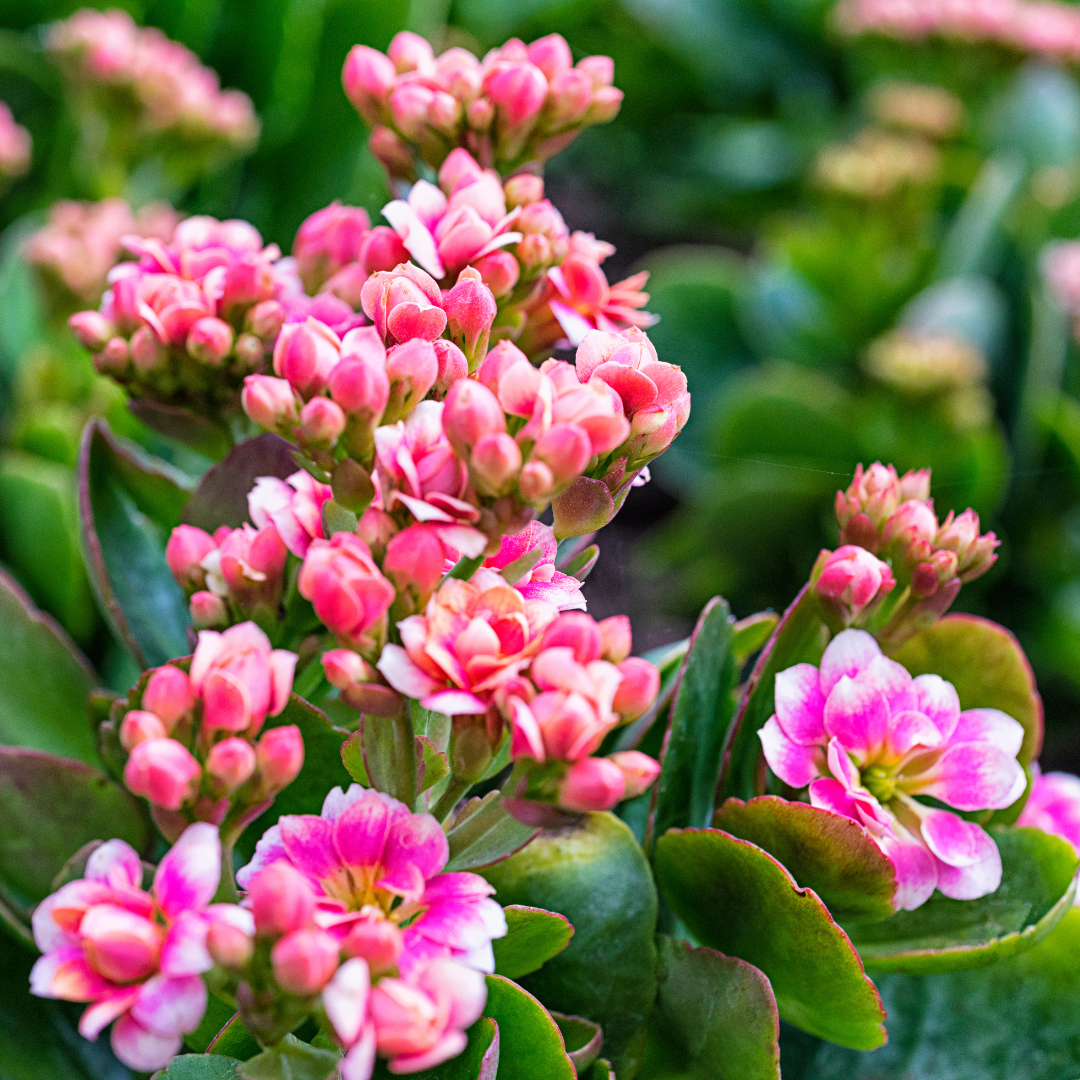

Flapjacks
Flapjacks
Couldn't load pickup availability
Phoenix's Boldest Paddle-Leaf Succulent — Flapjack Plant
Kalanchoe luciae, commonly known as the Flapjack Plant or Paddle Plant, is one of the most visually striking succulents for Phoenix Valley landscapes. Its large, flat, paddle-shaped leaves form dramatic rosettes that flush brilliant red and coral along the edges in cool weather and full sun. Incredibly heat-tolerant and drought-tough once established, Flapjacks thrive in Scottsdale rock gardens, Mesa container plantings, Chandler xeriscapes, and Gilbert front yard beds with virtually zero maintenance. If you want jaw-dropping color and sculptural form without the water bill, Flapjacks deliver.
Flapjack Plant Details
| Attribute | Detail |
|---|---|
| Scientific Name | Kalanchoe luciae |
| Common Names | Flapjack Plant, Paddle Plant, Desert Cabbage |
| Mature Height | 1–2 feet |
| Mature Width | 1–2 feet |
| Growth Rate | Moderate — reaches full size in 1–2 years in Phoenix |
| Sun | Full sun to partial shade. Full sun intensifies red leaf edges. |
| Water | Low once established. Highly drought-tolerant. |
| USDA Zones | 9–11 (Phoenix is Zone 9b–10a) |
| Soil | Well-draining. Adapts to Arizona caliche soils with gravel or pumice amendment. |
| Foliage | Evergreen — chalky blue-green paddles with red-coral edges in cool months |
| Bloom | Yellow flower clusters on tall stalks in late winter to spring |
Flapjack Plant Uses in Phoenix Landscapes
Desert Rock Garden Showpiece
Flapjacks' large paddle-shaped leaves and red-edged color make them instant focal points in rock gardens and gravel beds. Plant in groups of 3–5 among decomposed granite and desert boulders for a modern succulent display. Pairs beautifully with Blue Elf Aloe, Ghost Aloe, and Agave for contrasting shapes and textures.
Container & Patio Plantings
Flapjack Plants are ideal container specimens for Scottsdale patios, Tempe balconies, and Peoria courtyards. Use a well-draining cactus mix in a pot with drainage holes. The chalky blue-green paddles look stunning in low, wide bowls or modern concrete planters — the red edges pop against neutral containers.
Xeriscape Border & Ground Cover
Space Flapjacks 12–18 inches apart for a low, colorful border along walkways, driveways, and pool fences. They stay compact and tidy, producing offsets that gradually fill in gaps. The result is a water-wise ground cover that looks polished year-round across the Phoenix Valley.
Mixed Succulent Beds
Combine Flapjacks with other Three Timbers succulents for layered color and texture. Their broad, flat leaves contrast perfectly with spiky Dyckias, columnar Euphorbias, and rosette-forming Aloes. Plant in Chandler, Gilbert, and Mesa landscapes for a curated desert garden look.
Best Time to Plant Flapjacks in Phoenix
Fall (October–November) is the ideal planting window. Warm soil encourages root establishment while cooler air reduces transplant stress and triggers the best red-edge coloring. Spring (February–April) is the second-best option. Avoid planting in peak summer heat if possible — the paddles can sunburn during transplant stress.
How to Plant Flapjacks
- Dig wide, not deep — hole should be 2–3x the root ball width, same depth
- Check for caliche — break through any hardpan layer to ensure proper drainage
- Backfill with native soil — mix in 20–30% pumice or perlite for excellent drainage
- Spacing — 12–18 inches apart for borders; 18–24 inches for feature plantings
- Water basin — build a 2–3 inch ring around the plant to direct water to roots
- Mulch — 1–2 inches of gravel mulch; avoid organic mulch touching the crown to prevent rot
Watering Flapjacks in Phoenix
First Year Watering Schedule
Weeks 1–2: Every 3–4 days, deep and slow. Month 1–2: Every 5–7 days. Month 3–6: Every 10–14 days (every 7–10 days in peak summer). After Year 1: Every 14–21 days in summer; monthly or less in winter.
Drip Irrigation
Place one 0.5–1 GPH emitter 6–8 inches from the plant base. Flapjacks store water in their thick leaves and prefer to dry out completely between waterings — overwatering is the #1 cause of failure. Established plants need very little supplemental irrigation.
How fast do Flapjacks grow in Phoenix?
Flapjack Plants reach their mature size of 1–2 feet tall and wide within 1–2 years in Phoenix. They produce offsets around the base that can be divided and replanted.
Are Flapjacks drought-tolerant once established?
Very much so. Once established (after 6–12 months), Flapjacks can survive on rainfall alone through Phoenix winters and need only occasional deep watering in summer — every 2–3 weeks at most.
Why do my Flapjack leaves turn red?
The red-coral edge coloring is triggered by sun stress and cool temperatures — it's a natural, desirable trait. Full sun and winter temps below 50°F produce the most vivid red edges. In shade or summer heat, leaves stay more blue-green.
What's the difference between Flapjacks and Variegated Flapjacks?
Standard Flapjacks (Kalanchoe luciae) have solid blue-green leaves with red edges. Variegated Flapjacks add creamy yellow-white variegation to the leaf margins for extra color interest. Both have the same care needs and heat tolerance.
Can Flapjacks handle full Phoenix summer sun?
Yes, established Flapjacks handle full sun and reflected heat well. Newly planted ones may benefit from afternoon shade for the first summer while roots establish.
You May Also Like
Variegated Flapjacks — Same paddle-leaf form with added cream-yellow variegation for extra color.
Ghost Aloe — Pale blue-white aloe that pairs beautifully with Flapjacks' warm red tones.
Blue Elf Aloe — Compact blue-green aloe rosettes for contrasting texture alongside paddle leaves.
Grape Jelly Dyckia — Deep purple bromeliad rosettes for dramatic color contrast in succulent beds.
Pink Jade Plant — Another colorful, low-water succulent for container and rock garden plantings.
Share