

Fernleaf Lavender
Fernleaf Lavender
Couldn't load pickup availability
A Fragrant, Heat-Loving Lavender for Phoenix Gardens
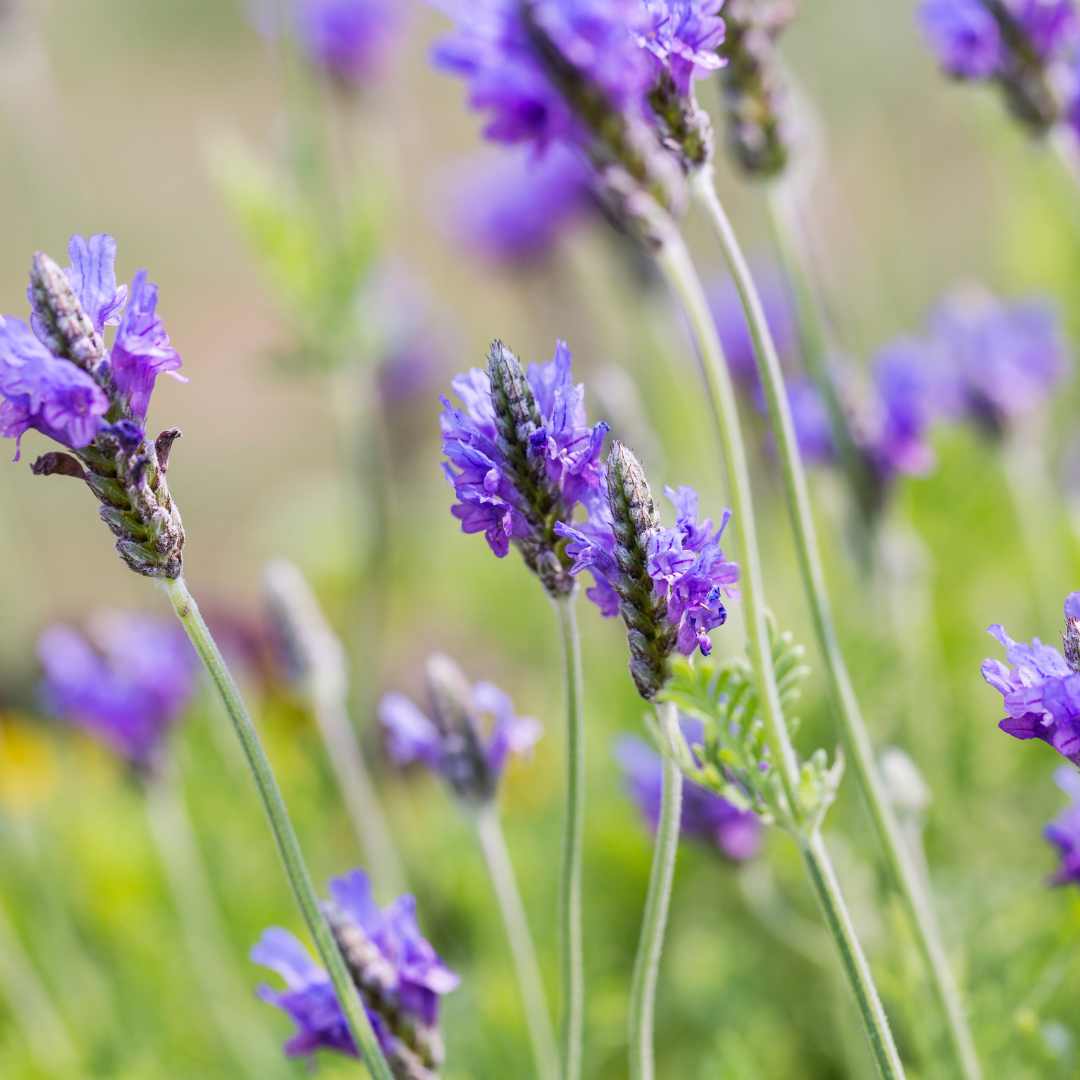
Fernleaf Lavender (Lavandula multifida) is the best lavender for Phoenix's extreme heat. Unlike traditional English or French lavenders that struggle in Arizona summers, Fernleaf Lavender thrives in full sun and intense heat, producing deep blue-violet flower spikes nearly year-round. Its unique, deeply cut fern-like foliage adds soft texture and silvery-green color to any landscape. Whether you're creating a fragrant border in Scottsdale, a pollinator garden in Mesa, or a Mediterranean-style planting in Chandler — Fernleaf Lavender delivers non-stop color, heavenly fragrance, and almost zero maintenance.
Fernleaf Lavender Plant Details
| Attribute | Detail |
|---|---|
| Scientific Name | Lavandula multifida |
| Common Names | Fernleaf Lavender, Egyptian Lavender, Cut-Leaf Lavender |
| Mature Height | 18–24 inches |
| Mature Width | 18–24 inches |
| Growth Rate | Fast — reaches full size within one growing season |
| Sun | Full sun (6+ hrs). Loves Phoenix summer heat. |
| Water | Low once established. Drought-tolerant. |
| USDA Zones | 8–11 (Phoenix is Zone 9b–10a) |
| Soil | Well-draining preferred. Adapts to Arizona caliche soils. |
| Foliage | Evergreen — distinctive fern-like, deeply dissected silvery-green leaves |
| Bloom Season | Nearly year-round in Phoenix; heaviest spring through fall |
| Bloom Color | Deep blue to violet flower spikes on tall stems |
Fernleaf Lavender Uses in Phoenix Landscapes
Fragrant Border & Edging
Plant Fernleaf Lavender 18–24 inches apart along walkways, driveways, or garden borders for a continuous ribbon of fragrance and color. The compact, mounding habit creates a neat edge that requires minimal trimming. Brush against it as you walk by to release the aromatic oils.
Pollinator & Butterfly Garden
The deep blue-violet flowers are irresistible to bees, butterflies, and hummingbirds. Combine with Lantana, Salvia, Gaura, and Ruellia for a year-round pollinator habitat. Fernleaf Lavender is one of the longest-blooming perennials in the Phoenix Valley.
Mediterranean & Xeriscape Design
Fernleaf Lavender is a natural fit for Mediterranean and water-wise landscapes. Pair with Rosemary, Texas Sage, Russian Sage, and ornamental grasses for a layered, fragrant garden that thrives on minimal water. The silvery-green foliage contrasts beautifully with darker desert plants.
Best Time to Plant Fernleaf Lavender in Phoenix
Fall (October–November) is ideal. Cooler temperatures reduce transplant stress and allow root establishment before summer. Spring (February–April) is also excellent — the plant will quickly establish and begin blooming. Avoid planting in peak summer heat.
How to Plant Fernleaf Lavender
- Dig wide, not deep — 2x the root ball width, same depth as the container.
- Check for caliche — break through any hardpan. Lavender needs good drainage.
- Backfill with native soil — lavender prefers lean soil; avoid heavy amendments.
- Spacing — 18–24 inches apart for a border; 2 ft for individual plants.
- Water basin — a small 2-inch ring to direct initial watering, but don't let water pool.
- Gravel mulch — 2 inches of decomposed granite to keep the crown dry and reflect heat.
Watering Fernleaf Lavender in Phoenix
First Year Watering Schedule
- Weeks 1–2: Every 2–3 days, light watering
- Month 1–2: Every 4–5 days
- Month 3–6: Every 7–10 days
- After Year 1: Every 10–14 days summer; every 3–4 weeks winter
Drip Irrigation
Place one 1 GPH emitter 8–12 inches from the base. Established Fernleaf Lavender is quite drought-tolerant. Overwatering causes root rot — water less often rather than more.
Is Fernleaf Lavender different from English Lavender?
Yes — Fernleaf Lavender (Lavandula multifida) is far more heat-tolerant than English Lavender (Lavandula angustifolia). It thrives in Phoenix summers that would kill English varieties. The foliage is also distinctive: deeply cut and fern-like rather than the narrow leaves of English Lavender.
Does it bloom year-round in Phoenix?
Nearly. Fernleaf Lavender produces flower spikes from spring through fall in Phoenix, with lighter blooming through winter. It's one of the longest-blooming perennials available for Valley gardens.
Can I use it for cooking or sachets?
Fernleaf Lavender is primarily ornamental. For culinary use, English Lavender is preferred. However, the flowers and foliage are wonderfully fragrant and can be used in potpourri and dried arrangements.
Does it attract pollinators?
Absolutely. Bees, butterflies, and hummingbirds love the nectar-rich flowers. It's one of the best pollinator plants for Phoenix gardens.
You May Also Like
- Russian Sage — tall, airy blue-purple spikes with silvery foliage
- Cherry Red Sage — compact perennial with red blooms for contrast
- Bush Germander — evergreen shrub with purple flowers and silvery leaves
- Gaura White — delicate white butterfly-like flowers, pairs beautifully with lavender
How Many Fernleaf Lavender Do I Need?
Fernleaf Lavender matures at 18 to 24 inches wide, so space plants about 20 inches apart for a continuous fragrant border or mass. Use this table to estimate counts:
| Planting Run / Area | Plants Needed (at 20 in spacing) |
|---|---|
| 10 ft border | 6 plants |
| 20 ft border | 12 plants |
| 25 sq ft bed | 9 to 11 plants |
| 50 sq ft bed | 18 to 22 plants |
For individual specimen mounds, give each plant 2 feet of clearance so air moves freely around the crown.
Fernleaf Lavender Season-by-Season in Phoenix
- Spring (Feb to Apr): Heavy flush of blue-violet spikes and the best second planting window. Foliage fills out fast.
- Summer (May to Sep): Loves full reflected heat and keeps blooming through the hottest months. The monsoon's extra humidity is the one risk: keep the crown dry and the soil draining to avoid rot.
- Fall (Oct to Nov): Prime planting season and another strong bloom flush as nights cool.
- Winter (Dec to Jan): Stays evergreen with lighter blooming. The least cold-hardy of the lavenders: protect or cover on nights below about 20°F.
At a Glance
✔ Pollinator-Friendly ✔ Hummingbird-Friendly ✔ Heat-Loving (Reflected-Heat Tolerant) ✔ Drought-Tolerant ✔ Evergreen ✔ Low-Maintenance ✔ Deer & Rabbit-Resistant ✔ Cold-Hardy to 15°F
Plant It With
- Cherry Red Sage: red blooms that contrast the blue-violet spikes and share the same low-water needs.
- Bush Germander: an evergreen silver-foliage shrub that anchors a Mediterranean border behind the lavender.
- Gaura White: airy white butterfly flowers that soften the planting and bloom alongside it.
- Texas Sage: a tough silvery desert shrub that pairs well in a xeriscape mass.
Is Fernleaf Lavender Right for Your Yard?
Fernleaf Lavender thrives in full sun and reflected heat with fast-draining soil. Break through caliche and use a gravel mulch so the crown stays dry. It is ideal for fragrant borders, pollinator beds, and Mediterranean or xeriscape designs. It is not a fit for low spots that stay wet or for heavily shaded areas, where it will rot or stop blooming, and it is the most frost-tender lavender so plan to cover it during a hard Valley freeze.
Share