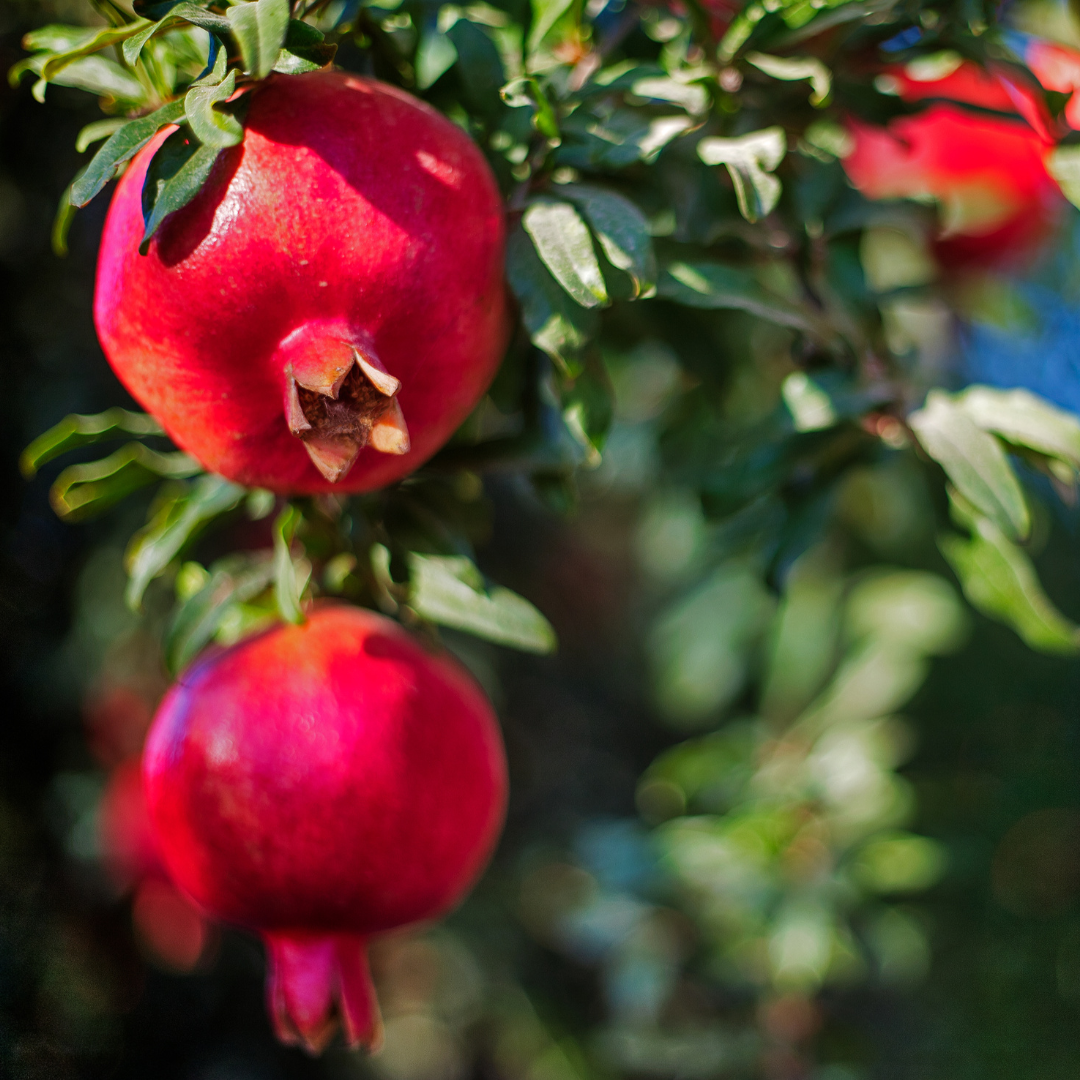

Edible Pomegranate Tree
Edible Pomegranate Tree
Couldn't load pickup availability
Harvest Fresh Pomegranates from Your Phoenix Backyard
Edible Pomegranate Tree (Punica granatum) is one of the best fruit-producing trees for the Phoenix Valley. This heat-loving deciduous tree thrives in Arizona's intense summers, producing abundant crops of ruby-red fruit packed with antioxidant-rich seeds. Pomegranates have been cultivated in hot, arid climates for over 4,000 years — and Phoenix's long, hot growing season is ideal for maximum fruit production. Whether you're building a backyard food forest in Scottsdale, adding an ornamental fruit tree in Mesa, or creating an edible landscape in Gilbert — the Edible Pomegranate Tree delivers beauty, shade, and a serious harvest every fall.
Edible Pomegranate Tree Plant Details
| Attribute | Detail |
|---|---|
| Scientific Name | Punica granatum |
| Common Names | Pomegranate, Edible Pomegranate, Wonderful Pomegranate |
| Mature Height | 6–12 feet |
| Mature Width | 6–10 feet |
| Growth Rate | Moderate to fast — 1–2 feet per year in Phoenix |
| Sun | Full sun (6+ hrs). Loves Phoenix summer heat. |
| Water | Low to moderate once established. Highly drought-tolerant. |
| USDA Zones | 7–11 (Phoenix is Zone 9b–10a) |
| Soil | Highly adaptable. Tolerates Arizona caliche and alkaline soils. |
| Foliage | Deciduous — glossy green leaves turn golden-yellow in fall |
| Fruit Season | September–November in Phoenix |
| Bloom Color | Bright reddish-orange tubular flowers, spring through summer |
Edible Pomegranate Tree Uses in Phoenix Landscapes
Backyard Fruit Production
A single mature pomegranate tree can produce 100–200+ fruits per season in the Phoenix heat. The fruit ripens September through November, splitting slightly on the tree when ready to pick. Popular edible varieties include Wonderful (deep red, tart-sweet), Angel Red (soft-seeded), and Sweet (mild flavor). Plant in full sun for maximum fruit set.
Ornamental Specimen Tree
Beyond the fruit, pomegranate trees are stunning ornamentals. Bright reddish-orange tubular flowers bloom from late spring through summer, attracting hummingbirds and pollinators. The glossy foliage turns golden-yellow before dropping in late fall, and the sculptural branching structure provides winter interest.
Edible Privacy Screen
Plant pomegranate trees 6–8 feet apart for an informal edible hedge or privacy screen that reaches 8–12 feet tall. The dense, multi-trunked habit fills in well. For a 30-foot screening row, you'll need about 4–5 trees.
Best Time to Plant Edible Pomegranate Tree in Phoenix
Fall (October–November) is the ideal planting window. Warm soil encourages rapid root establishment while cooler air reduces transplant stress. The tree gets a full winter and spring to develop roots before its first Phoenix summer. Spring (February–March) is the second-best option. Avoid summer planting if possible.
How to Plant Edible Pomegranate Tree
- Dig wide, not deep — 3x the root ball width, same depth as the container.
- Check for caliche — break through any hardpan layer for drainage.
- Backfill with native soil — pomegranates thrive in poor soil; no amendments needed.
- Spacing — 10–15 ft apart for individual trees; 6–8 ft for a hedge row.
- Water basin — build a wide 4–6 inch soil ring to direct deep watering.
- Mulch — 3–4 inches of bark or gravel mulch to retain moisture and moderate soil temperature.
Watering Edible Pomegranate Tree in Phoenix
First Year Watering Schedule
- Weeks 1–2: Every 1–2 days, deep and slow (30–45 min)
- Month 1–3: Every 3–4 days
- Month 3–6: Every 5–7 days
- After Year 1: Every 7–14 days summer; every 3–4 weeks winter
Drip Irrigation
Use two 2 GPH emitters placed 18–24 inches from the trunk. Consistent water during fruit development (June–September) produces larger fruit with fewer splits. Reduce water slightly as fruit nears harvest to concentrate flavor.
How fast does a pomegranate tree grow in Phoenix?
Moderate to fast — expect 1–2 feet of growth per year. A 15-gallon tree can reach 6–8 feet and begin fruiting within 1–2 years of planting.
When do pomegranates ripen in Phoenix?
Most varieties ripen September through November. Fruit is ready when the skin develops deep color and the fruit feels heavy. A slight cracking or splitting at the crown is normal and indicates ripeness.
Do pomegranate trees need a pollinator?
No. Pomegranates are self-fertile and will produce fruit with a single tree. However, planting two or more trees can improve fruit set through cross-pollination.
Can pomegranate trees handle Phoenix summer heat?
They love it. Pomegranates are native to hot, arid regions and actually produce their best fruit in sustained heat. Phoenix summers are ideal for pomegranate cultivation.
You May Also Like
- Dwarf Pomegranate — compact ornamental version for patios and small spaces
- Edible Fig Tree — another heat-loving fruit tree for Phoenix backyards
- Eureka Lemon — year-round citrus production in the Valley
- Arizona Sweet Orange — classic Phoenix citrus for fresh juice
How Many Edible Pomegranate Trees Do I Need?
Pomegranate is self-fertile, so one tree fruits on its own. Its 6 to 10 foot multi-trunk form makes it equally good as a single specimen or a productive edible hedge. Pick spacing from the role you want.
| Hedge / Screen Length | Trees at 7 ft Spacing |
|---|---|
| 7 ft | 1 to 2 trees |
| 14 ft | 2 to 3 trees |
| 28 ft | 4 to 5 trees |
| 42 ft | 6 to 7 trees |
For a single fruiting specimen, space 10 to 15 feet from other trees and structures. Adding a second tree is optional but can improve fruit set through cross-pollination.
Edible Pomegranate Season-by-Season in Phoenix
- Spring (Feb to Apr): Leaf-out from bare branches, then the first reddish-orange tubular flowers that draw hummingbirds and bees. Good secondary planting window.
- Summer (May to Sep): Long bloom and fruit development through the heat and monsoon. Pomegranate loves sustained Phoenix heat. Keep water steady June through September for larger fruit with fewer splits, then ease back as fruit colors up.
- Fall (Oct to Nov): Main harvest. Fruit is ripe when heavy with deep color and slight crown splitting. Foliage turns golden-yellow before dropping. Prime planting season for new trees.
- Winter (Dec to Jan): Dormant and leafless with sculptural branching for winter interest. Cold-hardy well below freezing while dormant, so Valley frost is not a concern. Prune lightly to shape and remove suckers.
At a Glance
✔ Edible ✔ Heat-Loving (Reflected-Heat Tolerant) ✔ Drought-Tolerant ✔ Hummingbird-Friendly ✔ Pollinator-Friendly ✔ Low-Maintenance ✔ Self-Fertile ✔ Cold-Hardy (Dormant)
Plant It With
- Edible Fig Tree: another heat-loving, low-care fruit tree that ripens through summer.
- AZ Sweet Orange: evergreen citrus that adds year-round green structure and winter fruit.
- Red Yucca: shares the pomegranate's hummingbird appeal and fills the bed with low-water color.
- Eureka Lemon: a productive citrus to round out a small home orchard.
Is Edible Pomegranate Right for Your Yard?
Pomegranate thrives in full Phoenix sun and reflected heat, shrugs off caliche and alkaline soil, and needs only low to moderate water once established. It works as a fruiting specimen, an informal hedge, or a hummingbird-friendly ornamental. It is not a fit for deep shade or a spot you want evergreen year-round: it is deciduous and drops its leaves in winter, and the multi-trunk habit suckers, so plan on occasional thinning.
Share