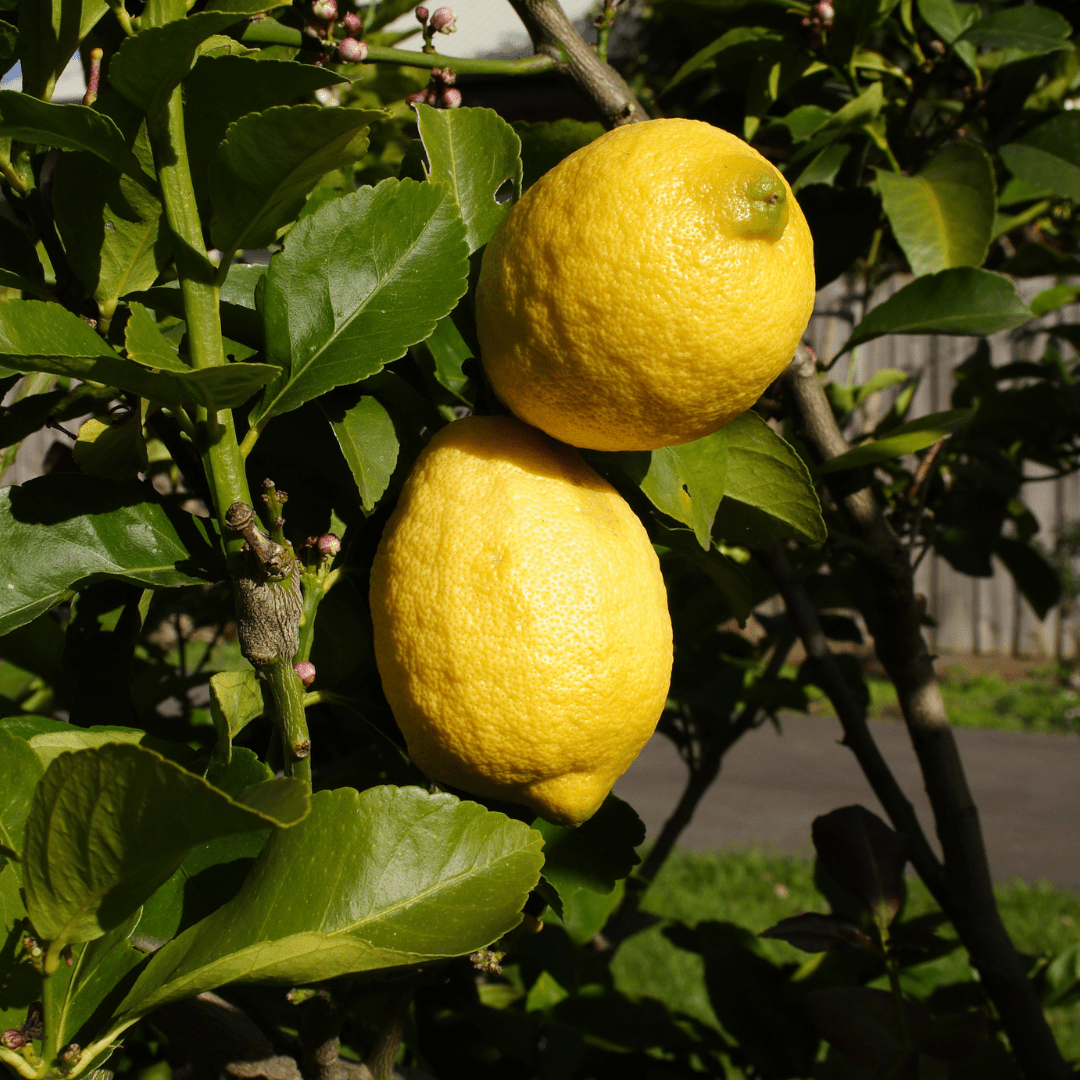

Eureka Lemon
Eureka Lemon
Couldn't load pickup availability
Year-Round Fresh Lemons from Your Phoenix Backyard
Eureka Lemon Tree (Citrus limon 'Eureka') is Phoenix's go-to lemon tree for year-round fruit production. This vigorous evergreen citrus produces juicy, bright yellow lemons nearly every month of the year — making it the most productive backyard lemon tree for the Valley's hot, sunny climate. Eureka Lemon is the classic grocery-store lemon, and growing your own means picking sun-ripened fruit straight from the branch whenever you need it. Whether you're starting a backyard citrus grove in Scottsdale, adding an edible shade tree in Mesa, or planting a patio specimen in Chandler — the Eureka Lemon Tree is a proven performer in the Phoenix heat.
Eureka Lemon Tree Plant Details
| Attribute | Detail |
|---|---|
| Scientific Name | Citrus limon 'Eureka' |
| Common Names | Eureka Lemon, Lemon Tree |
| Mature Height | 10–20 feet (often kept 8–12 ft with pruning) |
| Mature Width | 10–15 feet |
| Growth Rate | Moderate to fast — 1–2 feet per year in Phoenix |
| Sun | Full sun (6+ hrs). Thrives in Phoenix summer heat. |
| Water | Moderate. Regular deep watering for best fruit production. |
| USDA Zones | 9–11 (Phoenix is Zone 9b–10a) |
| Soil | Well-draining preferred. Adapts to Arizona caliche with proper drainage. |
| Foliage | Evergreen — glossy dark green leaves year-round |
| Fruit Season | Year-round production; heaviest harvest winter through spring |
| Bloom | Fragrant white flowers, multiple flushes per year |
Eureka Lemon Tree Uses in Phoenix Landscapes
Backyard Citrus Production
A mature Eureka Lemon can produce 100–200+ lemons per year in Phoenix's ideal climate. The fruit is classic — bright yellow, juicy, and tangy — perfect for cooking, lemonade, cocktails, and preserving. Unlike some citrus varieties, Eureka produces fruit nearly year-round with the heaviest crop from winter through spring.
Evergreen Shade Tree
Eureka Lemon's dense, glossy evergreen canopy provides year-round shade that cools patios, seating areas, and garden beds. The fragrant white flowers that appear several times per year add a delightful scent to outdoor living spaces. Plant on the south or west side of a patio for maximum shade benefit.
Edible Landscape Feature
Lemon trees are a cornerstone of Phoenix's edible landscaping tradition. Pair with other citrus varieties like Bearss Lime, Arizona Sweet Orange, and Flame Grapefruit for a diverse backyard citrus grove. Space trees 12–15 feet apart for proper air circulation and sun exposure.
Best Time to Plant Eureka Lemon in Phoenix
Fall (October–November) is ideal for citrus planting in Phoenix. Warm soil promotes fast root establishment while cooler air reduces transplant stress. Spring (February–March) is the second-best window. Avoid planting in summer — the intense heat stresses newly planted citrus trees.
How to Plant Eureka Lemon Tree
- Dig wide, not deep — 3x the root ball width, same depth as the container. Never bury the graft union.
- Check for caliche — break through any hardpan layer. Citrus roots need good drainage.
- Backfill with native soil — a 20% compost blend helps but avoid heavy amendments.
- Spacing — 12–15 ft from structures and other trees; 8–10 ft for a tighter grove.
- Water basin — build a wide 4–6 inch soil ring extending to the canopy drip line.
- Mulch — 3–4 inches of wood chip mulch, kept 6 inches from the trunk to prevent collar rot.
Watering Eureka Lemon in Phoenix
First Year Watering Schedule
- Weeks 1–2: Every 1–2 days, deep and slow (30–45 min)
- Month 1–3: Every 3–4 days
- Month 3–6: Every 5–7 days
- After Year 1: Every 7–10 days summer; every 14–21 days winter
Drip Irrigation
Use two to four 2 GPH emitters spaced evenly around the drip line. Mature citrus trees need deep, infrequent watering — shallow daily watering causes root rot and poor fruit quality. Consistent watering during fruit development produces juicier lemons.
How fast does a Eureka Lemon tree grow in Phoenix?
Moderate to fast — expect 1–2 feet per year with regular watering and fertilization. A 15-gallon tree typically reaches 8–10 feet within 3–4 years and can fruit within the first year of planting.
When do Eureka Lemons ripen in Phoenix?
Eureka Lemons produce fruit nearly year-round in Phoenix. The heaviest harvest is winter through spring, but you'll find fruit on the tree in every season. Lemons are ready when they're fully yellow and slightly soft when squeezed.
Do I need two lemon trees for pollination?
No. Eureka Lemon is self-fertile and will produce a full crop with just one tree. The fragrant flowers are also attractive to bees and other pollinators.
How do I protect citrus from frost?
In most Phoenix Valley locations, frost is rare and mild. On cold nights below 32°F, cover the tree with frost cloth. Young trees are more frost-sensitive than established ones. Avoid south-facing walls for planting — they radiate heat that can cause sunburn on the trunk.
You May Also Like
- Bearss Lime — compact citrus tree for limes, great on patios
- Arizona Sweet Orange — classic Phoenix citrus for fresh juice
- Flame Grapefruit — red-fleshed grapefruit tree for the Phoenix Valley
- Edible Fig Tree — another heat-loving fruit tree for backyard orchards
How Many Eureka Lemon Trees Do I Need?
Eureka Lemon is self-fertile, so a single tree gives a full, nearly year-round crop. For a backyard citrus grove, space trees at their 10 to 15 foot mature width (about 13 feet center to center, or 8 to 10 feet for a tighter pruned grove with good airflow).
| Grove Row Length | Trees at 13 ft Spacing |
|---|---|
| 13 ft | 1 to 2 trees |
| 26 ft | 2 to 3 trees |
| 39 ft | 3 to 4 trees |
| 52 ft | 4 to 5 trees |
One lemon tree usually keeps a household well supplied. Add a lime, orange, or grapefruit instead of a second lemon to spread the harvest across the citrus season.
Eureka Lemon Season-by-Season in Phoenix
- Spring (Feb to Apr): A heavy flush of fragrant white blossoms that draw bees, plus continued fruit. Prime planting window and the time for a light shaping and the year's first citrus feeding.
- Summer (May to Sep): Vigorous new growth and fruit set through the heat. Keep deep water steady and consistent: citrus stress in extreme heat causes fruit drop. Whitewash exposed trunk wood to prevent sunburn on young trees.
- Fall (Oct to Nov): Prime planting season and the start of the heavy harvest as fruit colors up. Maintain even watering for juicy, full-size lemons.
- Winter (Dec to Jan): Peak harvest, evergreen and productive. Be honest about frost: lemons are among the more frost-sensitive citrus. On nights below 32F, especially for young trees, cover with frost cloth and water before a freeze.
At a Glance
✔ Edible ✔ Evergreen ✔ Heat-Loving (Reflected-Heat Tolerant) ✔ Shade-Providing ✔ Pollinator-Friendly ✔ Self-Fertile ✔ Low-Maintenance
Plant It With
- Bearss Lime: a seedless lime that pairs with lemon for a complete cocktail-and-cooking citrus pair.
- AZ Sweet Orange: classic Phoenix juice orange to broaden the grove.
- Flame Grapefruit: red-fleshed grapefruit that stretches the harvest into late winter.
- Edible Fig Tree: a heat-loving deciduous fruit tree to add variety beyond citrus.
Is Eureka Lemon Right for Your Yard?
Eureka Lemon thrives in full Phoenix sun with well-draining soil (break through caliche) and steady deep water, rewarding you with fruit in every season and fragrant evergreen shade. It is not a fit for cold, frost-pocket spots or low-water-only beds: it is among the more frost-sensitive citrus and needs reliable irrigation, so plant it in a warm location, keep frost cloth handy for young trees, and protect the trunk from sunburn.
Share