

Dwarf Heavenly Bamboo
Dwarf Heavenly Bamboo
Couldn't load pickup availability
Year-Round Color in a Compact, Low-Maintenance Package
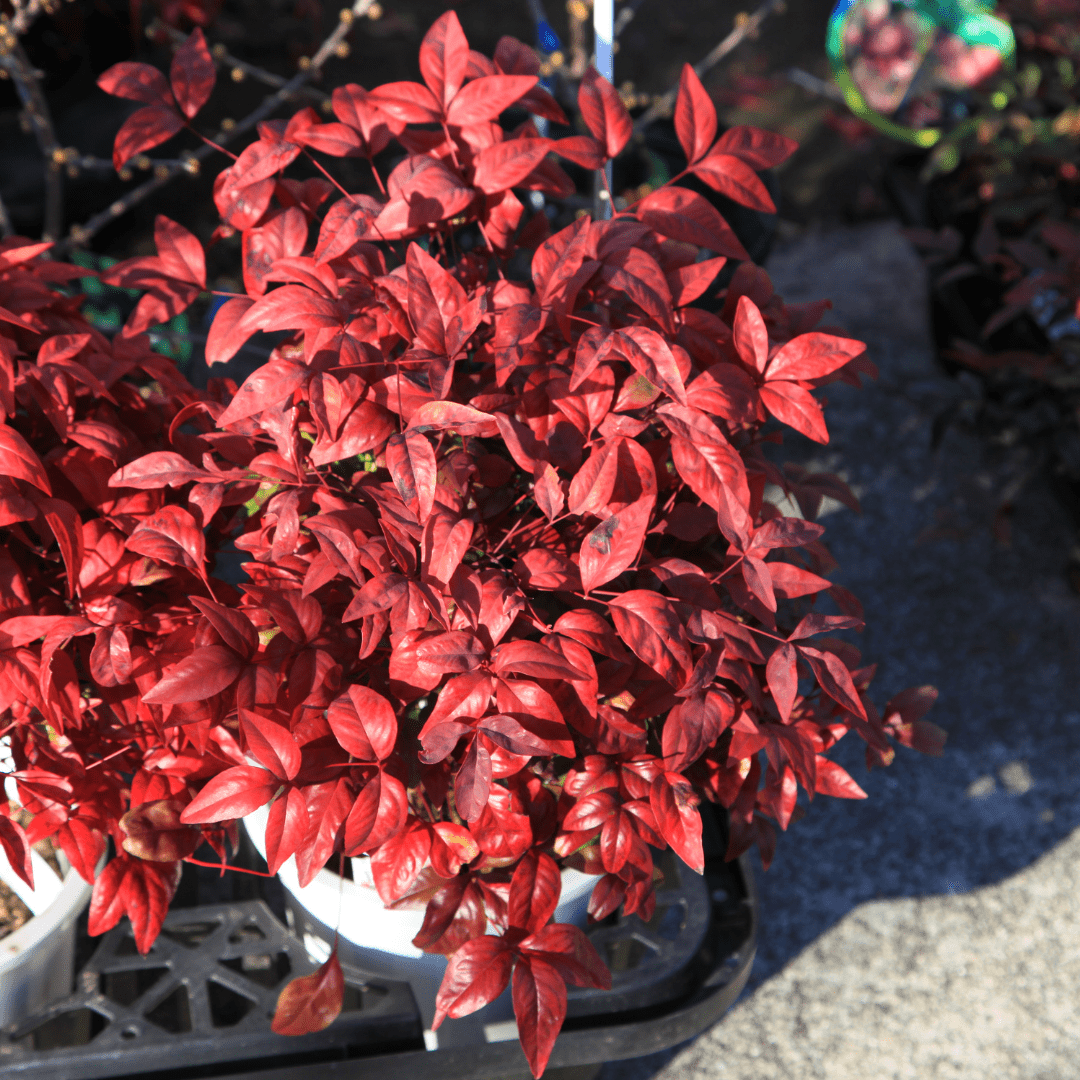
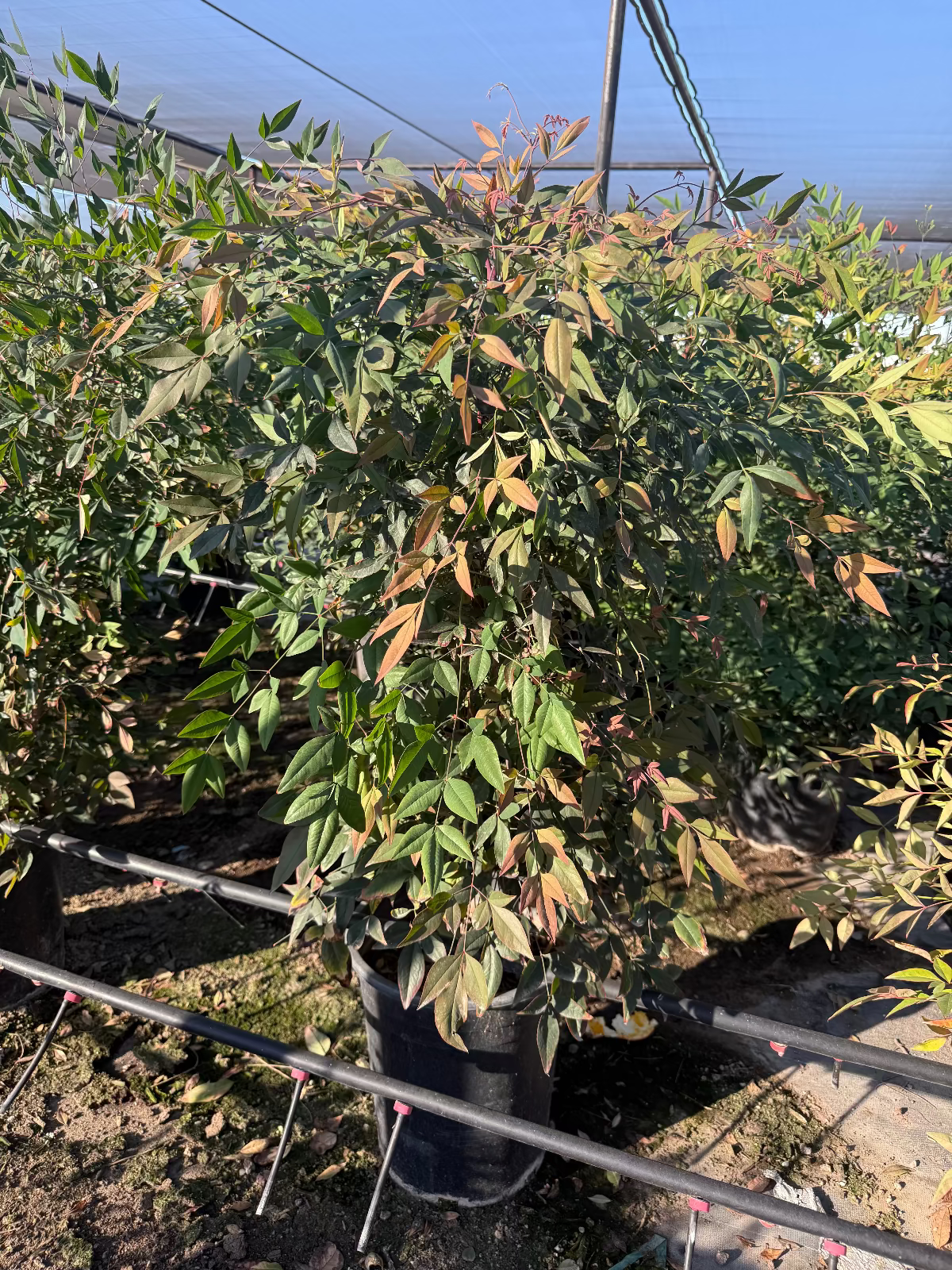
Dwarf Heavenly Bamboo (Nandina domestica) is one of the most versatile compact shrubs for Phoenix landscapes. Despite its name, it's not a true bamboo — it's an evergreen shrub prized for its year-round color show. New growth emerges bright red or bronze, matures to rich green in summer, then turns fiery red and burgundy in fall and winter. Whether you're filling a shaded border in Scottsdale, adding color to a courtyard in Mesa, or creating a low foundation planting in Gilbert — Dwarf Heavenly Bamboo delivers four-season interest with minimal care.
Dwarf Heavenly Bamboo Plant Details
| Attribute | Detail |
|---|---|
| Scientific Name | Nandina domestica (dwarf cultivar) |
| Common Names | Dwarf Heavenly Bamboo, Dwarf Nandina, Nana Nandina |
| Mature Height | 2–3 feet |
| Mature Width | 2–3 feet |
| Growth Rate | Moderate — 6–12 inches per year in Phoenix |
| Sun | Full sun to partial shade. Best color in full sun; tolerates shade. |
| Water | Low to moderate once established. Drought-tolerant. |
| USDA Zones | 6–11 (Phoenix is Zone 9b–10a) |
| Soil | Adaptable. Performs well in Arizona caliche soils with decent drainage. |
| Foliage | Evergreen — red/bronze new growth, green summer, red/burgundy fall-winter |
| Berries | Red berries in fall-winter on mature plants (dwarf varieties produce fewer) |
Dwarf Heavenly Bamboo Uses in Phoenix Landscapes
Foundation Planting & Low Border
At just 2–3 feet tall, Dwarf Heavenly Bamboo is ideal for foundation plantings beneath windows and along walkways. Plant 2–3 feet apart for a continuous low hedge. The compact, mounding form requires little to no pruning, and the year-round color changes keep the landscape interesting every season.
Shade Garden Color
Unlike most colorful shrubs that demand full sun, Dwarf Heavenly Bamboo performs beautifully in partial shade. Plant it under trees, along north-facing walls, or in covered patios where other flowering shrubs struggle. The red and bronze foliage tones still develop in shade, though full sun produces the most intense colors.
Mass Planting & Groundcover
Plant Dwarf Heavenly Bamboo in groups of 5–7 for a stunning mass planting that creates a living carpet of seasonal color. Combine with ornamental grasses, agaves, or desert spoon for contrasting textures. In Scottsdale and Paradise Valley, mass plantings of Dwarf Nandina create a refined, modern landscape look.
Best Time to Plant Dwarf Heavenly Bamboo in Phoenix
Fall (October–November) is the ideal planting window — cooler temperatures reduce transplant stress while warm soil promotes root growth. Spring (February–April) is the second-best window. Avoid planting in peak summer heat for best establishment.
How to Plant Dwarf Heavenly Bamboo
- Dig wide, not deep — 2–3x the root ball width, same depth
- Check for caliche — break through any hardpan layer for drainage
- Backfill with native soil — a light 20% compost blend is fine
- Spacing — 2–3 ft apart for hedge or mass planting
- Water basin — build a 3–4 inch ring to direct water to roots
- Mulch — 2–3 inches of bark or gravel mulch to retain moisture and keep roots cool
Watering Dwarf Heavenly Bamboo in Phoenix
First Year Watering Schedule
Weeks 1–2: Every 1–2 days, deep and slow (20–30 min). Month 1–2: Every 3–4 days. Month 3–6: Every 5–7 days. After Year 1: Every 7–14 days summer; every 2–3 weeks winter.
Drip Irrigation
Place one 1–2 GPH emitter 12 inches from the base. Established plants are quite drought-tolerant but look their best with consistent deep watering during the growing season. Reduce water in winter when growth slows.
How tall does Dwarf Heavenly Bamboo get?
Dwarf varieties typically stay 2–3 feet tall and wide, making them much more manageable than the standard Heavenly Bamboo which can reach 6–8 feet. Little to no pruning is needed to maintain shape.
Is Dwarf Heavenly Bamboo actually a bamboo?
No — despite the common name, Nandina is not related to bamboo at all. It's an evergreen shrub in the Berberidaceae family. It won't spread aggressively like true bamboo.
Does Dwarf Heavenly Bamboo change color?
Yes — this is one of its best features. New growth emerges red or bronze in spring, turns green in summer, then shifts to vibrant reds and burgundy in fall and winter. Full sun produces the most dramatic color changes.
Is Dwarf Heavenly Bamboo toxic?
The berries are toxic to birds and pets if consumed in large quantities. Dwarf varieties produce fewer berries than standard Nandina, reducing the risk.
You May Also Like
Bush Germander — Compact evergreen shrub with purple flowers, great companion for Nandina in mixed borders.
Dwarf Bottlebrush — Another compact shrub with red flowers and year-round color for Phoenix gardens.
Texas Sage — Silvery-leaved evergreen shrub that blooms purple after summer rains.
Japanese Boxwood — Classic evergreen hedge plant for formal borders and edging.
How Many Dwarf Heavenly Bamboo Do I Need?
At a mature width of 2 to 3 feet, space Dwarf Nandina about 2.5 feet on center for a continuous low hedge or mass planting. Use this guide:
| Hedge / mass run | Plants needed (2.5 ft spacing) |
|---|---|
| 5 ft | 2 to 3 plants |
| 10 ft | 4 to 5 plants |
| 15 ft | 6 to 7 plants |
| 20 ft | 8 to 9 plants |
For a bold sweep of color, plant in groups of 5 to 7 at 2 to 2.5 feet apart so the foliage knits into a single carpet. As edging or single accents, one plant every 2.5 feet keeps the line even.
Dwarf Heavenly Bamboo Season-by-Season in Phoenix
- Spring (Feb to Apr): Bright red and bronze new growth flushes out, the showiest season alongside the warm winter color still hanging on. Strong second planting window.
- Summer (May to Sep): Foliage matures to rich green. In the hottest reflected-heat spots the leaves can scorch, so a little afternoon shade and steady deep water keep it looking its best through the monsoon.
- Fall (Oct to Nov): Top planting season in Phoenix, and the foliage begins shifting to fiery reds and burgundy as nights cool.
- Winter (Dec to Jan): Peak red and burgundy color, fully evergreen. Very cold-hardy (to roughly 10°F and below), so Valley frosts only deepen the color.
At a Glance
✔ Evergreen ✔ Low-Maintenance ✔ Drought-Tolerant ✔ Deer & Rabbit-Resistant ✔ Cold-Hardy to 10°F
Plant It With
- Bush Germander: compact evergreen with purple flowers that complements Nandina's changing foliage.
- Dwarf Bottlebrush: another low shrub with red tones and year-round structure.
- Texas Sage: silver-leaved evergreen with purple monsoon blooms for color contrast.
- Japanese Boxwood: classic green hedge that frames a formal Nandina border.
Is Dwarf Heavenly Bamboo Right for Your Yard?
Dwarf Heavenly Bamboo is one of the few colorful shrubs that thrives in part shade, so it shines in spots most flowering plants reject: north walls, under trees, and covered patios, as well as full sun where the color runs hottest. It is evergreen, tidy, and nearly carefree. Not a fit if you have a hard reflected-heat western exposure with no afternoon relief (the leaves can scorch) or curious pets and birds that might eat the berries: place it where the foliage gets some midday shade and the berries stay out of reach.
Share