
Duranta Mulit (Huge)
Duranta Mulit (Huge)
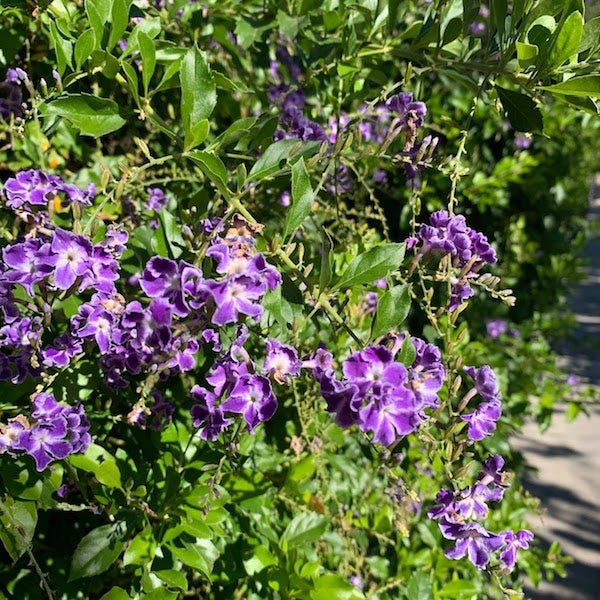
Big flowering shrub with purple blooms and gold berries
Couldn't load pickup availability
A Fast-Growing Purple Flowering Shrub for Phoenix Landscapes
Duranta (Duranta erecta) is one of the most versatile and colorful flowering shrubs for the Phoenix Valley. This multi-trunk specimen features cascading clusters of violet-blue flowers from spring through fall, followed by golden berries that attract birds. With its fast growth and lush tropical appearance, Duranta transforms any landscape quickly. Whether you're filling a large border in Scottsdale, creating a colorful hedge in Mesa, or adding a flowering specimen tree in Chandler — this huge multi-trunk Duranta delivers instant impact.
Duranta Plant Details
| Attribute | Detail |
|---|---|
| Scientific Name | Duranta erecta |
| Common Names | Duranta, Golden Dewdrop, Skyflower, Pigeon Berry |
| Mature Height | 7–9 feet |
| Mature Width | 6–8 feet |
| Growth Rate | Fast — 3–5 feet per year in Phoenix |
| Sun | Full sun (6+ hrs). More sun = more blooms. |
| Water | Moderate. Drought-tolerant once established but blooms best with regular water. |
| USDA Zones | 9–11 (Phoenix is Zone 9b–10a) |
| Soil | Adaptable. Thrives in Arizona caliche soils with decent drainage. |
| Foliage | Semi-evergreen — may drop some leaves in cold winters |
| Bloom Color | Violet-blue to light purple — spring through fall |
Duranta Uses in Phoenix Landscapes
Flowering Hedge & Privacy Screen
Duranta's fast, dense growth makes it an excellent choice for flowering hedges and privacy screens. Plant 4–5 feet apart for a continuous hedge that reaches 7–9 feet tall. The violet-blue flower cascades add seasonal color that most hedging plants can't match. Works beautifully along fence lines and property borders throughout the Phoenix Valley.
Multi-Trunk Specimen Tree
This huge multi-trunk form creates a stunning small specimen tree for patios, courtyards, and entryways. The arching branches loaded with purple flowers create a graceful, weeping effect. Underplant with Lantana or Ruellia for a layered, colorful display that blooms all summer.
Pool & Patio Backdrop
Duranta's tropical look and continuous flowering make it a natural choice for pool areas and outdoor living spaces. The golden berries that follow the flowers add winter interest. Plant as a backdrop behind a seating area or along a pool fence for year-round color and texture.
Best Time to Plant Duranta in Phoenix
Spring (March–May) is ideal for planting Duranta in Phoenix — warm soil and long days fuel rapid establishment and growth. Fall (October–November) is also excellent. Avoid planting in winter, as Duranta is frost-sensitive and cold damage can set back new plantings.
How to Plant Duranta
- Dig wide, not deep — 2–3x the root ball width, same depth
- Check for caliche — break through any hardpan layer for drainage
- Backfill with native soil — a light 20% compost blend is fine
- Spacing — 4–5 ft apart for hedge; 6–8 ft for individual specimens
- Water basin — build a 3–4 inch ring to direct water to roots
- Mulch — 2–3 inches of bark or gravel mulch to retain moisture
Watering Duranta in Phoenix
First Year Watering Schedule
Weeks 1–2: Every 1–2 days, deep and slow (20–30 min). Month 1–2: Every 3–4 days. Month 3–6: Every 5–7 days. After Year 1: Every 7–10 days summer; every 2–3 weeks winter.
Drip Irrigation
Place two 2 GPH emitters 18–24 inches from the trunk on opposite sides. Duranta blooms best with consistent moisture during the growing season but is surprisingly drought-tolerant once established. Reduce watering in winter when growth slows.
How fast does Duranta grow in Phoenix?
Very fast — Duranta can grow 3–5 feet per year in Phoenix with full sun and adequate water. This huge multi-trunk form is already well-established and will fill in rapidly after planting.
Is Duranta frost-hardy in Phoenix?
Duranta is semi-tropical and may suffer frost damage below 28°F. In most Phoenix Valley locations (Zone 9b–10a), it performs well year-round. In a hard freeze, it may die back to the ground but typically rebounds quickly in spring.
Does Duranta attract butterflies and birds?
Yes — the violet-blue flowers attract butterflies and hummingbirds, while the golden berries that follow attract songbirds. It's an excellent wildlife garden plant.
Is Duranta toxic?
Yes — the berries and foliage are toxic if ingested. Keep away from children and pets.
You May Also Like
Yellow Bells — Another fast-growing flowering shrub with bright yellow trumpet blooms for full-sun Phoenix landscapes.
Bottlebrush Bush — Evergreen shrub with unique red bottlebrush flowers, great for hedges and wildlife gardens.
Cape Honeysuckle — Vigorous flowering shrub with orange tubular blooms that attracts hummingbirds year-round.
Lantana — Heat-loving groundcover with colorful flower clusters, perfect for underplanting beneath Duranta.
How Many Duranta Do I Need?
For a fast flowering hedge or privacy screen, space this large multi-trunk Duranta about 5 feet on center. For a looser screen or standalone specimens, give each plant 6 to 8 feet. Use this guide for a hedge run:
| Hedge / screen run | Plants needed (5 ft spacing) |
|---|---|
| 10 ft | 2 to 3 plants |
| 20 ft | 4 to 5 plants |
| 30 ft | 6 to 7 plants |
| 50 ft | 10 to 11 plants |
As a single flowering specimen tree at a patio or entry, one plant stands on its own with 6 to 8 feet of clearance all around.
Duranta Season-by-Season in Phoenix
- Spring (Feb to Apr): New growth surges and the first violet-blue flower cascades open. Top planting window for fast establishment ahead of summer.
- Summer (May to Sep): Peak bloom and rapid growth. Loves the heat, and the monsoon (Jul to Sep) fuels heavy flowering plus the golden berries that follow. Blooms best with regular water through the hottest months.
- Fall (Oct to Nov): Strong second planting season and continued color, with berries feeding songbirds.
- Winter (Dec to Jan): Semi-evergreen and frost-sensitive. Expect leaf drop and tip damage below about 28°F, and a hard freeze can knock it to the ground. Cover on frost nights or accept the dieback: it rebounds fast from the base in spring.
At a Glance
✔ Pollinator-Friendly ✔ Hummingbird-Friendly ✔ Heat-Loving (Reflected-Heat Tolerant) ✔ Drought-Tolerant ✔ Low-Maintenance
Plant It With
- Yellow Bells: fast-growing yellow trumpet shrub that contrasts Duranta's violet blooms.
- Bottlebrush Bush: evergreen red-flowered shrub that holds structure when Duranta drops leaves in winter.
- Cape Honeysuckle: vigorous orange-flowered shrub that keeps hummingbirds working the bed.
- Desert Ruellia: low purple bloomer that underplants beautifully beneath a multi-trunk Duranta.
Is Duranta Right for Your Yard?
Duranta is a great fit for a full-sun spot where you want fast height, season-long purple color, and butterfly and bird traffic, and it handles caliche as long as drainage is decent. Not a fit if you need a reliably evergreen, frost-proof hedge or you have small children or pets in the bed: the berries and foliage are toxic if eaten, and a hard Valley freeze will knock it back until spring.
Share