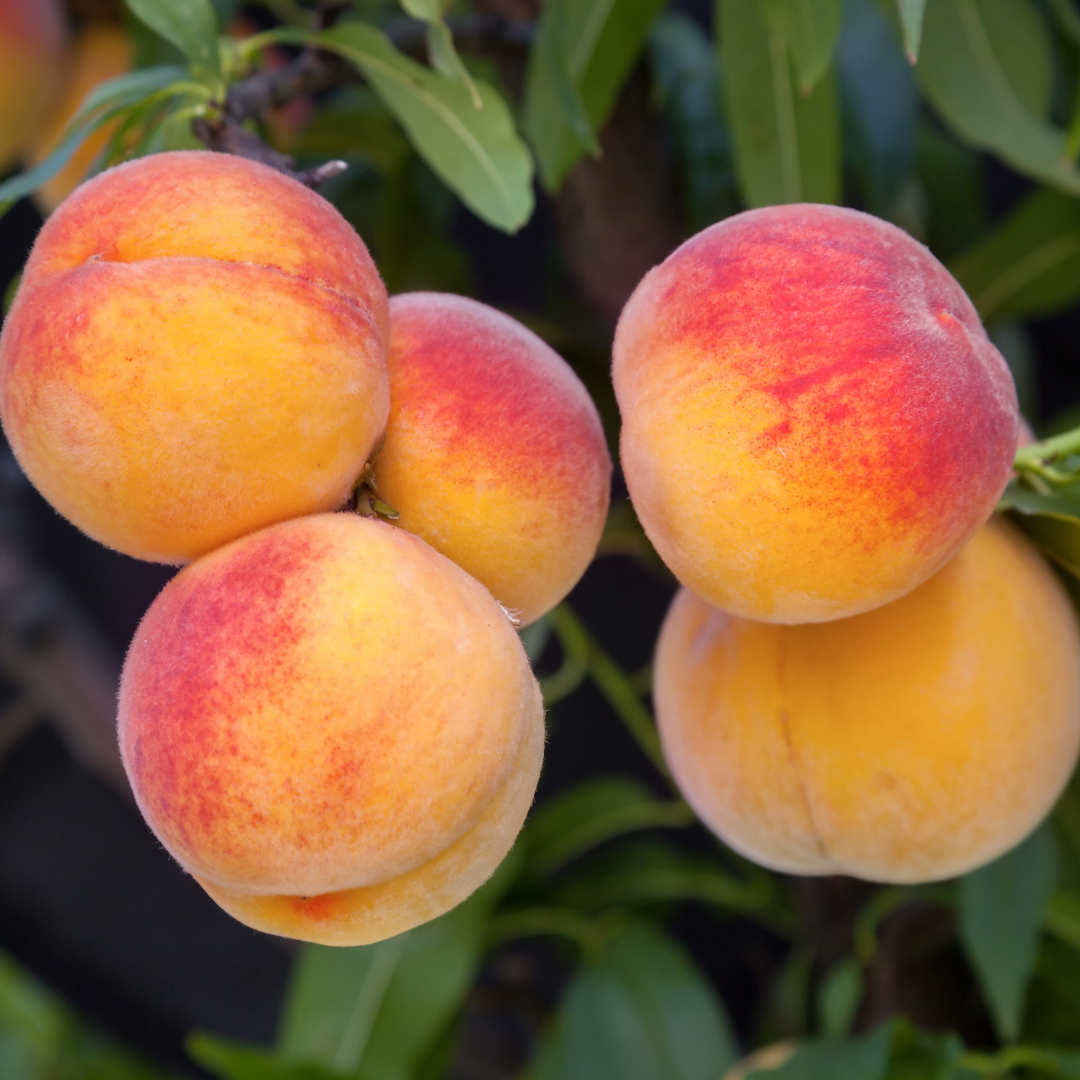

Desert Gold Peach Tree
Desert Gold Peach Tree
Couldn't load pickup availability
Desert Gold Peach — The Best Low-Chill Peach Tree for Phoenix Backyards
Desert Gold Peach (Prunus persica 'Desert Gold') is one of the top fruit tree picks for the Phoenix Valley. Bred specifically for low-chill climates, this early-season peach tree produces sweet, juicy yellow freestone peaches as early as May — well ahead of the brutal summer heat. Whether you're building an edible landscape in Scottsdale, adding a fruit tree to a Gilbert backyard orchard, or planting your first peach in Mesa — Desert Gold is the proven performer for Arizona's desert climate.
Desert Gold Peach Tree Plant Details
| Attribute | Detail |
|---|---|
| Scientific Name | Prunus persica 'Desert Gold' |
| Common Names | Desert Gold Peach, Low-Chill Peach |
| Mature Height | 15–25 feet (often kept 10–15 ft with pruning) |
| Mature Width | 12–15 feet |
| Growth Rate | Fast — 2–3 feet per year in Phoenix |
| Sun | Full sun (6+ hrs). Needs direct sunlight for best fruit production. |
| Water | Moderate. Regular deep watering, especially during fruit development. |
| USDA Zones | 8–10 (Phoenix is Zone 9b–10a) |
| Soil | Well-draining. Adapts to Arizona caliche soils with proper amendment. |
| Foliage | Deciduous — drops leaves in winter; pink blooms in late January–February |
| Chill Hours | 250–300 hours (perfect for Phoenix's mild winters) |
| Harvest | May — early-season yellow freestone peaches |
Desert Gold Peach Tree Uses in Phoenix Landscapes
Backyard Fruit Orchard
Desert Gold is the anchor tree for any Phoenix backyard fruit orchard. Its early harvest (May) means you're picking peaches before summer heat peaks. Plant alongside other low-chill fruit trees from Three Timbers like Fig, Pomegranate, and Citrus to create a year-round edible landscape. Space 12–15 feet apart for a mini orchard.
Edible Landscape Feature
With its beautiful pink spring blooms and lush green summer canopy, Desert Gold does double duty as an ornamental and a fruit producer. Plant one as a front-yard statement tree or near a patio where you can enjoy the spring flowers and harvest fruit by hand. It pairs beautifully with low-water perennials like Lantana and Ruellia from Three Timbers.
Small Space Fruit Tree
With regular pruning, Desert Gold can be maintained at 10–12 feet — making it ideal for smaller lots, side yards, and container-friendly courtyards in Tempe, Chandler, and Scottsdale. Even a single tree produces an impressive crop of 50–100+ pounds of peaches per season once established.
Best Time to Plant Desert Gold Peach in Phoenix
Late fall through early winter (November–January) is the ideal planting window for deciduous fruit trees in Phoenix. The tree is dormant and can focus energy on root establishment before spring growth. Planting during dormancy also means less transplant stress and lower water needs during establishment. Spring planting (February–March) works too but requires more vigilant watering through the first summer.
How to Plant Desert Gold Peach Tree
- Dig wide, not deep — 2–3x the root ball width, same depth as the container.
- Check for caliche — Break through any hardpan layer to ensure proper drainage. Peach trees are especially sensitive to poor drainage.
- Backfill with amended soil — Mix 30% compost with native soil for fruit trees.
- Spacing — 12–15 ft apart for orchard plantings; 15+ ft from structures.
- Water basin — Build a 3–4 inch soil ring around the root zone to direct water to the roots.
- Mulch — 3–4 inches of wood chip mulch around the base (keep mulch 6 inches from trunk).
Watering Desert Gold Peach in Phoenix
First Year Watering Schedule
- Weeks 1–2: Every 1–2 days, deep and slow (20–30 minutes per session)
- Months 1–2: Every 3–4 days
- Months 3–6: Every 5–7 days (every 3–5 days during peak summer)
- After Year 1: Every 7–10 days in summer; every 14–21 days in winter
Drip Irrigation
Place 2–4 emitters 18–24 inches from the trunk, each delivering 2–4 GPH. Increase watering frequency during fruit development (March–May) for larger, juicier peaches. Reduce water after harvest and allow the tree to go semi-dormant in late fall.
How many chill hours does Desert Gold Peach need?
Desert Gold requires only 250–300 chill hours (hours below 45°F), making it one of the best peach varieties for Phoenix. Most Phoenix-area locations reliably accumulate 300–400 chill hours per winter.
When does Desert Gold Peach ripen in Phoenix?
Desert Gold is an early-season peach that ripens in May in the Phoenix Valley — one of the earliest peaches you can grow. This means you harvest before the worst summer heat arrives.
Does Desert Gold Peach need a pollinator?
No. Desert Gold is self-fertile, meaning a single tree will produce fruit on its own. However, planting a second peach variety nearby (like Red Baron) can increase yields.
How do I protect my peach tree from Phoenix summer heat?
Whitewash the trunk with diluted latex paint to prevent sunscald. Maintain consistent deep watering through summer. A light shade cloth during the hottest weeks (June–July) can help young trees but isn't needed once established.
How big does Desert Gold Peach get?
Unpruned, Desert Gold can reach 20–25 feet. Most Phoenix homeowners prune to 10–15 feet for easier harvesting and better fruit quality. Annual winter pruning keeps the tree compact and productive.
You May Also Like
- Red Baron Peach — A stunning ornamental peach with red foliage and delicious yellow freestone fruit.
- Fig Tree — Another low-maintenance, heat-loving fruit tree that thrives in Phoenix backyards.
- Pomegranate — Extremely drought-tolerant fruit tree with beautiful orange-red blooms and fall harvest.
- Lemon Improved Meyer — A must-have Phoenix citrus tree for year-round fruit production.
How Many Desert Gold Peach Trees Do I Need?
Desert Gold is self-fertile, so one tree fruits on its own. For a backyard orchard, space trees at their 12 to 15 foot mature width (about 14 feet center to center for full canopies). Kept pruned to 10 to 12 feet, they can sit closer at 10 feet for a tighter row.
| Orchard Row Length | Trees at 14 ft Spacing |
|---|---|
| 14 ft | 1 to 2 trees |
| 28 ft | 2 to 3 trees |
| 42 ft | 3 to 4 trees |
| 56 ft | 4 to 5 trees |
For a single front-yard specimen or shade-and-fruit tree, one is plenty. Give it 15 feet of clearance from structures so the canopy can fill out.
Desert Gold Peach Season-by-Season in Phoenix
- Spring (Feb to Apr): Pink blossoms open in late January into February, among the first blooms of the year, then leaf-out and rapid fruit development. Thin young fruit in March so the remaining peaches size up.
- Summer (May to Sep): Harvest in May, ahead of peak heat. After harvest the tree tolerates Phoenix summer well with steady deep water. Whitewash the trunk to prevent sunscald on young trees.
- Fall (Oct to Nov): Prime planting season for dormant bare-root and container trees. Leaves color and drop as the tree winds down. Reduce water heading into dormancy.
- Winter (Dec to Jan): Fully dormant and leafless: the window for annual structural pruning that keeps it compact and productive. Cold-hardy well below freezing while dormant, so Valley frosts are not a concern.
At a Glance
✔ Edible ✔ Heat-Loving (Reflected-Heat Tolerant) ✔ Pollinator-Friendly ✔ Shade-Providing ✔ Low-Maintenance ✔ Self-Fertile ✔ Cold-Hardy (Dormant)
Plant It With
- Red Baron Peach: a red-leaf ornamental peach that boosts yields and extends the peach harvest.
- Desert Delight Nectarine: another low-chill stone fruit for a backyard orchard row.
- Fig Tree: a heat-loving, low-care fruit tree with multiple harvests.
- Lemon Improved Meyer: evergreen citrus that adds year-round structure and winter fruit.
Is Desert Gold Peach Right for Your Yard?
Desert Gold thrives in full Phoenix sun with well-draining soil (break through caliche hardpan, since peaches hate wet feet) and steady deep water through bloom and fruit development. At 12 to 15 feet it suits orchard rows, front-yard features, and pruned small-space plantings. It is not a fit if you want a zero-care, no-irrigation tree: it needs regular summer water, yearly dormant pruning, and trunk whitewashing while young to perform.
Share