

Damianita
Damianita
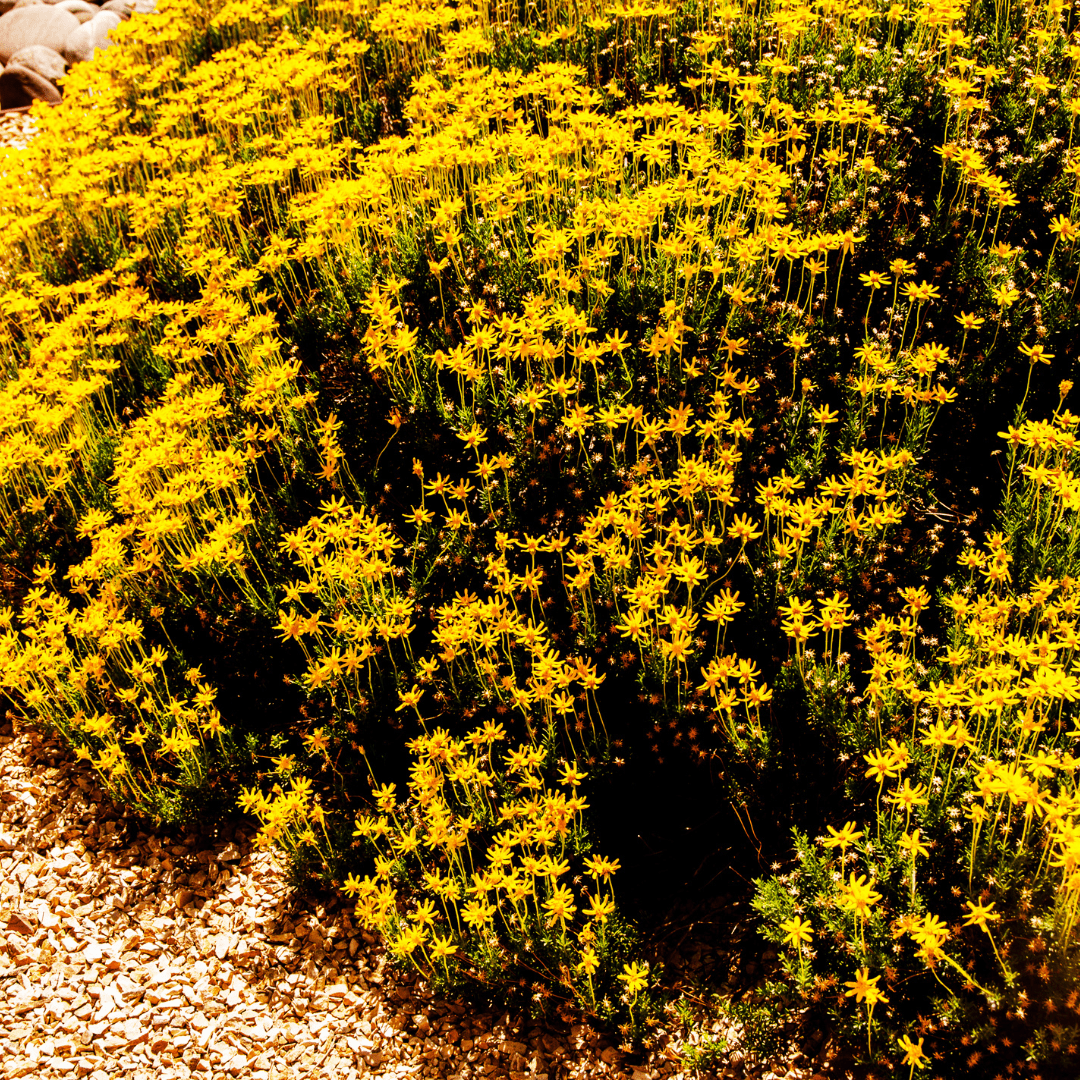
Aromatic green mound topped with golden blooms
Couldn't load pickup availability
Phoenix's Best Low-Growing Native Shrub — Damianita
Damianita (Chrysactinia mexicana) is a gem of the Sonoran Desert — a compact, mounding native shrub covered in bright yellow daisy-like blooms and releasing a distinctive herbal-citrus fragrance when touched. Growing just 1–2 feet tall and 2 feet wide, it's one of the most versatile low-water plants available for Phoenix landscapes. Whether you're edging a xeriscape pathway in Scottsdale, filling a rock garden in Chandler, or lining a desert driveway in Mesa — Damianita delivers year-round color and texture with almost no care.
Damianita Plant Details
| Attribute | Detail |
|---|---|
| Scientific Name | Chrysactinia mexicana |
| Common Names | Damianita, Damiana Daisy, Chamisa de Bolita |
| Mature Height | 1–2 feet |
| Mature Width | 2 feet |
| Growth Rate | Moderate — fills in nicely within 1–2 seasons in Phoenix |
| Sun | Full sun (6+ hrs). Thrives in reflected heat from walls and rock mulch. |
| Water | Very low once established. Extremely drought-tolerant. |
| USDA Zones | 7–11 (Phoenix is Zone 9b–10a) |
| Soil | Well-draining, rocky or sandy. Adapts to Arizona caliche soils. |
| Foliage | Evergreen — fine-textured, dark green aromatic foliage year-round |
| Bloom Color | Bright yellow |
| Bloom Season | Spring through fall, heaviest after monsoon rains |
| Fragrance | Strong herbal-citrus scent when touched |
| Native | Yes — Chihuahuan and Sonoran Desert, native to Southwest U.S. and Mexico |
Damianita Uses in Phoenix Landscapes
Rock Gardens and Desert Borders
Damianita's compact habit and love of rocky, well-draining soil make it a natural fit for rock garden designs throughout the Phoenix Valley. Plant it among boulders, in decomposed granite beds, or at the base of larger specimen plants in Peoria, Glendale, or Tempe. For a 20-foot border — use 8–10 plants spaced 24 inches apart. For a 10-foot rock garden — use 4–5 plants for full coverage within 1–2 seasons.
Pathway and Edging Plant
At 1–2 feet tall with a mounding, non-invasive form, Damianita makes an outstanding edging plant along pathways, driveways, and garden beds. The fragrant foliage is a bonus when planted near walkways — visitors will brush against it and release the distinctive herbal scent. Pair with Globemallow or Desert Ruellia for a colorful, textured border that stays tidy without pruning.
Low-Water Mass Planting
Planted in masses of 5–10 or more, Damianita creates a stunning carpet of yellow blooms that looks spectacular from spring through fall. This technique is widely used in commercial landscapes and HOA common areas throughout Scottsdale, Gilbert, and Chandler because of its extremely low irrigation requirements and clean, manicured appearance year-round.
Pollinator Gardens
Damianita's bright yellow blooms attract butterflies, native bees, and other pollinators throughout the bloom season. Plant alongside Trailing Indigo, Autumn Sage, and Chuparosa to create a multi-season pollinator habitat in any Phoenix yard.
Best Time to Plant Damianita in Phoenix
Fall (October–November) is the ideal planting window. Warm soil temperatures encourage root development while cool air reduces transplant stress. Plants establish over 6–8 months before their first full Phoenix summer. Spring (February–April) also works well. Avoid planting in peak summer if possible, as young plants need extra irrigation to get established in the heat.
How to Plant Damianita
- Dig wide, not deep — 2–3x the root ball width, same depth as the container.
- Check for caliche — break through any hardpan to ensure proper drainage.
- Backfill with native soil — minimal amendment needed; Damianita prefers lean soil.
- Spacing — 24 inches apart for borders; 18 inches for a dense mass planting.
- Water basin — build a 3-inch berm around each plant to direct water to the roots.
- Mulch — use gravel or decomposed granite, not bark; Damianita prefers the dry, hot conditions that rock mulch creates.
Watering Damianita in Phoenix
First Year Watering Schedule
- Weeks 1–2: Every 1–2 days, slow and deep (15–20 minutes per session)
- Months 1–2: Every 3–4 days
- Months 3–6: Every 7–10 days (every 5–7 days during peak summer)
- After Year 1: Every 2–4 weeks in summer; rely on natural rainfall in cooler months
Drip Irrigation
Place 1 GPH emitters 10–12 inches from the plant crown for 1-gallon plants. For 5-gallon plants, use 2 GPH emitters placed 12–15 inches from the crown. Once established, Damianita is one of the most self-sufficient native plants for Phoenix — many plants require no supplemental irrigation beyond monsoon rains after the first year.
How often does Damianita bloom in Phoenix?
Damianita blooms prolifically from spring through fall in Phoenix, with the heaviest flowering in spring and a second strong flush after monsoon rains in late summer. Cutting plants back lightly after the spring bloom encourages a dense, rounded form and strong fall rebloom.
Does Damianita smell bad?
No — Damianita has a pleasant, distinctive herbal-citrus fragrance similar to chamomile or dried herbs. The scent is strongest when the foliage is touched or crushed. Most people find it refreshing, especially near patios and walkways in warm-weather months.
Does Damianita need pruning in Phoenix?
Damianita is naturally compact and rarely needs pruning. A light shearing after the spring bloom can encourage fresh growth and a tighter mound shape, but it's entirely optional. Avoid heavy pruning in summer — prune only in late fall or early spring.
Is Damianita a good companion plant for cacti?
Yes — Damianita thrives in the same conditions as many cacti: full sun, excellent drainage, lean soil, and minimal water. It makes a beautiful low-growing companion plant around saguaro, barrel cactus, and other desert succulents in naturalistic Phoenix landscape designs.
You May Also Like
- Globemallow — A native perennial with orange, red, or pink cup-shaped blooms that adds bright color at a similar scale to Damianita in xeriscape beds.
- Trailing Indigo — A spreading native groundcover with purple blooms that pairs beautifully with Damianita in rock gardens and slopes.
- Yellow Dalea — A compact native shrub with golden-yellow fall blooms that complements Damianita's spring-through-summer flowering.
- Desert Ruellia — A tough spreading perennial with purple blooms that provides color contrast alongside Damianita's yellow flowers.
- Autumn Sage — A compact, hummingbird-friendly native with red or pink blooms that extends the bloom season in Damianita plantings.
How Many Damianita Do I Need?
Damianita matures around 2 feet wide. For a low, tidy color carpet or edging band, plant on 2 ft centers. Use this coverage guide:
| Area to Cover | Plants Needed (2 ft spacing) |
|---|---|
| 40 sq ft | 10 plants |
| 80 sq ft | 20 plants |
| 150 sq ft | 38 plants |
| 300 sq ft | 75 plants |
For a dense mass, tighten to 18 inch centers. As a pathway edging, a single row on 2 ft centers knits into a clean mounded border within a season or two.
Damianita Season-by-Season in Phoenix
- Spring (Feb–Apr): Heaviest bloom of the year, the whole mound covered in bright yellow daisies. Prime planting window. A light shear right after this flush keeps the form tight.
- Summer (May–Sep): Holds its fine evergreen foliage through extreme and reflected heat off walls and rock mulch with no afternoon shade needed. Monsoon rains (Jul–Sep) trigger a strong second flush of yellow.
- Fall (Oct–Nov): Continued bloom as temperatures ease. Prime planting season while soil stays warm.
- Winter (Dec–Jan): Stays evergreen and fully cold-hardy in the Valley, holding its aromatic dark-green mound through frost. No frost protection needed.
At a Glance
✔ Pollinator-Friendly ✔ Heat-Loving (Reflected-Heat Tolerant) ✔ Drought-Tolerant ✔ Evergreen ✔ Low-Maintenance ✔ Deer & Rabbit-Resistant ✔ Cold-Hardy to 0°F
Plant It With
- Globemallow: native orange-to-pink cups that add color at a matching low scale.
- Desert Ruellia: tough purple-blooming perennial for cool contrast against the yellow.
- Autumn Sage: compact hummingbird shrub that extends the bloom season.
- Brittlebush: silver-leaved native with yellow daisies for a layered desert palette.
Is Damianita Right for Your Yard?
Damianita thrives in full sun and reflected heat, in lean, sharply draining rocky or caliche soil, and asks for almost no water once established. It is ideal for rock gardens, pathway edging, mass color, and as a low companion around cacti and agaves. It is not the best fit if your soil stays wet or heavy, since the crown rots quickly in soggy ground.
Share