

Dallas Red Lantana
Dallas Red Lantana
Couldn't load pickup availability
Phoenix's Boldest Red-Blooming Lantana for Full Sun, Low-Water Landscapes
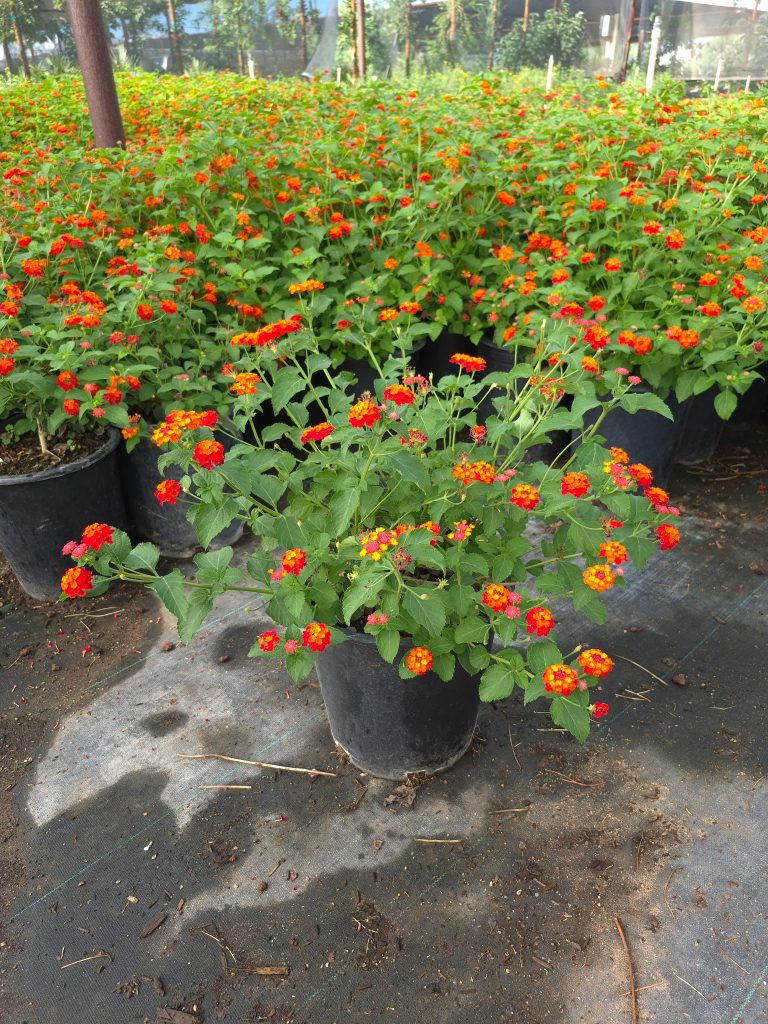
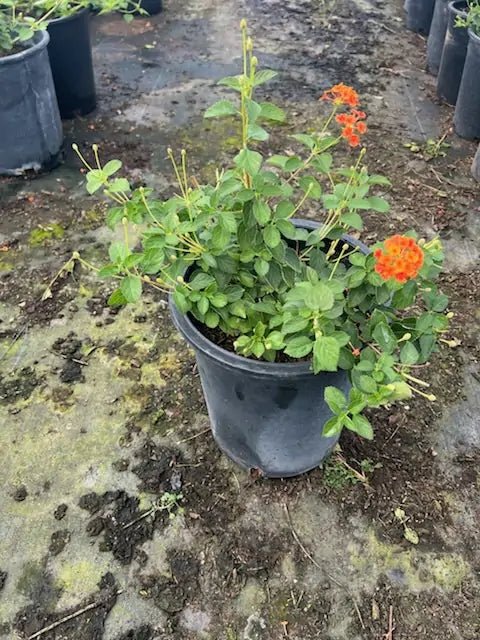
Dallas Red Lantana (Lantana camara 'Dallas Red') is one of the most striking flowering shrubs available for Phoenix Valley landscapes. Its multi-toned blooms open deep red at the center and gradually warm to orange and yellow at the edges, creating a vibrant, sunset-like display that intensifies under Phoenix's hot desert sun. It grows 1–3 feet tall and spreads 1–3 feet wide, making it a versatile choice for borders, mass plantings, slopes, and groundcover applications. Once established, it handles extreme Phoenix heat with almost no supplemental water and blooms continuously from spring through fall. Whether you're adding bold red color to a front yard in Scottsdale, lining a driveway in Chandler, or creating a wildlife-friendly garden in Mesa — Dallas Red Lantana is a top performer for Arizona desert landscapes.
Dallas Red Lantana Plant Details
| Attribute | Detail |
|---|---|
| Scientific Name | Lantana camara 'Dallas Red' |
| Common Names | Dallas Red Lantana, Red Lantana |
| Mature Height | 1–3 feet |
| Mature Width | 1–3 feet |
| Growth Rate | Fast — 12–18 inches per year in Phoenix |
| Sun | Full sun (6+ hours). Blooms most intensely in direct Phoenix heat. |
| Water | Low once established. Highly drought-tolerant. |
| USDA Zones | 8–11 (Phoenix is Zone 9b–10a) |
| Soil | Well-draining. Tolerates Arizona caliche soils. |
| Foliage | Evergreen in warm Phoenix winters; may die back in hard freezes |
| Bloom Color | Deep red center with orange and yellow outer florets; multi-toned |
| Bloom Season | Spring through fall; near year-round in Phoenix's warm climate |
Dallas Red Lantana Uses in Phoenix Landscapes
Bold Red Color for Full-Sun Beds
Dallas Red delivers one of the deepest, richest red flower colors available in any drought-tolerant shrub for Phoenix landscapes. The multi-toned blooms — deep red at center with orange and yellow edges — create a warm, vibrant effect that attracts immediate attention. Use it as a focal point in hot, south-facing beds in Scottsdale, as a bold accent at entryways, or mass plant it for a dramatic display of color that contrasts beautifully with silver-foliage plants like Texas Sage or Bush Morning Glory.
Butterfly and Pollinator Gardens
Dallas Red Lantana is a proven butterfly magnet for Phoenix. The dense flower clusters are rich in nectar and attract monarch butterflies, swallowtails, Gulf fritillaries, painted ladies, and dozens of other species throughout the blooming season. It's an excellent anchor plant for a pollinator garden in Tempe, Peoria, or Surprise, particularly when combined with New Gold Lantana, Purple Trailing Lantana, and native wildflowers for multi-season butterfly support.
Low-Water Border and Mass Planting
Dallas Red's mounding habit fills in beds and borders efficiently. Plant 2–2.5 feet apart for a dense, weed-suppressing mass planting that provides season-long color with minimal maintenance. For a 20 ft fence line: 8–10 plants; for a 40 ft border: 16–18 plants at 2.5 ft spacing. The fast growth rate means full coverage is achieved within one to two growing seasons in Phoenix's warm climate.
Slope and Erosion Control
Dallas Red Lantana is an effective slope plant for Phoenix and Scottsdale landscapes. Its spreading root system stabilizes soil on berms and slopes while its fast growth and dense canopy reduce erosion from monsoon rainfall. The continuous bloom display makes it one of the most attractive slope plants available for the Phoenix Valley — providing both functional erosion control and vibrant visual appeal.
Best Time to Plant Dallas Red Lantana in Phoenix
Fall (October–November) is ideal — warm soil supports root establishment while cooler air reduces transplant stress. Plants get 6–8 months of root development before facing their first Phoenix summer. Spring (February–April) is an effective second option. Dallas Red is tough enough to survive summer planting, but water demand is significantly higher during extreme heat — fall or spring planting is always preferred for best establishment results.
How to Plant Dallas Red Lantana
- Dig wide, not deep — excavate a hole 2–3x the root ball width at the same depth as the container.
- Check for caliche — break through any hardpan layer to ensure good drainage below the roots.
- Backfill with native soil — a light 20% organic amendment is fine; avoid heavy compost mixes.
- Spacing — 2–2.5 feet apart for mass plantings; 2.5–3 feet for borders and individual accents.
- Water basin — build a 3–4 inch soil ring around each plant to direct irrigation to the root zone.
- Mulch — apply 2–3 inches of bark or gravel mulch to conserve moisture and moderate soil temperature.
Watering Dallas Red Lantana in Phoenix
First Year Watering Schedule
- Weeks 1–2: Every 1–2 days, deep and slow (20–30 minutes)
- Months 1–2: Every 3–4 days
- Months 3–6: Every 7–10 days (every 5–7 days during peak summer)
- After Year 1: Every 10–14 days in summer; every 3–4 weeks in winter
Drip Irrigation
Place 1–2 GPH emitters 18–24 inches from the plant center. Water deeply and infrequently to train roots to go deep. Once established, Dallas Red Lantana is highly drought-tolerant — established plants in Phoenix typically thrive on watering every 10–14 days in summer, with little to no supplemental water needed in winter.
How fast does Dallas Red Lantana grow in Phoenix?
Expect 12–18 inches of new growth per year. Dallas Red is one of the faster-growing Lantanas, reaching its mature size of 1–3 feet within 1–2 growing seasons in Phoenix's warm climate.
What's the difference between Dallas Red and Radiation Lantana?
Dallas Red features deeper, richer red tones at the center of each flower cluster, with orange and yellow at the edges. Radiation Lantana is more orange-red overall. Dallas Red tends to grow slightly more upright and compact; Radiation tends to be more spreading and mounding. Both are excellent performers for Phoenix, and they look stunning planted together.
Is it drought-tolerant once established?
Yes — very much so. After its first full growing season, Dallas Red Lantana is one of the most drought-efficient flowering shrubs for Phoenix landscapes. It thrives on deep but infrequent irrigation and will maintain healthy blooming with surprisingly little water through Phoenix's hottest months.
Does it attract butterflies?
Yes — Dallas Red is one of the top butterfly plants for the Phoenix Valley. The nectar-rich flower clusters attract monarchs, swallowtails, Gulf fritillaries, and many other species throughout the long blooming season.
Will it survive a Phoenix freeze?
Dallas Red Lantana can handle light frosts and mild Phoenix winters. In the event of a hard freeze (below 28°F for extended periods), it may die back to the ground but typically re-sprouts vigorously from the roots in spring. Phoenix's Zone 9b–10a climate rarely produces freezes severe enough to kill established Lantana permanently.
You May Also Like
Radiation Lantana — bold orange-red and yellow multi-toned blooms on a spreading mounding form; a natural companion to Dallas Red for warm-toned color combinations.
New Gold Lantana — solid golden-yellow blooms that provide striking contrast when planted alongside Dallas Red's deep reds.
Purple Trailing Lantana — cool purple blooms on a low trailing form that complements Dallas Red's warm tones beautifully in mixed groundcover plantings.
White Trailing Lantana — crisp white blooms that create an elegant, high-contrast pairing with Dallas Red's vibrant reds and oranges.
How Many Dallas Red Lantana Do I Need?
Dallas Red matures around 2 to 3 feet wide. For a dense, weed-suppressing color carpet, plant on 2.5 ft centers. Use this coverage guide:
| Area to Cover | Plants Needed (2.5 ft spacing) |
|---|---|
| 50 sq ft | 8 plants |
| 100 sq ft | 16 plants |
| 200 sq ft | 32 plants |
| 400 sq ft | 64 plants |
On a slope, tighten to 2 ft centers so the canopy closes faster for erosion control. As single mounding accents in a border, give each plant 3 ft of room.
Dallas Red Lantana Season-by-Season in Phoenix
- Spring (Feb–Apr): New growth flushes and the deep-red clusters open as soil warms. Prime planting window. A late-February cut-back clears frost-nipped tips and shapes the plant.
- Summer (May–Sep): Peak bloom. Color intensifies in extreme and reflected heat off walls and pavement with no afternoon shade needed. Monsoon rains (Jul–Sep) drive an extra flush.
- Fall (Oct–Nov): Strong continued bloom as temperatures ease. A good secondary planting window while soil stays warm.
- Winter (Dec–Jan): Often holds leaves and some color through mild Valley winters. A hard freeze below about 28°F can knock it to the ground; it re-sprouts vigorously from the roots in spring. Cover young plants on hard frost nights.
At a Glance
✔ Pollinator-Friendly ✔ Hummingbird-Friendly ✔ Heat-Loving (Reflected-Heat Tolerant) ✔ Drought-Tolerant ✔ Low-Maintenance ✔ Deer & Rabbit-Resistant
Plant It With
- Confetti Lantana: a multicolor Lantana that blends pink, purple, and orange beside the deep reds.
- Irene Lantana: lavender and yellow bi-color for cool-toned contrast.
- Christine Lantana: yellow-pink-orange Lantana for a warm blended drift.
- Texas Sage: silver foliage and purple bloom that sets off the red beautifully.
Is Dallas Red Lantana Right for Your Yard?
Dallas Red Lantana thrives in full sun and reflected heat, in lean, well-draining or caliche soil, and asks for little water once established. It is ideal for bold color beds, slopes, mass plantings, and low-water pollinator gardens. It is not the best fit if you have a shady yard, soil that stays wet, or pets and small children who graze on plants, since the berries are toxic if eaten.
Share