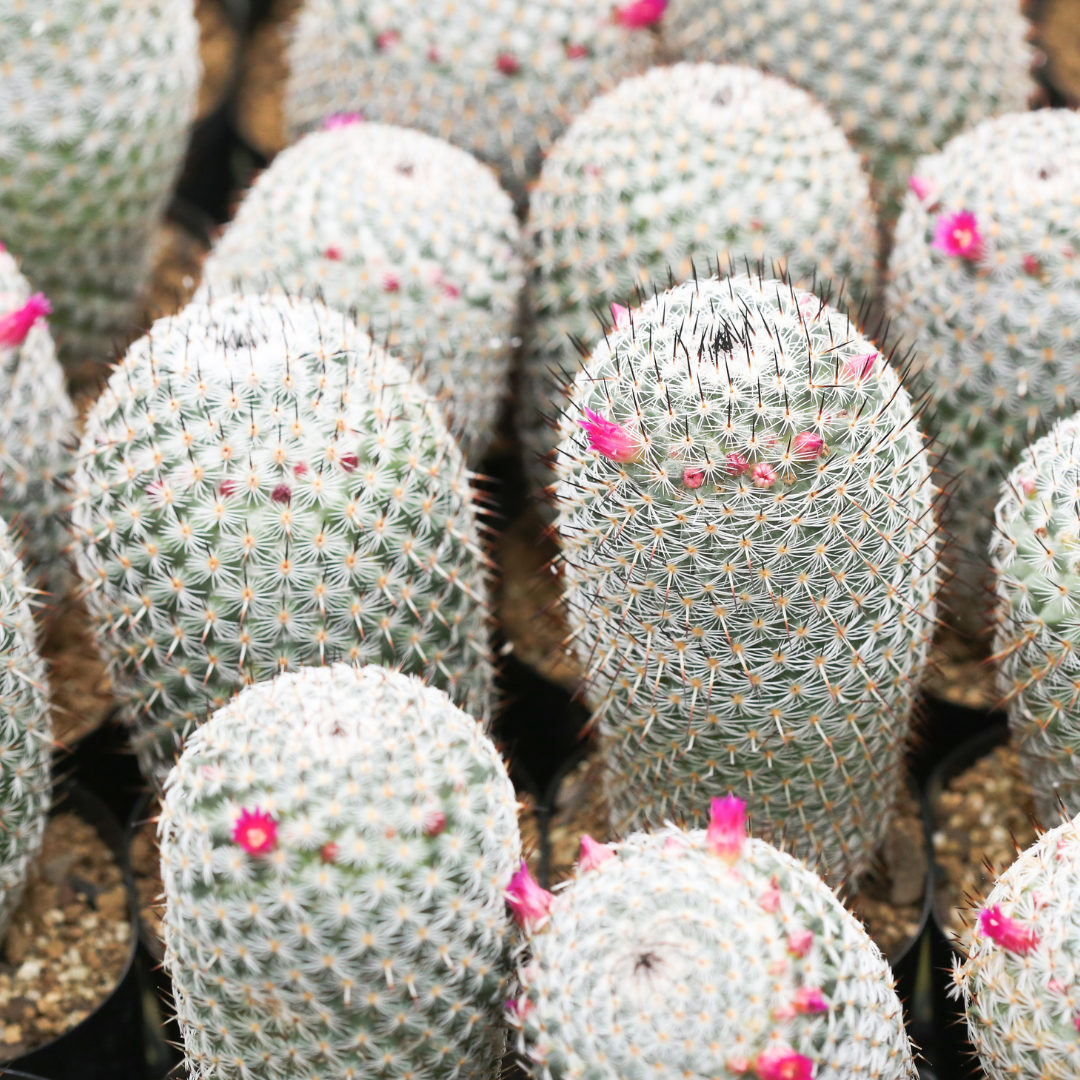

Cylindrical Pincushion Cactus
Cylindrical Pincushion Cactus
Couldn't load pickup availability
A Compact Clustering Cactus Perfect for Phoenix Containers & Rock Gardens
Cylindrical Pincushion Cactus (Mammillaria elongata) is one of the most charming small cacti for Phoenix Valley gardens. Native to Central Mexico, this compact species forms tight clusters of finger-like cylindrical stems covered in star-shaped spine patterns in gold, copper, or white. Growing just 6–12 inches tall and wide, it produces rings of delicate pink, red, or yellow flowers in spring. Whether you’re filling a windowsill planter in Scottsdale, adding detail to a Chandler rock garden, or building a tabletop cactus collection in Mesa — Cylindrical Pincushion Cactus delivers big personality in a small package.
Cylindrical Pincushion Cactus Plant Details
| Attribute | Detail |
|---|---|
| Scientific Name | Mammillaria elongata |
| Common Names | Cylindrical Pincushion Cactus, Gold Lace Cactus, Lady Finger Cactus |
| Mature Height | 6–12 inches |
| Mature Width | 6–12 inches (clusters spread over time) |
| Growth Rate | Moderate — clusters fill out within 2–3 years |
| Sun | Full sun to partial shade. Tolerates bright indirect light. |
| Water | Very low. Extremely drought-tolerant. |
| USDA Zones | 9–11 (Phoenix is Zone 9b–10a) |
| Soil | Well-draining. Thrives in Arizona caliche and rocky soils. |
| Foliage | Evergreen — cylindrical green stems with decorative spines year-round |
| Bloom Season | Spring — rings of pink, red, or yellow flowers |
Cylindrical Pincushion Cactus Uses in Phoenix Landscapes
Container Gardens & Windowsill Displays
Cylindrical Pincushion Cactus is ideal for containers — its compact size and attractive clustering habit make it a standout in decorative pots on patios, balconies, and windowsills. Use a shallow bowl or wide planter to let the clusters spread naturally. Mix with other small Mammillaria species for a stunning miniature cactus garden.
Rock Gardens & Desert Beds
Tuck Cylindrical Pincushion Cactus between boulders and among gravel in rock gardens. The finger-like stems provide fine-textured detail that contrasts beautifully with larger cacti like Golden Barrel and Totem Pole. Plant in groups of 3–5 for maximum visual impact at the front of desert beds.
Mixed Succulent Arrangements
Combine with other Three Timbers succulents like Coral Aloe, Echeveria, and small agaves for a diverse arrangement. The golden spine clusters of Mammillaria elongata add warm tones and texture to mixed plantings.
Best Time to Plant Cylindrical Pincushion Cactus in Phoenix
Fall (October–November) or spring (February–April) are both excellent planting windows. Avoid summer transplanting and winter planting when overnight temps drop below 40°F. Container plants can be planted or repotted any time of year indoors.
How to Plant Cylindrical Pincushion Cactus
- Choose a container with drainage holes or a well-draining garden spot
- Use cactus mix soil or native soil with added perlite for drainage
- Plant at the same depth as the nursery pot — never bury the stems
- Spacing — 6–12 inches apart in garden beds; clusters can touch in containers
- Top dress with small gravel or crushed rock for a clean look
- No water basin needed — this cactus prefers fast drainage
Watering Cylindrical Pincushion Cactus in Phoenix
First Year Watering Schedule
- Weeks 1–2: Every 5–7 days, light watering
- Month 1–3: Every 10–14 days
- Month 3–6: Every 2–3 weeks
- After Year 1: Monthly in summer; no water in winter
Drip Irrigation
A single 0.5-GPH emitter placed 6 inches from the base is sufficient. Overwatering is the most common killer of Mammillaria — when in doubt, skip the watering.
How big does Cylindrical Pincushion Cactus get?
Individual stems reach about 6 inches tall, but clusters can spread to 12 inches or more over several years. It stays compact, making it ideal for small spaces and containers.
Does it bloom?
Yes! Mature plants produce rings of small pink, red, or yellow flowers around the tops of the stems in spring. The flower display is one of the highlights of this species.
Is it cold hardy in Phoenix?
Hardy to about 25–30°F, which covers most Phoenix Valley winters. Protect from extended freezes below 25°F with frost cloth or by moving containers indoors.
Are the spines sharp?
The spines are relatively soft and star-shaped compared to other cacti, but they can still prick. Handle with gloves or wrap with newspaper when transplanting.
You May Also Like
- Golden Barrel Cactus — Classic round desert cactus, great larger companion piece
- Totem Pole Cactus — Smooth columnar cactus for vertical contrast
- Coral Aloe — Orange-blooming succulent rosette, perfect pairing in mixed beds
- Bunny Ears Cactus — Another Opuntia family member with flat decorative pads
Share