
Cow's Horn Euphorbia
Cow's Horn Euphorbia
Couldn't load pickup availability
A Sculptural Desert Statement Plant for Phoenix Landscapes
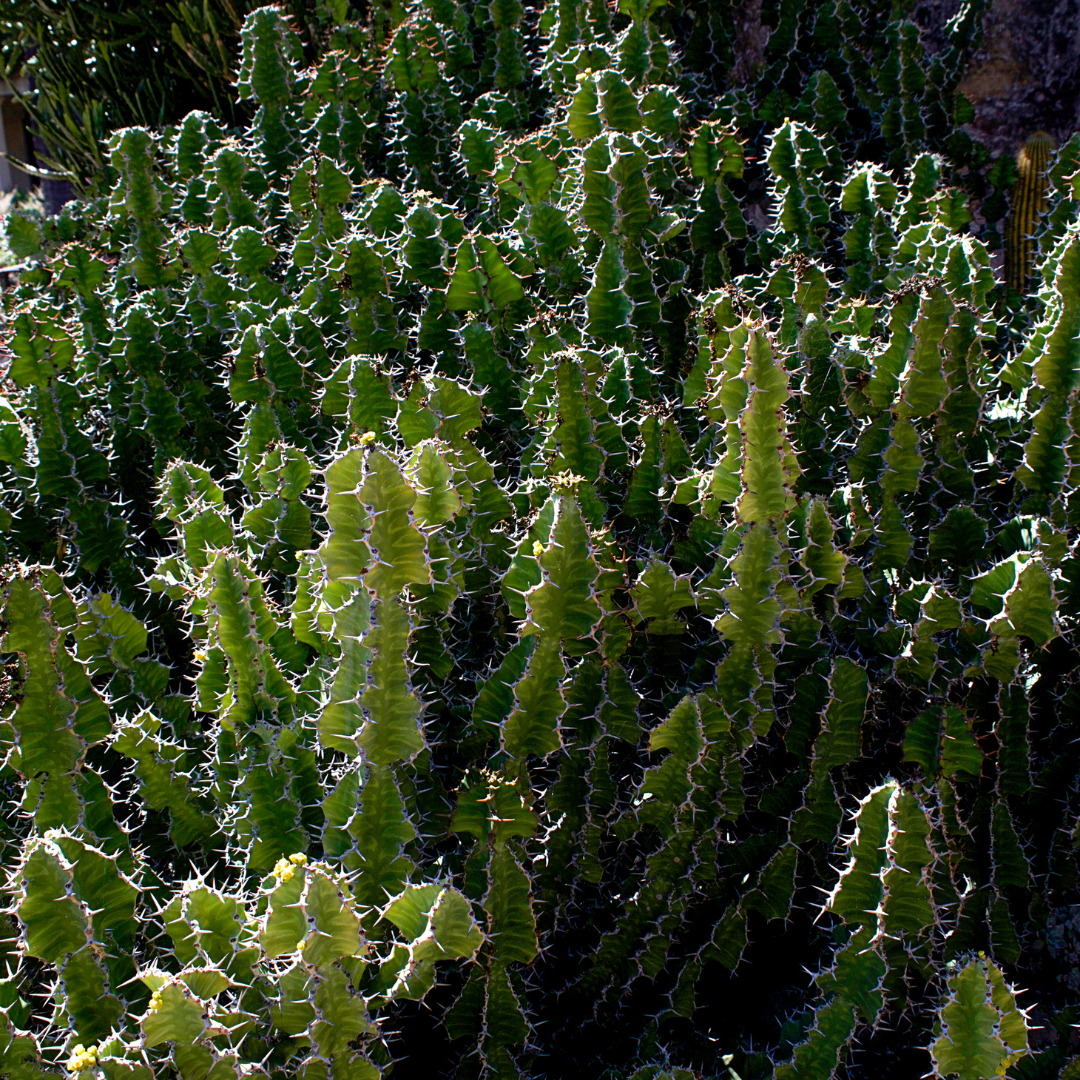
Cow’s Horn Euphorbia (Euphorbia grandicornis) is one of the most architecturally striking succulents available for Phoenix Valley gardens. Native to South Africa, this dramatic plant features thick, three-winged stems lined with paired horn-like spines that create a bold, zigzag silhouette reaching 2–6 feet tall. Whether you’re designing a modern Scottsdale courtyard, building a sculptural succulent collection in Mesa, or adding a conversation-starting specimen to a Chandler patio — Cow’s Horn Euphorbia delivers unforgettable architectural impact year-round.
Cow’s Horn Euphorbia Plant Details
| Attribute | Detail |
|---|---|
| Scientific Name | Euphorbia grandicornis |
| Common Names | Cow’s Horn Euphorbia, Big Horn Euphorbia, Cow Horn |
| Mature Height | 2–6 feet |
| Mature Width | 2–4 feet |
| Growth Rate | Moderate — 1–2 feet per year in Phoenix |
| Sun | Full sun to partial shade. Handles reflected heat. |
| Water | Very low once established. Highly drought-tolerant. |
| USDA Zones | 9b–11 (Phoenix is Zone 9b–10a) |
| Soil | Well-draining. Adapts to Arizona caliche soils. |
| Foliage | Evergreen — green three-winged stems year-round |
| Spines | Paired horn-like spines along stem ridges |
Cow’s Horn Euphorbia Uses in Phoenix Landscapes
Sculptural Focal Points & Container Gardens
Cow’s Horn Euphorbia is a natural showstopper. Its dramatic zigzag stems and horn-like spines make it an ideal focal point in gravel beds, raised planters, or large decorative containers on patios. One specimen can anchor an entire garden vignette. Pairs beautifully with smooth river rock and decomposed granite.
Modern & Contemporary Landscapes
The geometric, angular form of this euphorbia is tailor-made for modern desert design. Use it alongside concrete walls, steel planters, or minimalist compositions with Golden Barrel Cactus and Blue Yucca for a striking contemporary aesthetic popular in Scottsdale and Paradise Valley.
Succulent & Cactus Collections
Add Cow’s Horn Euphorbia to mixed succulent beds alongside other Three Timbers favorites like Coral Aloe, Coast Aloe, and Desert Spoon. Its upright, branching form provides excellent vertical contrast among rosette-forming and ground-hugging succulents.
Best Time to Plant Cow’s Horn Euphorbia in Phoenix
Fall (October–November) is ideal — warm soil promotes root establishment while cooler air reduces transplant stress. Spring (February–April) is the second-best window. Avoid summer planting and any planting when overnight temperatures drop below 40°F.
How to Plant Cow’s Horn Euphorbia
- Dig wide, not deep — 2–3x the root ball width, same depth
- Check for caliche — break through any hardpan layer for drainage
- Backfill with native soil — no amendments needed
- Spacing — 3–4 feet from other plants to allow full spread
- Water basin — build a 3–4 inch ring to direct water to roots
- Mulch — 2–3 inches of gravel mulch; avoid organic mulch touching stems
Caution: Euphorbia sap is a milky latex that can irritate skin and eyes. Wear gloves when handling or pruning.
Watering Cow’s Horn Euphorbia in Phoenix
First Year Watering Schedule
- Weeks 1–2: Every 3–4 days, deep and slow
- Month 1–2: Every 5–7 days
- Month 3–6: Every 10–14 days
- After Year 1: Every 3–4 weeks summer; monthly or less in winter
Drip Irrigation
Place one 1-GPH emitter 12 inches from the base. Established Cow’s Horn Euphorbia is extremely drought-tolerant — overwatering causes stem rot and is the most common cause of failure in Phoenix.
How big does Cow’s Horn Euphorbia get in Phoenix?
Expect 2–6 feet tall and 2–4 feet wide at maturity. Growth rate is moderate, reaching impressive size within 3–5 years in the Phoenix climate.
Is Cow’s Horn Euphorbia cold hardy in Phoenix?
It’s hardy to about 28–30°F, which works for most Phoenix Valley locations. In rare hard freezes, protect with frost cloth or bring container plants under cover.
Is the sap dangerous?
The milky latex sap can irritate skin and eyes. Always wear gloves when pruning or handling, and keep away from eyes and pets. The plant is otherwise very low-maintenance.
Does it bloom?
Yes, it produces small yellowish-green flowers along the stem ridges in spring, though the plant is primarily grown for its dramatic structural form rather than its blooms.
You May Also Like
- Coral Aloe — Striking orange-red blooms and blue-green rosettes, perfect succulent companion
- Golden Barrel Cactus — Round, golden-spined desert classic that pairs beautifully in modern designs
- Desert Spoon — Silvery-blue rosette with dramatic flower stalk, excellent architectural contrast
- Blue Yucca — Bold blue-gray foliage with similar sculptural presence
Share