

Confetti Lantana
Confetti Lantana
Couldn't load pickup availability
Phoenix's Most Colorful Multi-Hued Landscape Shrub — Confetti Lantana
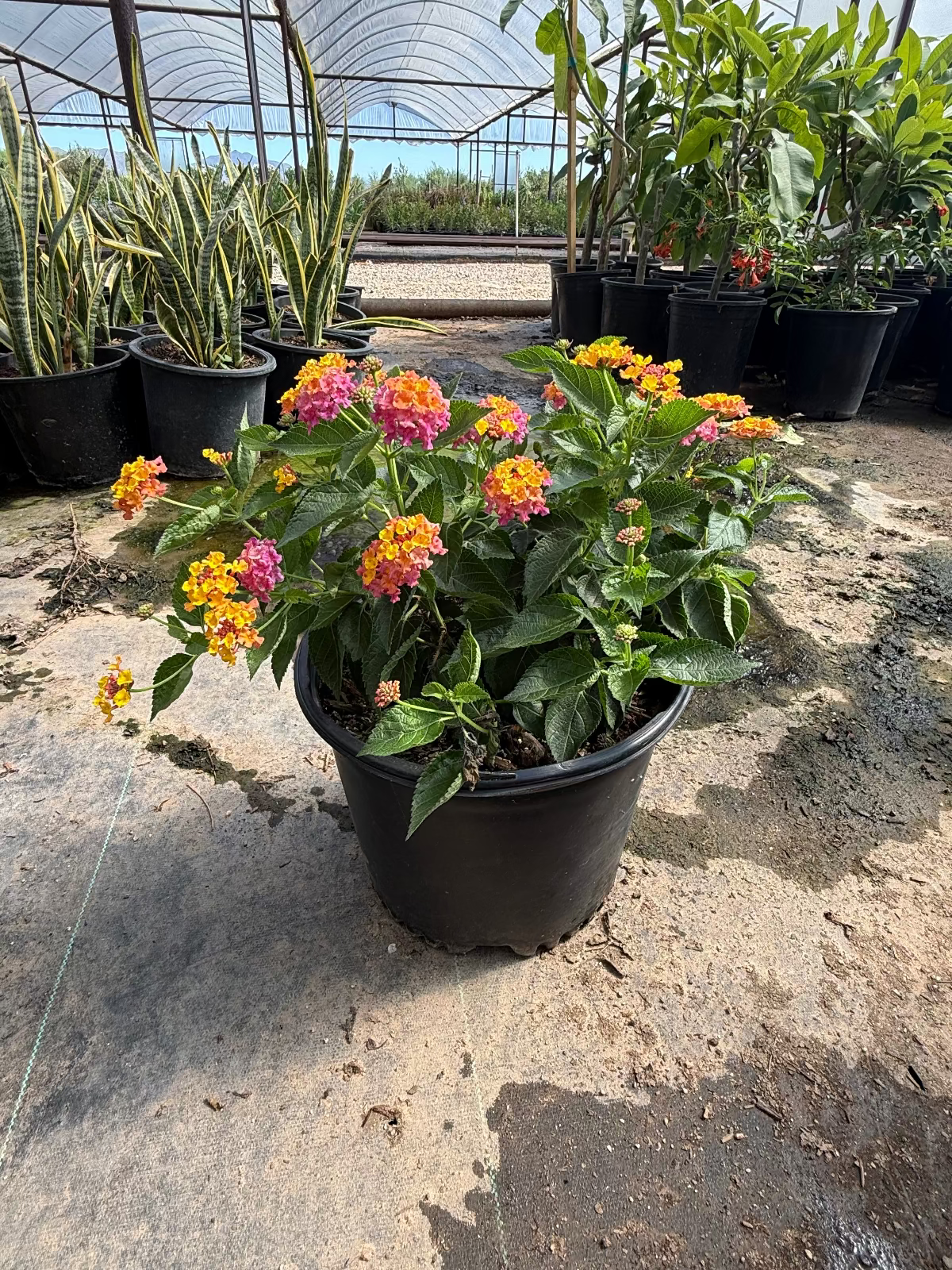
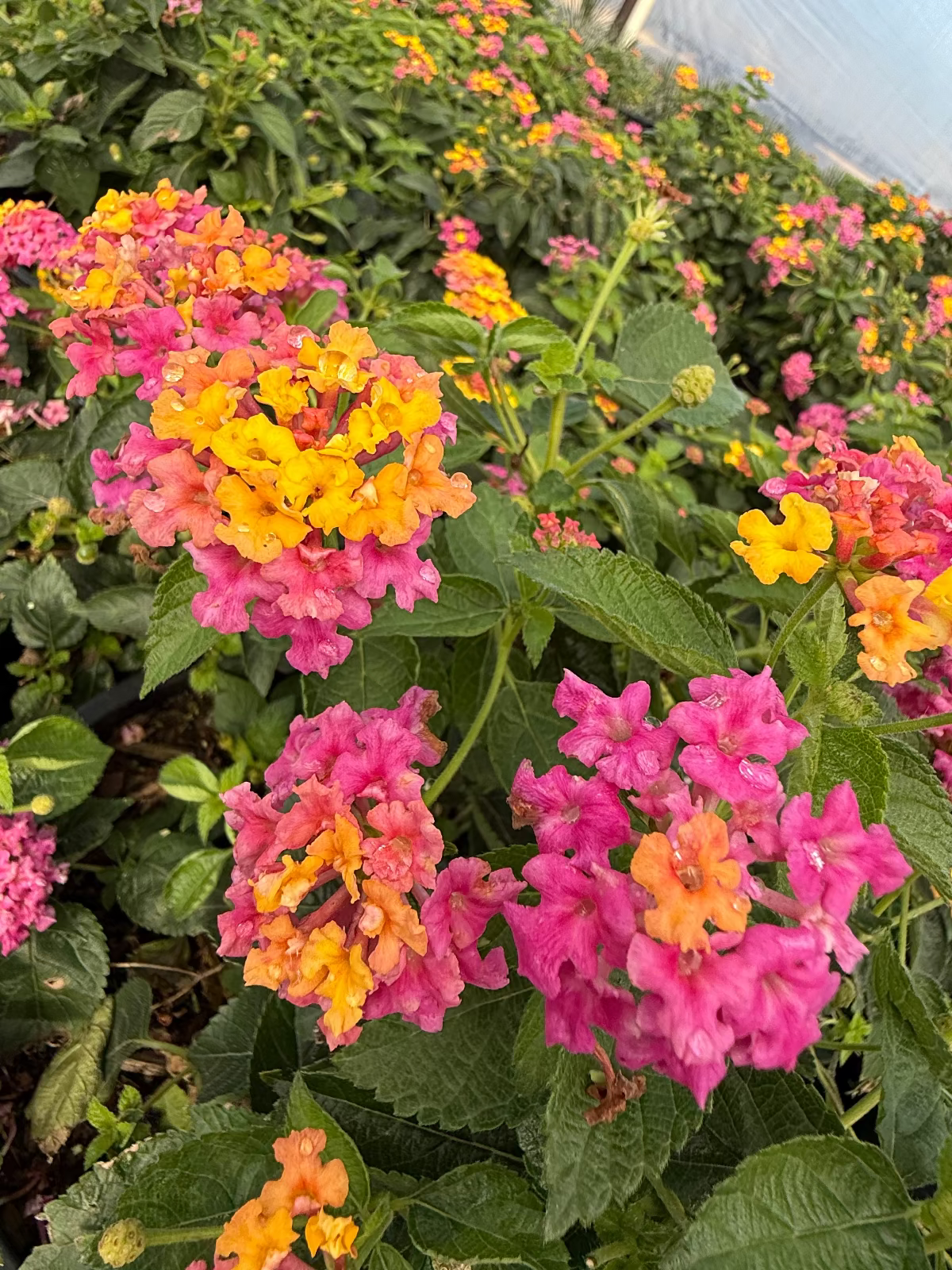
Confetti Lantana (Lantana camara 'Confetti') is one of the Phoenix Valley's most spectacular flowering shrubs, delivering a dazzling non-stop fireworks display of pink, purple, orange, and yellow blooms from spring through fall. This compact, mounding beauty earns its name — clusters of tiny flowers in multiple colors appear together on every stem, creating a confetti-like effect that draws hummingbirds and butterflies by the dozens. It's tough, drought-tolerant, and thrives in Phoenix's heat, making it perfect for color-forward landscapes throughout Scottsdale, Mesa, Gilbert, and the greater Phoenix Valley.
Confetti Lantana Plant Details
| Attribute | Detail |
|---|---|
| Scientific Name | Lantana camara 'Confetti' |
| Common Names | Confetti Lantana, Multi-color Lantana |
| Mature Height | 1–3 feet |
| Mature Width | 1–3 feet |
| Growth Rate | Fast — 12–24 inches per year in Phoenix |
| Sun | Full sun (6+ hrs). Blooms most heavily with intense light and heat. |
| Water | Low once established. Drought-tolerant after the first season. |
| USDA Zones | 9–11 (Phoenix is Zone 9b–10a) |
| Soil | Well-draining. Adapts readily to Arizona caliche soils. |
| Foliage | Semi-evergreen — may drop some leaves in winter, regrows quickly |
| Bloom Color | Multi-colored — pink, purple, orange, and yellow in the same cluster |
| Bloom Season | Spring through fall (March–November in Phoenix) |
Confetti Lantana Uses in Phoenix Landscapes
Color-Forward Borders and Focal Points
Confetti Lantana's simultaneous multi-color blooms make it one of the most visually striking plants in any Phoenix landscape. Plant it as a focal point in mixed borders, at driveway entries, or at corners of planting beds for maximum impact. For a bold color display along a fence or wall, space plants 3 feet apart — a 20-foot fence line needs 7 plants for a dense, flowering hedge effect. Pairs beautifully with Texas Sage, Bougainvillea, and Desert Marigold for a layered desert color palette.
Pollinator and Wildlife Garden
Confetti Lantana is one of the best pollinator plants available for Phoenix gardens. Its nectar-rich flower clusters are irresistible to hummingbirds, monarch butterflies, swallowtails, and native bees throughout its long bloom season. Plant it near water features, vegetable gardens, or seating areas in Chandler, Tempe, or Peoria to create a lively and colorful wildlife habitat.
Low-Water Color Hedge
At 1–3 feet tall and equally wide, Confetti Lantana works beautifully as a low-growing informal hedge or screen planting. For a knee-height color border, space plants 24–30 inches apart. Because it blooms so heavily and grows relatively fast, a Confetti Lantana hedge provides excellent season-long color while requiring very little supplemental water once established.
Container and Patio Planting
Confetti Lantana performs exceptionally well in large containers and elevated planters on Phoenix patios and courtyards. Its compact form, continuous bloom season, and drought tolerance make it one of the best container plants for full-sun patio locations. It also thrives in the heat radiating off concrete and stone — a trait that makes it ideal for poolside planting throughout the Phoenix Valley.
Best Time to Plant Confetti Lantana in Phoenix
Spring (March–April) is the prime planting window for Confetti Lantana in Phoenix. Warmer temperatures immediately trigger new growth and bloom production, and the plant has the full spring and fall bloom seasons ahead to establish before its first Phoenix winter. Fall planting (October–November) is also very effective — soil is still warm, and the plant settles in quickly before the cooler months. Avoid the peak of summer (July–August) if possible for newly planted specimens, though established Lantana handles Phoenix summers without issue.
How to Plant Confetti Lantana
- Dig wide, not deep — 2–3x the root ball width, same depth as the container.
- Check for caliche — break through any hardpan layer to ensure drainage. Lantana dislikes wet feet.
- Backfill with native soil — a light 20% organic blend is fine, but straight native soil works too.
- Spacing — 24–36 inches apart for hedges; 3–4 feet for individual shrub planting.
- Water basin — build a 3–4 inch ring to direct water to the root zone during establishment.
- Mulch — 2–3 inches of bark or gravel mulch to retain moisture and moderate soil temperature.
Watering Confetti Lantana in Phoenix
First Year Watering Schedule
- Weeks 1–2: Every 1–2 days, deep and slow (20–30 min)
- Month 1–2: Every 3–4 days
- Month 3–6: Every 7–10 days (5–7 days in peak summer heat)
- After Year 1: Every 10–14 days in summer; every 3–4 weeks in winter
Drip Irrigation
Place drip emitters 18–24 inches from the plant's crown. A 1 GPH emitter per plant is sufficient. Once established, Confetti Lantana is very drought-tolerant and can handle extended dry periods. Overwatering is the most common mistake — lean watering encourages more blooms.
Does Confetti Lantana bloom all summer in Phoenix? Yes. Confetti Lantana is one of the few plants that actually thrives in Phoenix's summer heat and keeps blooming through July, August, and September — when many other landscape plants struggle. It's one of the best summer color plants available for the Phoenix Valley.
How big does Confetti Lantana get in Phoenix? In Phoenix's warm climate, Confetti Lantana typically reaches 2–3 feet tall and equally wide within 2–3 growing seasons. It can be pruned in early spring to maintain a more compact shape and stimulate new growth.
Is Confetti Lantana the same as other Lantana varieties? Confetti is distinguished by its multi-colored flower clusters showing pink, purple, orange, and yellow simultaneously — unlike solid-color varieties like Dallas Red (red/orange) or New Gold (solid yellow). This multi-color display is what makes Confetti Lantana especially popular for ornamental landscapes.
Does Confetti Lantana attract butterflies in Phoenix? Yes — it's one of the top butterfly and hummingbird plants for Phoenix Valley gardens. Monarch butterflies, painted ladies, swallowtails, and native bees are all heavy visitors throughout the bloom season.
Does Confetti Lantana need to be cut back in Phoenix? Light pruning in early spring (February–March) helps maintain shape and removes any frost-damaged growth. Heavy pruning should be avoided during the growing season to preserve blooms.
You May Also Like
- Dallas Red Lantana — Bold red and orange blooms on a slightly larger, spreading Lantana variety.
- New Gold Lantana — Vibrant solid-gold blooms on a compact, groundcover-style Lantana.
- Irene Lantana — A lavender and yellow bi-color Lantana with equally long bloom season.
- Purple Trailing Lantana — A low-spreading groundcover Lantana with rich purple blooms.
- Texas Sage — A classic Phoenix companion shrub that blooms purple after summer rains.
How Many Confetti Lantana Do I Need?
Confetti Lantana matures around 2 to 3 feet wide. For a solid color carpet or low border, plant on 2.5 ft centers. Use this coverage guide:
| Area to Cover | Plants Needed (2.5 ft spacing) |
|---|---|
| 50 sq ft | 8 plants |
| 100 sq ft | 16 plants |
| 200 sq ft | 32 plants |
| 400 sq ft | 64 plants |
For a low informal hedge, space plants 24 to 30 inches apart so they knit into a continuous color band. As individual mounding accents, give each plant 3 ft of room to round out fully.
Confetti Lantana Season-by-Season in Phoenix
- Spring (Feb–Apr): New growth flushes as soil warms and the multicolor clusters begin. Prime planting window. A light cut-back in late February removes any frost-nipped tips and shapes the plant for a full season.
- Summer (May–Sep): Peak bloom. Thrives in extreme and reflected heat off walls, pavement, and poolside concrete with no afternoon shade needed. Monsoon rains (Jul–Sep) push an extra flush of color.
- Fall (Oct–Nov): Continued heavy bloom as temperatures ease. A strong secondary planting window while soil is still warm.
- Winter (Dec–Jan): Semi-evergreen and often still showing color in mild Valley winters. Young plants can be frost-nipped below about 30°F and a hard freeze may knock it to the ground; it rebounds from the roots in spring. Cover young plants on hard frost nights.
At a Glance
✔ Pollinator-Friendly ✔ Hummingbird-Friendly ✔ Heat-Loving (Reflected-Heat Tolerant) ✔ Drought-Tolerant ✔ Pool-Friendly (Low-Litter) ✔ Low-Maintenance ✔ Deer & Rabbit-Resistant
Plant It With
- Dallas Red Lantana: bold red-orange Lantana for a hotter color block beside the multicolor.
- Irene Lantana: lavender and yellow bi-color with the same long bloom season.
- Christine Lantana: a sister yellow-pink-orange Lantana for a blended drift.
- Texas Sage: classic purple-blooming desert shrub for a layered backdrop.
Is Confetti Lantana Right for Your Yard?
Confetti Lantana thrives in full sun and reflected heat, in lean, well-draining or caliche soil, and asks for very little water once established. It is ideal for color borders, low hedges, patio containers, and poolside beds. It is not the best fit if you have deep shade, soil that stays soggy, or pets and small children who graze on plants, since the berries are toxic if eaten.
Share