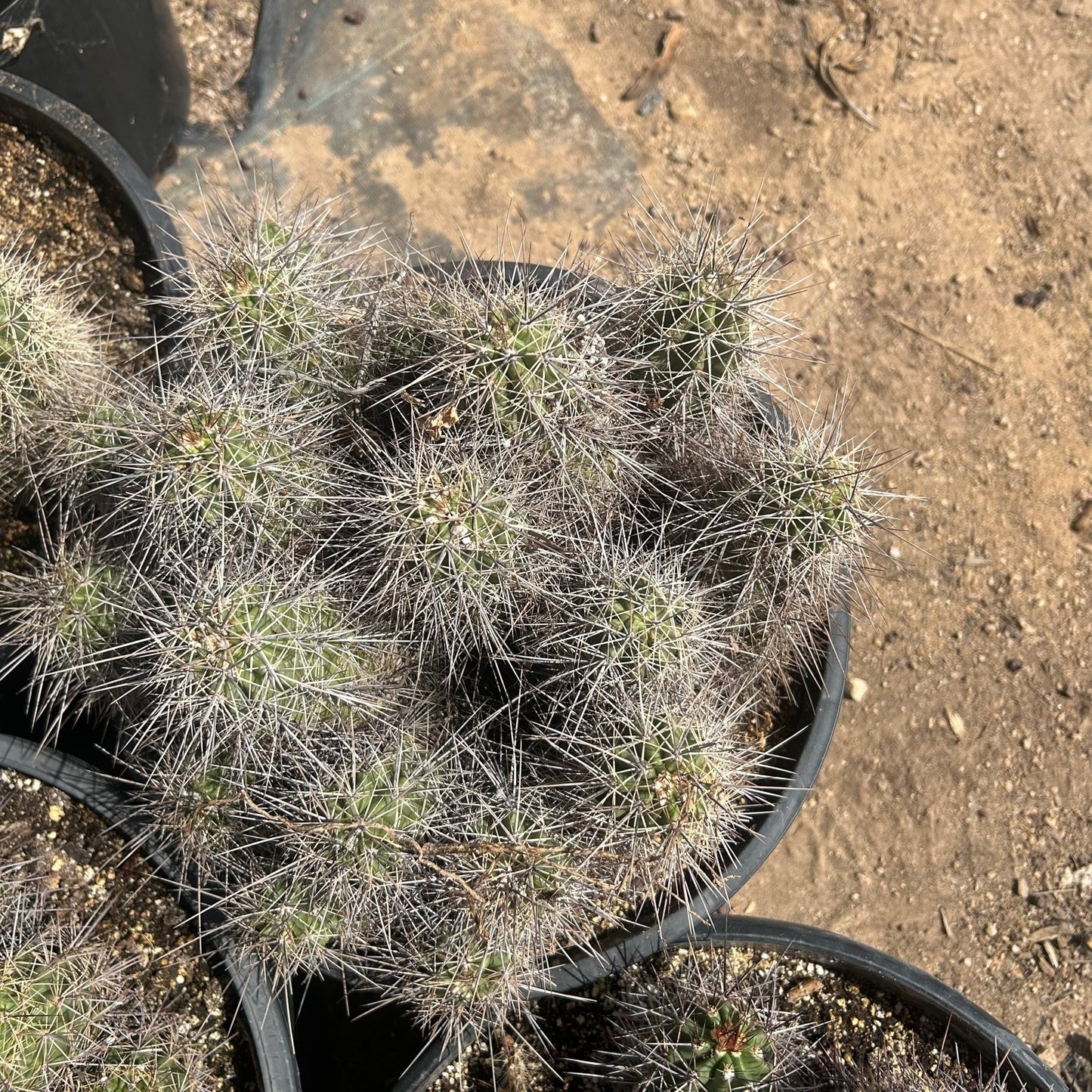


Claret Cup
Claret Cup
Couldn't load pickup availability
Phoenix's Most Colorful Desert Cactus — Vivid Red Spring Blooms
Claret Cup Cactus (Echinocereus triglochidiatus) is one of the most eye-catching flowering cacti you can grow in the Phoenix Valley. This compact, clumping species produces brilliant cup-shaped red to orange blooms in spring that attract hummingbirds from across your neighborhood. Cold-hardy down to the low teens, it handles Phoenix winters without a blink — and laughs at triple-digit summers. Whether you're adding color to a Scottsdale rock garden, building a pollinator-friendly border in Chandler, or tucking a specimen into a Mesa patio container — Claret Cup Cactus delivers show-stopping blooms with almost zero maintenance.
Claret Cup Cactus Plant Details
| Attribute | Detail |
|---|---|
| Scientific Name | Echinocereus triglochidiatus |
| Common Names | Claret Cup, Claret Cup Hedgehog, Kingcup Cactus, Mojave Mound Cactus |
| Mature Height | 6–12 inches |
| Mature Width | 12–24 inches (clumps widen over time) |
| Growth Rate | Slow to moderate — adds 2–4 new stems per year in Phoenix |
| Sun | Full sun (6+ hrs). Handles reflected heat from walls and patios. |
| Water | Very low once established. Highly drought-tolerant. |
| USDA Zones | 5–11 (Phoenix is Zone 9b–10a) |
| Soil | Well-draining. Adapts to Arizona caliche and rocky native soils. |
| Foliage | Evergreen — cylindrical green stems stay green year-round |
| Bloom Color | Vivid red to orange-red, spring through early summer |
| Cold Hardiness | Tolerates temps down to 10–15°F — one of the hardiest cacti |
Claret Cup Cactus Uses in Phoenix Landscapes
Rock Garden Focal Point
Claret Cup's compact mounding habit and explosive red blooms make it a natural centerpiece for rock gardens. Plant it among boulders with decomposed granite groundcover for a clean, modern desert look. Pair with Blue Elf Aloe or Golden Barrel for year-round color contrast.
Hummingbird & Pollinator Gardens
The tubular red flowers are irresistible to hummingbirds — Claret Cup is one of the best hummingbird plants for Phoenix. Combine with Chuparosa and Penstemon along a walkway or patio edge for a spring pollinator corridor that will keep your yard buzzing with life.
Patio Containers & Courtyard Accents
At just 6–12 inches tall, Claret Cup thrives in large terracotta or ceramic pots. Place it on a south-facing patio in Tempe or Gilbert for maximum blooms. Use cactus mix soil and ensure the container has drainage holes. It makes a stunning conversation piece when the flowers pop in March and April.
Low-Water Desert Borders
Line a front walkway or driveway edge with Claret Cup spaced 18–24 inches apart for a low, colorful border that needs almost no water once established. Mix with Strawberry Hedgehog and Desert Spoon for textural variety along a Peoria or Glendale streetscape.
Best Time to Plant Claret Cup Cactus in Phoenix
Fall (October–November) is ideal — the soil is still warm enough for root establishment, but cooler air reduces transplant stress. Your Claret Cup will have 6–8 months to settle in before its first Phoenix summer. Spring (February–April) is the second-best window. Avoid planting in June through September when ground temps can scorch newly placed roots.
How to Plant Claret Cup Cactus
- Dig wide, not deep — 2–3× the root ball width, same depth. Claret Cup has shallow roots that spread outward.
- Check for caliche — break through any hardpan layer for drainage. Standing water will rot the roots fast.
- Backfill with native soil — no amendments needed. A small amount of coarse sand is fine for heavy clay.
- Spacing — 18–24 inches apart for a border; 2–3 feet for individual specimen display.
- Water basin — build a 2–3 inch ring to direct water to the root zone during establishment.
- Top dress — 1–2 inches of gravel mulch to keep the base dry and prevent rot.
Watering Claret Cup Cactus in Phoenix
First Year Watering Schedule
- Weeks 1–2: Every 3–4 days, slow and deep (10–15 min drip)
- Month 1–3: Every 7–10 days
- Month 3–6: Every 10–14 days (every 7 days in peak summer)
- After Year 1: Every 2–3 weeks summer; monthly or less in winter
Drip Irrigation
Place a single 1 GPH emitter 6–8 inches from the base. Run for 20–30 minutes per session during establishment. Once established, Claret Cup can survive on rainfall alone in most Phoenix-area landscapes, but a monthly deep soak in summer keeps it looking its best.
How fast does Claret Cup Cactus grow in Phoenix?
Claret Cup grows slowly, adding 2–4 new stems to its clump each year. A 1-gallon plant will form a nice 12-inch mound within 3–4 years. Patience pays off — mature clumps covered in red blooms are absolutely spectacular.
Is Claret Cup Cactus cold hardy?
Yes — it's one of the most cold-tolerant cacti available. Claret Cup handles temps down to 10–15°F, making it bulletproof through Phoenix winters and even suitable for higher-elevation Arizona gardens in Prescott or Flagstaff.
Does Claret Cup attract hummingbirds?
Absolutely. The tubular red flowers are specifically shaped and colored to attract hummingbirds. Spring blooming season (March–May in Phoenix) brings Anna's and Costa's hummingbirds to your garden daily.
Can I grow Claret Cup in a container?
Yes. Use a wide, shallow pot with drainage holes and a fast-draining cactus mix. Place in full sun. Container-grown Claret Cups bloom just as well as in-ground plants and make excellent patio accents.
What's the difference between Claret Cup and Strawberry Hedgehog?
Both are Echinocereus species with showy spring blooms. Claret Cup has red to orange-red cup-shaped flowers and is more cold-hardy. Strawberry Hedgehog has magenta-pink flowers and a slightly more upright growth habit. Both thrive in Phoenix — plant them together for a stunning spring color show.
You May Also Like
- Strawberry Hedgehog Cactus — Magenta-pink spring blooms on a compact hedgehog cactus. Another hummingbird favorite.
- Native Hedgehog Cactus — Arizona's native Echinocereus with brilliant spring flowers and easy care.
- Golden Barrel Cactus — The iconic golden globe cactus. Pairs beautifully with Claret Cup's red blooms.
- Blue Barrel Cactus — Striking blue-gray barrel that adds cool contrast to Claret Cup's warm reds.
- Easter Lily Cactus — Showy pink trumpet blooms on a compact clumping cactus. Great companion plant.
How Many Claret Cup Do I Need?
Claret Cup is a low, clumping cactus that matures 12 to 24 inches wide. Plant single as a rock-garden or container focal point, or in odd-numbered groups of 3 to 5 spaced about 2 feet apart so the clumps grow into a colorful mass of spring bloom. For a low color border, figure roughly 2 foot centers:
| Border Length | Plants Needed (2 ft spacing) |
|---|---|
| 6 ft | 3 to 4 plants |
| 12 ft | 6 to 7 plants |
| 20 ft | 10 to 11 plants |
| 30 ft | 15 to 16 plants |
It stays low and spiny rather than barbed, but still give clumps a foot or so of clearance from walkway and patio edges so passersby do not brush the spines.
Claret Cup Season-by-Season in Phoenix
- Spring (Feb to Apr): The main event. Vivid red to orange-red cup-shaped flowers open March through May and pull in Anna's and Costa's hummingbirds daily. A strong second planting window once hard frost passes.
- Summer (May to Sep): Shrugs off triple-digit heat and reflected sun. Monsoon rain (Jul to Sep) is usually all the water an established clump needs, so keep supplemental irrigation light to avoid rot.
- Fall (Oct to Nov): Prime planting season. Warm soil and mild air let the shallow roots settle in before winter.
- Winter (Dec to Jan): Exceptionally cold-hardy, taking temperatures down to 10 to 15°F, so it sails through Valley winters and even higher-elevation Arizona cold with no cover. Keep it dry in winter: cold plus soggy soil is its only real weakness.
At a Glance
✔ Arizona Native ✔ Heat-Loving (Reflected-Heat Tolerant) ✔ Drought-Tolerant ✔ Pollinator-Friendly ✔ Hummingbird-Friendly ✔ Evergreen ✔ Low-Maintenance ✔ Deer & Rabbit-Resistant ✔ Cold-Hardy to 15°F
Plant It With
- Native Hedgehog: a fellow Arizona-native Echinocereus with brilliant spring flowers, perfect for a hedgehog color grouping.
- Golden Barrel: the iconic golden globe whose form and color set off Claret Cup's red blooms.
- Blue Barrel: a cool blue-gray barrel that contrasts beautifully with the warm red flowers.
- Easter Lily Cactus: another compact clumping bloomer that extends the spring flower show.
Is Claret Cup Right for Your Yard?
Claret Cup is an excellent fit for a full-sun rock garden, hummingbird border, or patio container with sharp drainage, and its cold hardiness makes it one of the few cacti that works in both low-desert Phoenix and higher-elevation Arizona yards. It wants lean, fast-draining ground: break through caliche so water never stands. It is not a fit for a shady spot or a heavy, poorly draining bed, where the shallow roots are prone to rot.
Share