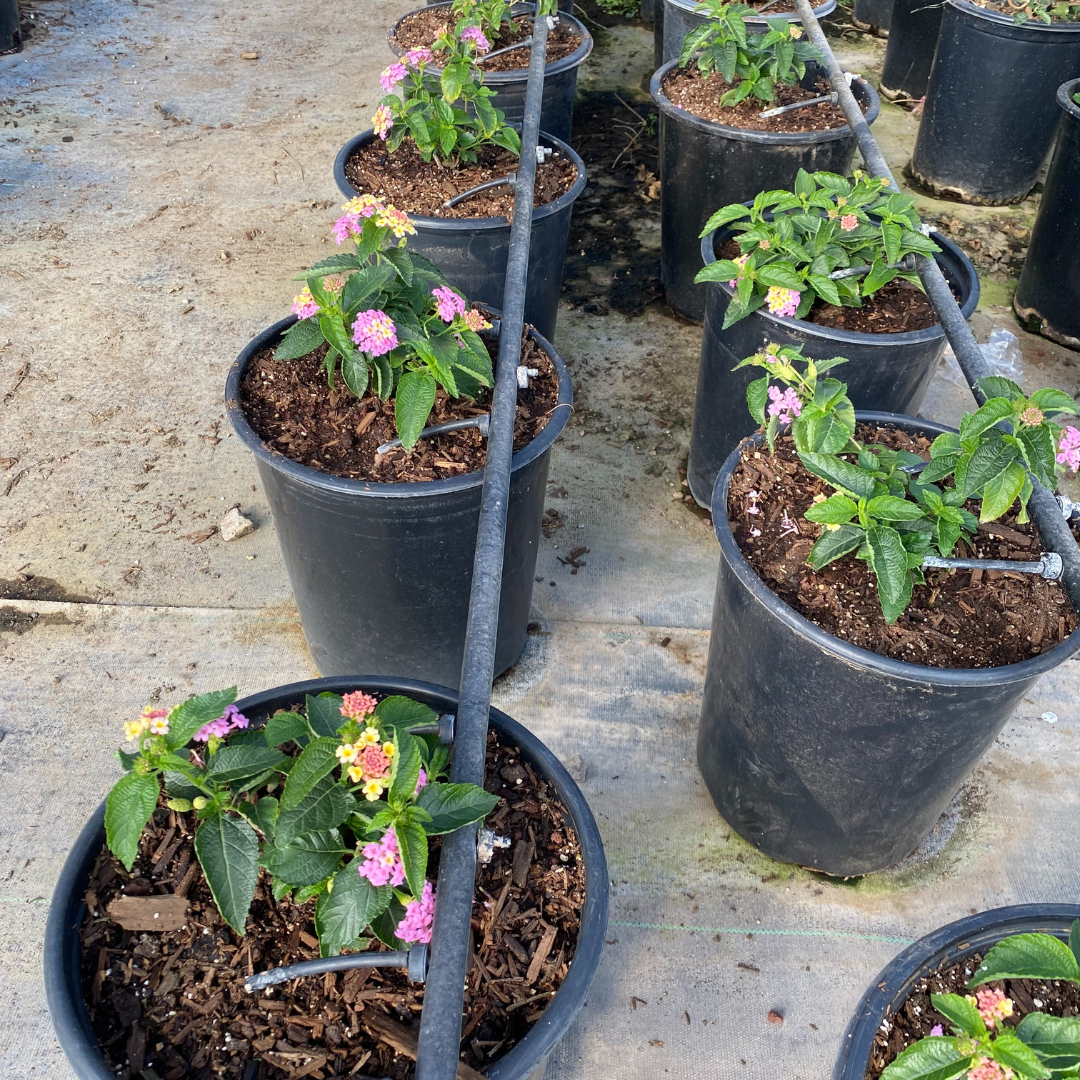


Christine Lantana
Christine Lantana
Couldn't load pickup availability
Non-Stop Color That Laughs at Phoenix Heat
Christine Lantana (Lantana camara 'Christine') is the ultimate set-it-and-forget-it color machine for Phoenix Valley landscapes. This heat-loving perennial pumps out clusters of yellow, pink, and orange flowers from spring through late fall — and often year-round in mild Phoenix winters. Butterflies and hummingbirds flock to it, while deer and rabbits leave it alone. Whether you're filling a border bed in Scottsdale, covering a slope in Mesa, or adding pops of color to a xeriscape in Chandler — Christine Lantana delivers relentless blooms with almost zero effort.
Christine Lantana Plant Details
| Attribute | Detail |
|---|---|
| Scientific Name | Lantana camara 'Christine' |
| Common Names | Christine Lantana, Multicolor Lantana |
| Mature Height | 1–3 feet |
| Mature Width | 1–3 feet |
| Growth Rate | Fast — 1–2 feet per year in Phoenix |
| Sun | Full sun (6+ hrs). Thrives in reflected heat from walls and pavement. |
| Water | Very low once established. Extremely drought-tolerant. |
| USDA Zones | 9–11 (Phoenix is Zone 9b–10a) |
| Soil | Well-draining. Thrives in poor, rocky, and caliche soils. |
| Foliage | Semi-evergreen — holds leaves most of the year in Phoenix |
| Bloom Color | Yellow, pink, and orange multicolor clusters |
| Bloom Season | Spring through fall; often year-round in Phoenix |
Christine Lantana Uses in Phoenix Landscapes
Mass Color Plantings & Ground Cover
Christine Lantana is a top choice for mass plantings along commercial properties, HOA common areas, and residential beds across the Phoenix metro. Space 2–3 feet apart for a dense, colorful carpet that suppresses weeds and requires almost no maintenance once established. The multicolor blooms create a vibrant tapestry from street level.
Butterfly & Pollinator Gardens
Few plants attract more butterflies than Lantana. Plant Christine Lantana alongside Butterfly Bush, Cherry Red Sage, and Ruellia for a continuous-blooming pollinator garden that keeps butterflies, bees, and hummingbirds coming back all season long in Scottsdale, Gilbert, and Tempe.
Slope & Erosion Control
Christine Lantana's spreading habit and tough root system make it excellent for stabilizing slopes and hillsides. It fills in quickly, tolerates poor soil, and requires no irrigation once established — ideal for graded lots and retention basins in Peoria, Surprise, and Goodyear.
Best Time to Plant Christine Lantana in Phoenix
Spring (March–May) is the ideal planting window for Lantana — it loves warm soil and establishes fastest during the warm months. Fall (October–November) also works well. Avoid planting in the coldest winter weeks (December–January) as Lantana can be frost-sensitive when young.
How to Plant Christine Lantana
- Dig wide, not deep — 2–3× the root ball width, same depth.
- Check for caliche — break through any hardpan layer for drainage.
- Backfill with native soil — Lantana prefers lean soil; skip heavy amendments.
- Spacing — 2–3 ft apart for ground cover; 3 ft for individual mounding plants.
- Water basin — build a 3–4 inch ring around the plant to direct water to roots.
- Mulch — 2–3 inches of gravel mulch to retain moisture and keep roots cool.
Watering Christine Lantana in Phoenix
First Year Watering Schedule
- Weeks 1–2: Every 2–3 days, deep and slow (15–20 min)
- Months 1–2: Every 3–4 days
- Months 3–6: Every 7–10 days (5–7 days in peak summer)
- After Year 1: Every 14–21 days summer; monthly or less in winter
Drip Irrigation
Place one 1 GPH emitter 12 inches from the base. Lantana is extremely drought-tolerant once established — overwatering causes leggy growth and fewer flowers. Let the soil dry out between waterings for the best bloom performance.
How fast does Christine Lantana grow in Phoenix?
Christine Lantana grows quickly — 1–2 feet per year — and reaches its full 1–3 foot size within a single growing season. It starts blooming almost immediately after planting in warm weather.
Is Christine Lantana drought tolerant?
Extremely. Once established, it needs only deep watering every 2–3 weeks in summer and can often survive on rainfall alone in winter. It's one of the toughest flowering plants for Phoenix heat.
Does Christine Lantana come back after winter?
In Phoenix's mild winters, Christine Lantana is typically semi-evergreen and may keep blooming through winter. In rare hard freezes, it may die back to the ground but rebounds vigorously from the roots in spring.
Is Christine Lantana toxic to pets?
Lantana berries can be toxic if ingested by pets or children. The plant is deer and rabbit resistant due to its aromatic foliage. Plant away from areas where pets might graze.
You May Also Like
- Confetti Lantana — a similar multicolor Lantana variety with a slightly different color mix.
- Cherry Red Sage — vivid red hummingbird-magnet shrub that pairs well with Lantana's warm tones.
- Angelita Daisy — a low-growing yellow daisy that makes a perfect ground-level companion.
- Ruellia — drought-tough purple perennial that provides cool-toned contrast to Lantana's warm blooms.
How Many Christine Lantana Do I Need?
Christine Lantana matures around 2 to 3 feet wide, so for a solid color carpet plant on 2.5 ft centers. Use this coverage guide:
| Area to Cover | Plants Needed (2.5 ft spacing) |
|---|---|
| 50 sq ft | 8 plants |
| 100 sq ft | 16 plants |
| 200 sq ft | 32 plants |
| 400 sq ft | 64 plants |
For single mounding accents in a border, space 3 ft apart so each plant rounds out fully. On a slope, tighten to 2 ft centers for faster knit-together coverage and erosion control.
Christine Lantana Season-by-Season in Phoenix
- Spring (Feb–Apr): New growth flushes as soil warms and the first color clusters open. Prime planting window. A hard cut-back in late February resets leggy plants for a fuller season.
- Summer (May–Sep): Peak performance. Blooms nonstop through extreme and reflected heat against west walls and pavement. The monsoon rains (Jul–Sep) trigger an extra flush of color. No afternoon shade needed.
- Fall (Oct–Nov): Strong second wave of bloom as temperatures ease. A good secondary planting window for establishing before winter.
- Winter (Dec–Jan): Semi-evergreen and often still blooming in mild Valley winters. Young plants can be frost-nipped below about 30°F, and a hard freeze may knock it to the ground; it rebounds from the roots in spring. Cover young plants on hard frost nights.
At a Glance
✔ Pollinator-Friendly ✔ Hummingbird-Friendly ✔ Heat-Loving (Reflected-Heat Tolerant) ✔ Drought-Tolerant ✔ Low-Maintenance ✔ Deer & Rabbit-Resistant
Plant It With
- Confetti Lantana: a sister multicolor Lantana for a blended, mixed-color drift.
- Cherry Red Sage: vivid red hummingbird magnet that echoes Lantana's warm tones.
- Angelita Daisy: low yellow daisy that fills the front edge at ground level.
- Desert Ruellia: drought-tough purple perennial for cool-toned contrast.
Is Christine Lantana Right for Your Yard?
Christine Lantana thrives in full sun and reflected heat, in lean, well-draining or caliche soil, and asks for almost no water once established. It is ideal for mass color, slopes, and low-water pollinator beds. It is not the best fit if you have a shady yard, heavy soil that stays wet, or pets and small children who graze on plants, since the berries are toxic if eaten.
Share