
Chaparral Sage
Chaparral Sage
Couldn't load pickup availability
Fragrant Purple Blooms That Perfume Your Phoenix Garden
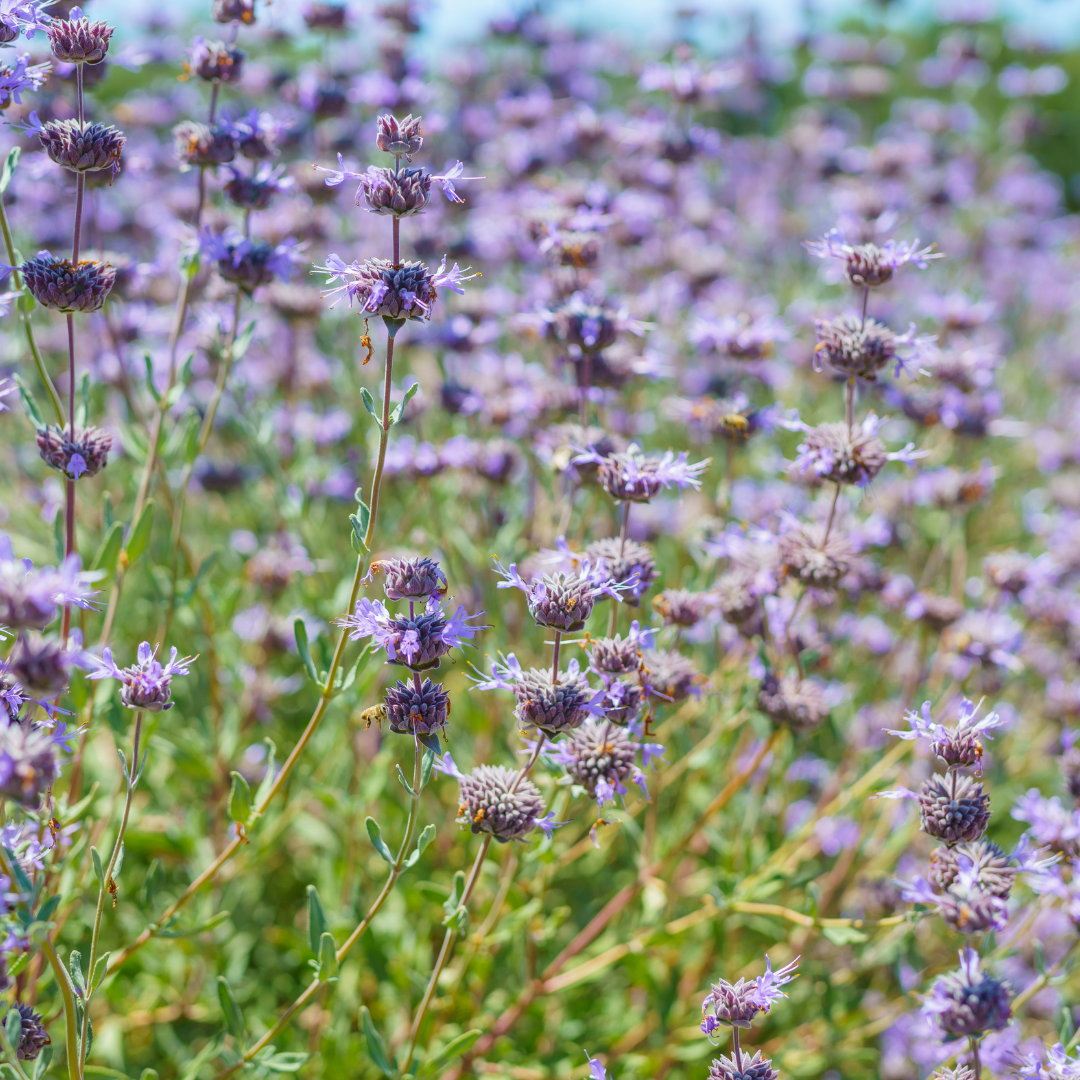
Chaparral Sage (Salvia clevelandii), also known as Cleveland Sage, is one of the most aromatic and visually striking shrubs you can grow in the Phoenix Valley. Growing 3–5 feet tall with a rounded 3–5 foot spread, this evergreen perennial produces waves of lavender-purple flower spikes from spring through summer that fill the air with an intoxicating fragrance. It's extremely drought tolerant, thrives in full sun, and attracts hummingbirds, butterflies, and bees all season. Whether you're planting a fragrant border in Scottsdale, creating a pollinator garden in Gilbert, or adding low-water color to a Mesa courtyard — Chaparral Sage is the ultimate desert-smart flowering shrub.
Chaparral Sage Plant Details
| Attribute | Detail |
| Scientific Name | Salvia clevelandii |
| Common Names | Chaparral Sage, Cleveland Sage, Fragrant Sage |
| Mature Height | 3–5 feet |
| Mature Width | 3–5 feet |
| Growth Rate | Moderate to Fast — 1–2 feet per year in Phoenix |
| Sun | Full sun (6+ hrs). Handles reflected heat from walls. |
| Water | Very low once established. Highly drought-tolerant. |
| USDA Zones | 8–11 (Phoenix is Zone 9b–10a) |
| Soil | Well-draining. Thrives in lean, rocky Arizona caliche soils. |
| Foliage | Evergreen — aromatic silver-green leaves year-round |
| Bloom Color | Lavender-purple flower spikes |
| Bloom Season | Spring through summer (March–July) |
Chaparral Sage Uses in Phoenix Landscapes
Fragrant Border & Pathway Planting
Plant Chaparral Sage along walkways, patios, and entryways where you'll brush against the foliage and release its incredible scent. The aromatic leaves smell like a blend of lavender and rosemary — a natural perfume for your outdoor living spaces. Space plants 3–4 feet apart for a continuous fragrant border in Tempe, Chandler, or Peoria.
Pollinator & Butterfly Garden
The lavender-purple flower spikes are a top-tier nectar source for hummingbirds, butterflies, and native bees. Plant Chaparral Sage as a centerpiece in a dedicated pollinator garden or mass several together for maximum visual and ecological impact. Pairs beautifully with Mexican Bush Sage and Fairy Duster for multi-season blooms.
Low-Water Color & Xeriscape Design
For homeowners in Glendale, Scottsdale, or Mesa looking to reduce water use without sacrificing beauty, Chaparral Sage is a standout choice. Once established, it thrives on deep watering every 2–3 weeks in summer. Its silver-green foliage looks elegant even when not in bloom, and the purple flowers provide months of nonstop color.
Best Time to Plant Chaparral Sage in Phoenix
Fall (October–November) is the ideal planting window. Warm soil encourages fast root establishment while cooler air reduces transplant stress, giving the plant 6–8 months to settle in before its first Phoenix summer. Spring (February–April) is the second-best option. Avoid planting in the peak summer heat if possible.
How to Plant Chaparral Sage
- Dig wide, not deep — 2–3x the root ball width, same depth as the container.
- Check for caliche — break through any hardpan layer to ensure proper drainage.
- Backfill with native soil — Chaparral Sage prefers lean soil; don't over-amend.
- Spacing — 3–4 feet apart for borders; 4–5 feet for individual specimens.
- Water basin — build a 3–4 inch soil ring around the root zone to direct water to roots.
- Mulch — 2–3 inches of gravel or decomposed granite (avoid heavy organic mulch near the crown).
Watering Chaparral Sage in Phoenix
First Year Watering Schedule
Weeks 1–2: Every 1–2 days, deep and slow (15–20 min). Month 1–2: Every 3–4 days. Month 3–6: Every 7–10 days (5–7 days in peak summer). After Year 1: Every 14–21 days summer; every 4–6 weeks winter.
Drip Irrigation
Place 1–2 emitters 12–18 inches from the base. A 1–2 GPH emitter running 30 minutes per session works well. Established Chaparral Sage is extremely drought tolerant — overwatering is more harmful than underwatering. Ensure excellent drainage.
How fast does Chaparral Sage grow in Phoenix?
Chaparral Sage grows at a moderate to fast rate, adding 1–2 feet per year. Most plants reach full size within 2–3 years in optimal Phoenix conditions.
Is Chaparral Sage fragrant?
Very. The silver-green leaves release a powerful lavender-rosemary scent when touched or brushed. It's one of the most aromatic landscape plants available for Phoenix gardens.
Does Chaparral Sage attract hummingbirds?
Yes — the lavender-purple flower spikes are a magnet for hummingbirds, butterflies, and native bees throughout the bloom season.
Can Chaparral Sage handle Phoenix summer heat?
Absolutely. It thrives in full sun and reflected heat. Just ensure well-draining soil — it's far more sensitive to overwatering and poor drainage than to heat.
You May Also Like
Mexican Bush Sage — Velvety purple spikes that bloom all fall. Extends your garden's color season.
Mexican Blue Sage — Vivid blue tubular flowers from spring through fall. Another stunning sage option.
Fairy Duster — Pink powder-puff blooms on a compact native shrub. Great pollinator companion.
Texas Sage — Classic Arizona purple-blooming shrub. Thrives in the same conditions as Chaparral Sage.
How Many Chaparral Sage Do I Need?
At a mature width of 3 to 5 ft, space plants about 3.5 ft apart for a full fragrant border or mass. Use this guide:
| Border Run | Plants Needed (3.5 ft spacing) |
|---|---|
| 10 ft | 3 plants |
| 20 ft | 6 plants |
| 30 ft | 8–9 plants |
| 40 ft | 11–12 plants |
As individual specimens give each plant 4 to 5 ft of room. Group in odd numbers of 3 or 5 for a fuller drift of purple and a stronger wave of fragrance.
Chaparral Sage Season-by-Season in Phoenix
- Spring (Feb–Apr): Lavender-purple spikes open and fresh silver-green growth flushes. A great second planting window and peak fragrance season.
- Summer (May–Sep): Bloom continues into early summer, then the plant rests in the most extreme heat. Thrives on reflected heat and lean soil. Go easy on water: it resents soggy roots far more than drought, and monsoon humidity can stress overwatered plants.
- Fall (Oct–Nov): Prime planting season. Cooler air keeps the aromatic foliage looking sharp as roots establish.
- Winter (Dec–Jan): Evergreen and aromatic through Valley winters, cold-hardy to roughly 15°F so frost is rarely an issue here. Shear lightly after bloom to keep it dense.
At a Glance
✔ Pollinator-Friendly ✔ Hummingbird-Friendly ✔ Heat-Loving (Reflected-Heat Tolerant) ✔ Drought-Tolerant ✔ Evergreen ✔ Low-Maintenance ✔ Deer & Rabbit-Resistant ✔ Cold-Hardy to 15°F
Plant It With
- Texas Sage: a larger purple-blooming desert shrub that thrives in the same lean, sunny conditions.
- Baja Fairy Duster: red powder-puff blooms and ferny texture for a pollinator pairing.
- Autumn Sage (Furman's Red): a smaller salvia in red that extends the bloom season at the front of the bed.
- Red Yucca: coral flower spikes and architectural form that contrast the soft sage foliage.
Is Chaparral Sage Right for Your Yard?
Yes if you want a fragrant, low-water flowering shrub for a full-sun bed, pathway, or xeriscape, with lean well-draining or caliche soil and a love of pollinators. It is deer and rabbit resistant and cold-hardy for the Valley. Not a fit if your soil stays wet or you tend to overwater: poor drainage and heavy summer irrigation are the fastest way to lose it.
Customer Reviews
The sage I received was healthy, two days later, after keeping it in the shade and monitoring it's moisture level, it began to die. I planted it promptly. it had no root system. when i turned the pot on it's side to remove it and put the plant in the hole, it had not established any roots. only the top 1/4 of the plant came out leaving me a huge pot of dirt that the plant was sitting on. the entire plant died the next day. i'll never buy from this company again.
Share