

Cat Claw Acacia
Cat Claw Acacia
Couldn't load pickup availability
Arizona's Toughest Native Wildlife Tree — Cat Claw Acacia
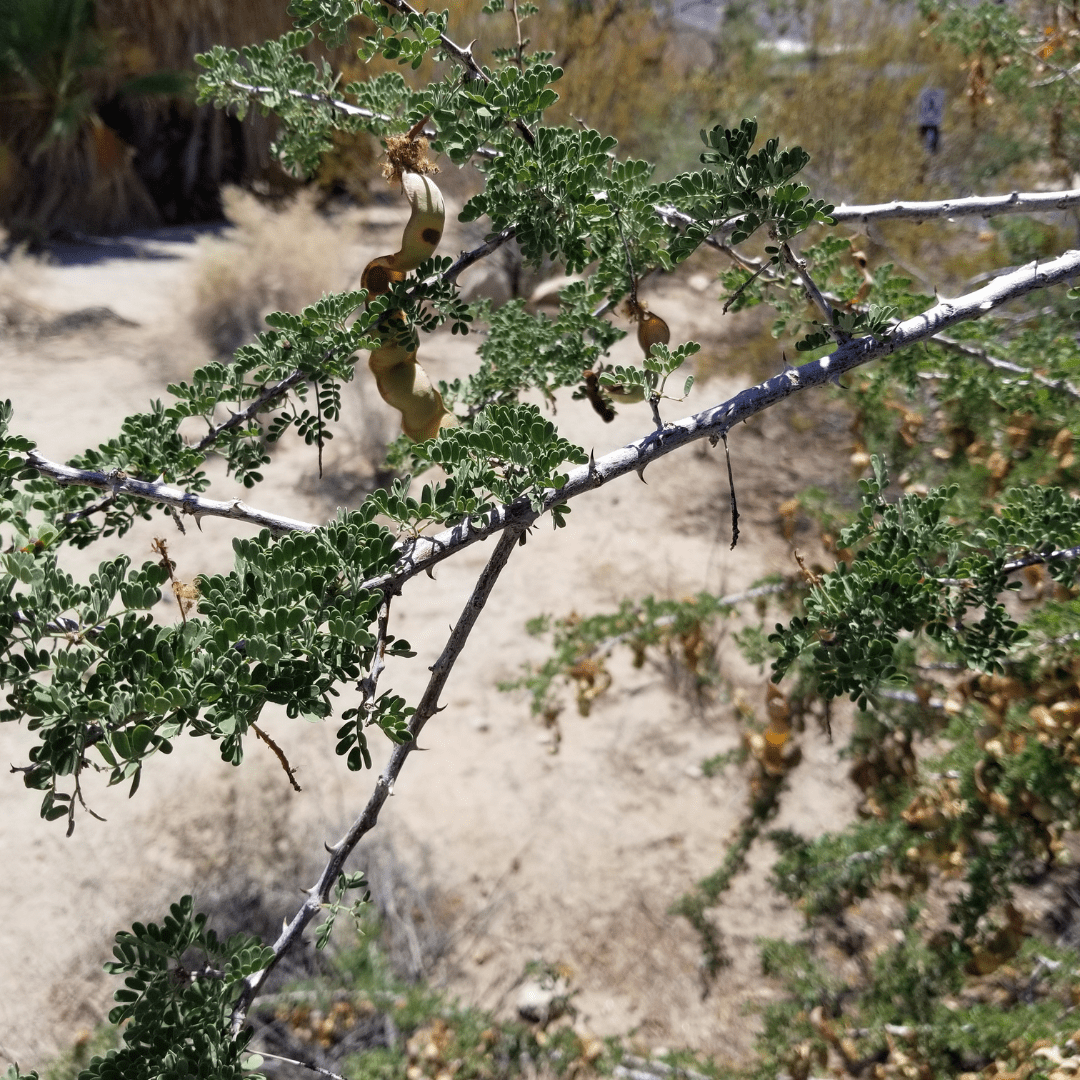
The Cat Claw Acacia (Senegalia greggii) is Arizona's toughest native desert tree-shrub, built for the harshest conditions the Sonoran Desert can produce. Named for its distinctive curved, hook-like thorns that grab like a cat's claw, this resilient native is a cornerstone of Phoenix Valley wildlife gardens, desert wash plantings, and naturalized landscapes. Fragrant creamy-yellow flower spikes attract native bees and hummingbirds in abundance, while its dense thorny form provides critical nesting habitat for desert birds. Once established in Phoenix, Scottsdale, Tempe, Mesa, or Chandler, the Cat Claw Acacia practically cares for itself — requiring almost no supplemental irrigation after the first year.
Cat Claw Acacia Plant Details
| Attribute | Detail |
|---|---|
| Scientific Name | Senegalia greggii (formerly Acacia greggii) |
| Common Names | Cat Claw Acacia, Catclaw Acacia, Wait-a-Minute Bush, Gregg's Catclaw |
| Mature Height | 10–15 feet (can reach 20+ feet with consistent water) |
| Mature Width | 10–20 feet |
| Growth Rate | Moderate — 1–2 feet per year in Phoenix |
| Sun | Full sun (6+ hrs). Handles intense reflected heat from walls and pavement. |
| Water | Very low once established. Survives entirely on rainfall in Phoenix after year 2. |
| USDA Zones | 8–11 (Phoenix is Zone 9b–10a) |
| Soil | Well-draining. Naturally adapted to Arizona's rocky caliche soils. |
| Foliage | Semi-deciduous — drops leaves in cold winters; leafs back in spring |
| Thorns | Curved hook-like thorns along stems — excellent wildlife habitat, natural barrier |
| Bloom | Creamy-yellow fragrant catkin spikes, spring and summer (April–August) |
| Native Status | Native to the Sonoran and Chihuahuan Deserts of Arizona, New Mexico, California, and Texas |
Cat Claw Acacia Uses in Phoenix Landscapes
Wildlife & Pollinator Gardens
The Cat Claw Acacia is one of the highest-value wildlife plants available for Phoenix Valley landscapes. Its fragrant spring and summer blooms attract native bees, honey bees, butterflies, and hummingbirds in extraordinary numbers — making it an essential component of any certified wildlife garden in Gilbert, Mesa, or Peoria. The dense, thorny branching structure provides prime nesting habitat for cactus wrens, curved-bill thrashers, and black-tailed gnatcatchers. Seed pods feed Gambel's quail, white-winged doves, and small desert mammals from late summer through fall.
Desert Wash & Naturalized Plantings
In nature, Cat Claw Acacia thrives along desert washes, arroyos, and rocky hillsides — exactly the conditions found in many Phoenix-area back yards and retention basins. Use it to anchor a naturalized desert wash design along with Desert Willow, Palo Verde, and native bunch grasses. It stabilizes banks and slopes effectively, and its irregular, natural form looks at home in any Sonoran Desert garden. Three plants spaced 10–12 feet apart create a natural desert wash corridor that requires zero maintenance once established.
Security Hedging & Natural Barrier
The curved hook-like thorns of the Cat Claw Acacia make it one of the most effective natural security barriers available for Phoenix properties. Planted in a line 6–8 feet apart, a row of Cat Claw Acacias creates an impenetrable barrier that requires no trimming and no irrigation. This natural barrier approach is particularly popular in Scottsdale and Chandler for back fence lines adjacent to washes, as well as side yards that receive foot traffic. Pair with Desert Spoon and Agave for a complete native security planting.
Large-Scale Native Restoration
For HOAs, commercial properties, and desert parks in Phoenix, the Cat Claw Acacia is an excellent large-scale restoration plant. It establishes quickly, requires minimal irrigation support, and self-seeds over time to create expanding native stands. Use in combination with Foothill Palo Verde, Blue Palo Verde, and Desert Marigold for a complete native Sonoran Desert restoration planting. Available in 1 gallon starter sizes through 24"/25 gallon specimens for quick establishment impact.
Best Time to Plant Cat Claw Acacia in Phoenix
Fall planting (October–November) is ideal for Cat Claw Acacia in Phoenix. The warm soil encourages rapid root development while cool air dramatically reduces transplant stress. Fall-planted trees get a full 6–8 months of root establishment before Phoenix's first brutal summer — giving them the best possible start.
Spring (February–April) is the second-best planting window. Avoid summer planting whenever possible; even this ultra-tough native benefits from the cooler establishment conditions of fall and early spring.
How to Plant Cat Claw Acacia
- Dig wide, not deep — excavate a hole 2–3x the width of the root ball, same depth as the root ball. Do not plant too deep.
- Check for caliche — probe the hole for hardpan caliche and break through it with a rebar rod if present. The Cat Claw Acacia grows naturally in rocky, fast-draining soil and needs good drainage.
- Backfill with native soil — use the native rocky or sandy soil you removed. This plant thrives in lean, unamended soil that mimics its natural habitat.
- Spacing — plant 8–10 feet apart for a dense native hedge; 12–15 feet apart as wildlife garden specimens.
- Build a water basin — create a 3–4 inch soil ring 18–24 inches from the trunk to direct irrigation to the root zone.
- Mulch with gravel — 1–2 inches of decomposed granite or crushed rock mulch is ideal and looks natural in desert settings.
Watering Cat Claw Acacia in Phoenix
First Year Watering Schedule
- Weeks 1–2: Water every 1–2 days, deep and slow (20–30 minutes)
- Month 1–2: Reduce to every 3–5 days
- Month 3–6: Transition to every 10–14 days (every 7–10 days during peak summer)
- After Year 1: Once every 2–4 weeks in summer; monthly or less in winter. After year 2, most established trees need no supplemental water in Phoenix.
Drip Irrigation
Place drip emitters 18–24 inches from the trunk to encourage outward root development. Use 1–2 GPH emitters, running 30–45 minutes per session. The Cat Claw Acacia is among the most drought-tolerant trees available for Phoenix — after the first 2 years, it typically requires no irrigation at all beyond monsoon season rainfall.
Is Cat Claw Acacia dangerous for kids or pets?
The Cat Claw Acacia has sharp, curved thorns along its stems that can catch skin and clothing — earning it the nickname "Wait-a-Minute Bush." Keep this in mind when choosing placement. It's an excellent back-yard or perimeter plant but is not ideal for high-traffic play areas. Once mature, it's low-maintenance, but wear gloves when pruning.
How fast does Cat Claw Acacia grow in Phoenix?
Expect moderate growth of 1–2 feet per year with adequate establishment watering. Growth accelerates noticeably after the root system is established in year 2–3. In ideal conditions along desert washes with additional subsurface moisture, it can grow significantly faster.
Is Cat Claw Acacia drought tolerant once established?
Extremely so. It is one of the most drought-tolerant plants in the Sonoran Desert — surviving entirely on natural rainfall in Phoenix after its root system is established, typically after 2 years of supplemental irrigation support.
Does Cat Claw Acacia work as a privacy screen?
Yes — it creates a dense, impenetrable natural barrier. Plant 6–8 feet apart for a solid privacy-and-security hedge. It grows wider than tall at maturity, so space accordingly. The thorns make it an excellent deterrent as well as a wildlife habitat feature.
What sizes does Three Timbers carry for Cat Claw Acacia?
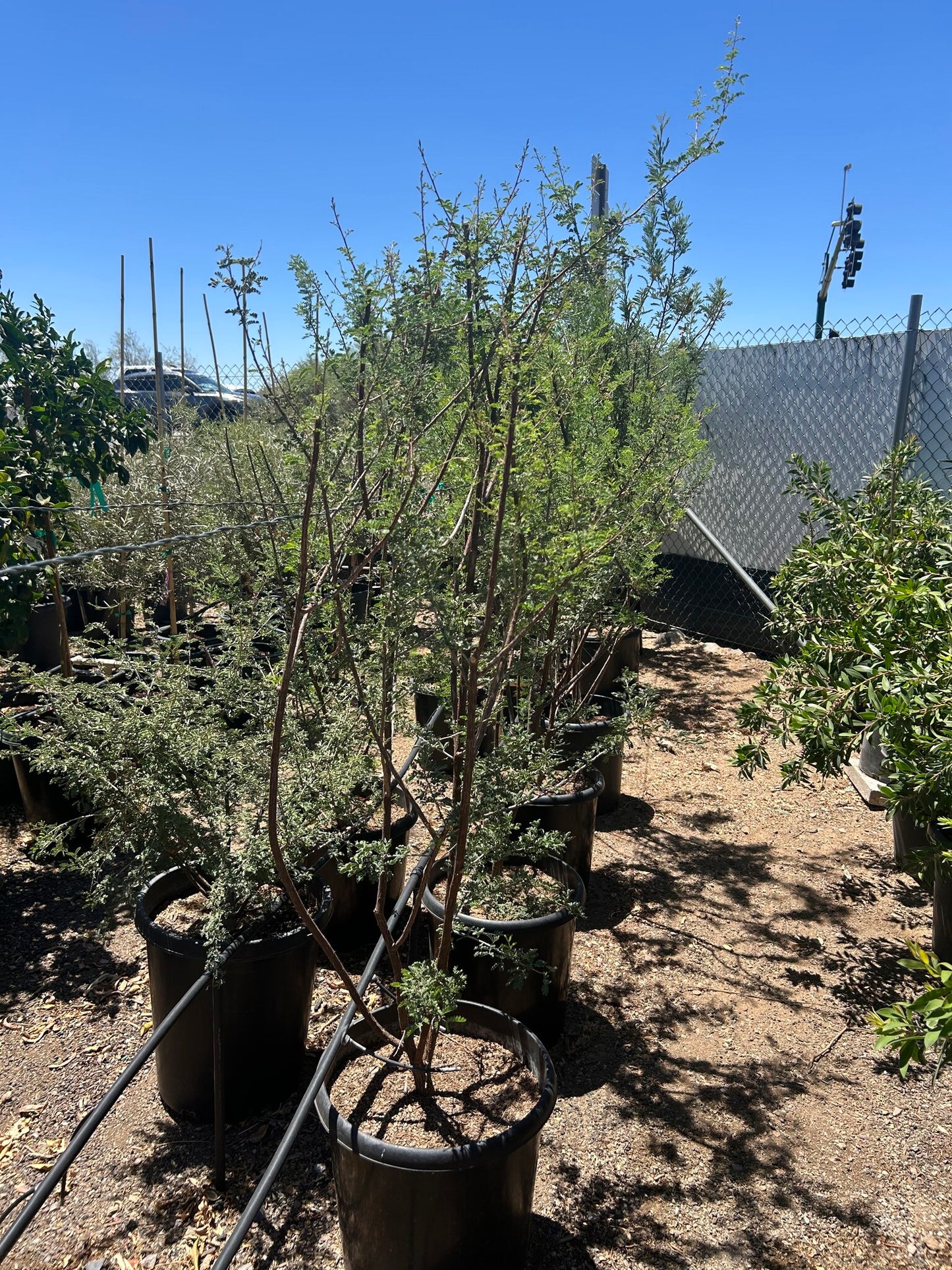
Three Timbers carries Cat Claw Acacia in 1 gallon, 3/5 gallon, 10/15 gallon, and 24"/25 gallon sizes — from budget-friendly starter plants to landscape-ready specimens.
You May Also Like
- Sweet Acacia — A fragrant native with golden puffball blooms; similar wildlife value with a more refined, smaller form perfect for front yard plantings in Scottsdale and Phoenix.
- Foothill Palo Verde — Arizona's toughest native tree with brilliant yellow spring blooms; excellent companion in naturalized desert wildlife gardens.
- Blue Palo Verde — Arizona's state tree; pairs beautifully with Cat Claw Acacia in native desert gardens for bloom color contrast in spring.
- Willow Acacia — A refined, thornless evergreen acacia with graceful weeping form; ideal companion for a wildlife garden that needs structure and shade.
- Desert Willow — A stunning native flowering tree with trumpet-shaped blooms that hummingbirds love; perfect partner for Cat Claw Acacia in wildlife-focused plantings.
How Many Cat Claw Acacias Do I Need?
Cat Claw Acacia matures 10 to 20 feet wide, growing wider than tall. For a wildlife specimen, plant single or in a loose group of 3 spaced 12 to 15 feet apart. For a dense, impenetrable security or barrier hedge, plant 8 feet on center. Keep the thorny stems well back from walkways, pools, and play areas.
| Run Length | Barrier Hedge (8 ft spacing) |
|---|---|
| 16 ft | 3 plants |
| 24 ft | 4 plants |
| 40 ft | 6 plants |
| 56 ft | 8 plants |
Cat Claw Acacia Season-by-Season in Phoenix
- Spring (Feb to Apr): Leafs out and begins its fragrant creamy-yellow catkin bloom that draws native bees and hummingbirds. A strong second planting window.
- Summer (May to Sep): Continues blooming into summer and thrives on reflected heat. Monsoon rains drive new growth and seed-pod set that feeds quail and doves. Needs almost no supplemental water once established.
- Fall (Oct to Nov): Prime planting season. Seed pods mature and the canopy stays full before winter.
- Winter (Dec to Jan): Semi-deciduous: may drop leaves in a cold snap and rest as a bare thorny form. Very cold-hardy in the Valley, down to about 10F, with no protection needed.
At a Glance
✔ Arizona Native ✔ Pollinator-Friendly ✔ Hummingbird-Friendly ✔ Heat-Loving (Reflected-Heat Tolerant) ✔ Drought-Tolerant ✔ Low-Maintenance ✔ Deer & Rabbit-Resistant ✔ Cold-Hardy to 10°F
Plant It With
- Sweet Acacia: fragrant native with golden puffball blooms and similar wildlife value in a more refined form.
- Foothill Palo Verde: tough native tree with yellow spring bloom for a naturalized desert wash planting.
- Blue Palo Verde: Arizona's state tree, for spring bloom color contrast in a native garden.
- Desert Willow: native flowering tree hummingbirds love, a perfect wildlife-garden partner.
Is Cat Claw Acacia Right for Your Yard?
Cat Claw Acacia is built for full sun, reflected heat, and lean rocky or caliche soil, and it needs essentially no water once established. It is an unbeatable choice for wildlife habitat, desert wash plantings, and security barriers. Not a fit near walkways, patios, pools, or play areas: the curved hook thorns grab skin and clothing, so site it along back fence lines and open native beds where no one will brush against it.
Share