

Cape Honeysuckle
Cape Honeysuckle
Couldn't load pickup availability
Phoenix's Top Red-Flowering Shrub for Hummingbirds & Color
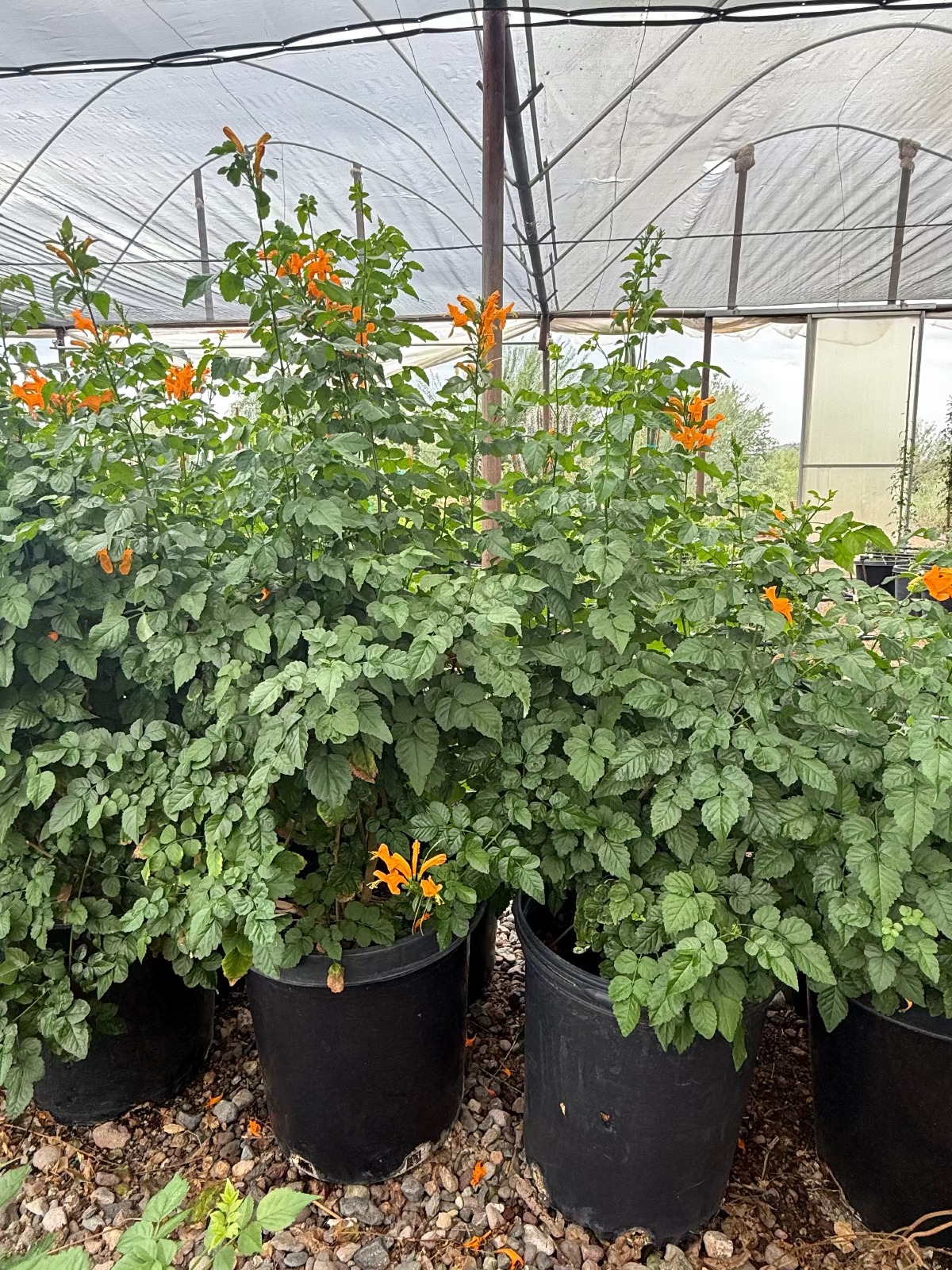
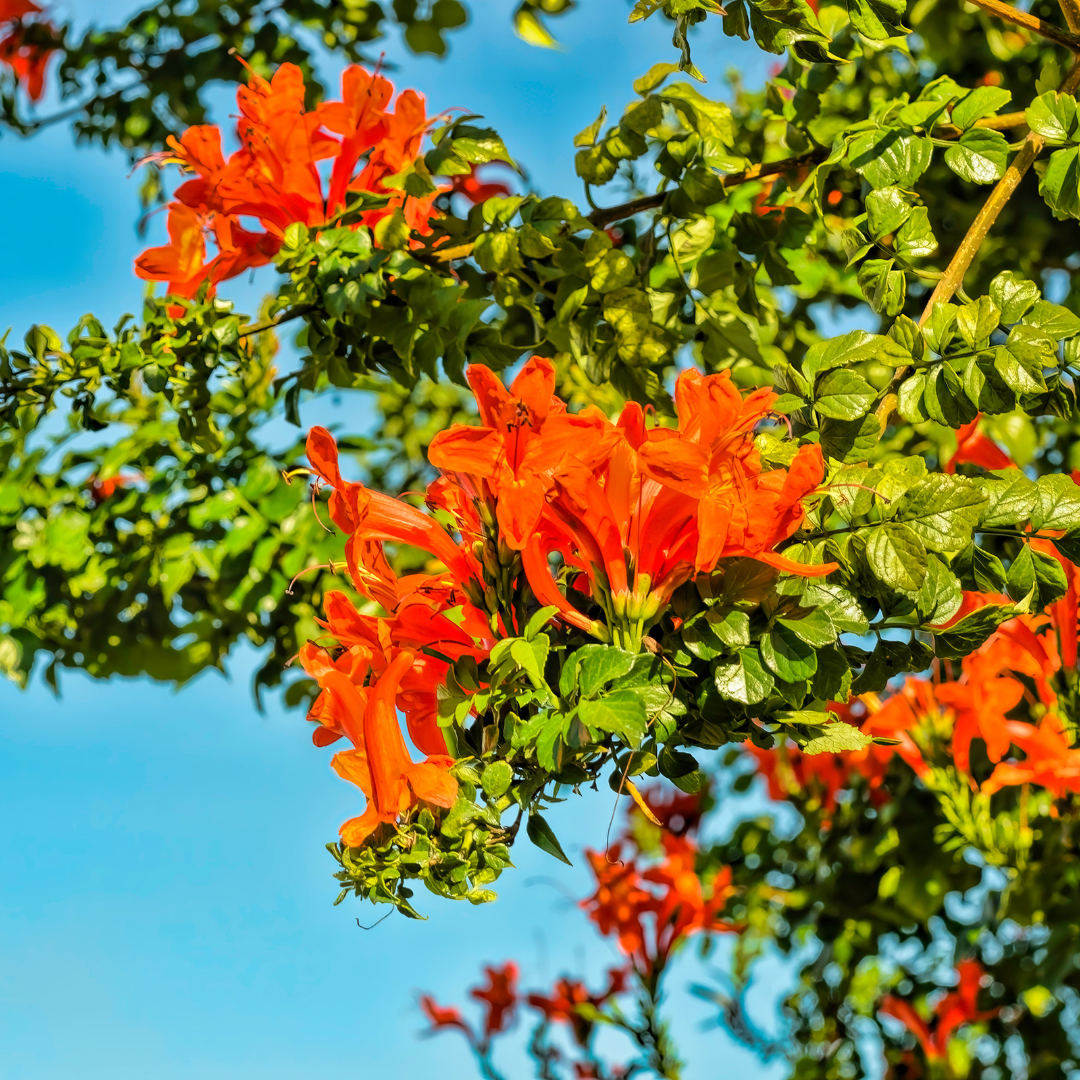
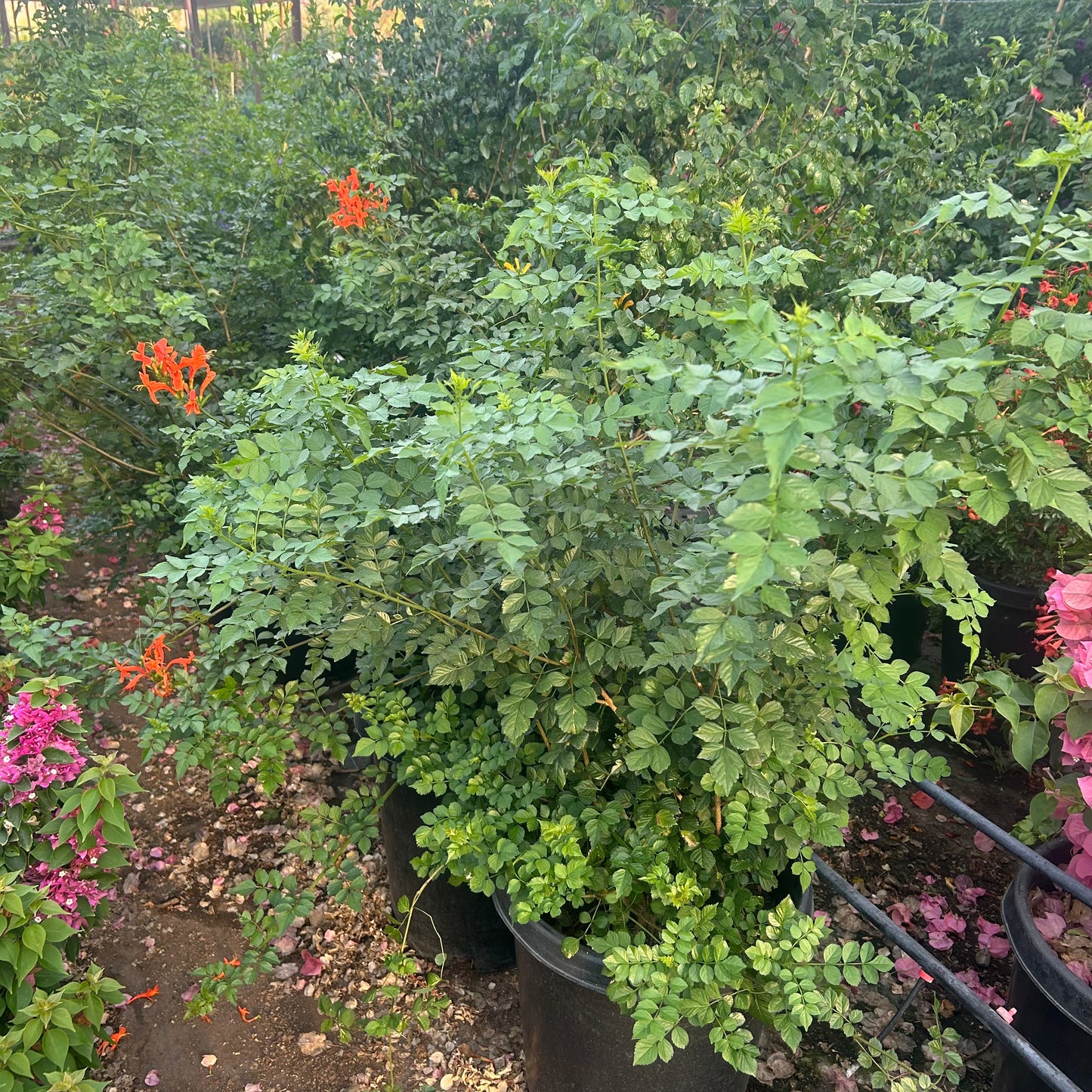
Cape Honeysuckle (Tecoma capensis) is one of the most versatile and colorful shrubs you can plant in a Phoenix landscape. This South African native produces clusters of bright red-orange tubular flowers almost year-round in the Valley’s mild climate, making it a magnet for hummingbirds and butterflies. Cape Honeysuckle grows fast, tolerates heat and drought, and can be trained as a shrub, hedge, vine, or even a small patio tree. Whether you’re covering a fence in Scottsdale, screening a pool area in Mesa, or adding nonstop color to a Chandler border — Cape Honeysuckle is one of the hardest-working plants in the Arizona nursery.
Cape Honeysuckle Plant Details
| Attribute | Detail |
|---|---|
| Scientific Name | Tecoma capensis |
| Common Names | Cape Honeysuckle, Red Cape Honeysuckle, Tecoma |
| Mature Height | 6–10 feet (up to 15+ as a vine) |
| Mature Width | 6–8 feet |
| Growth Rate | Fast — 3–5 feet per year in Phoenix |
| Sun | Full sun to partial shade (6+ hrs ideal). Handles reflected heat. |
| Water | Low to moderate once established. Drought-tolerant. |
| USDA Zones | 9–11 (Phoenix is Zone 9b–10a) |
| Soil | Well-draining. Adapts to Arizona caliche soils. |
| Foliage | Evergreen to semi-evergreen — may drop some leaves in cold winters |
| Bloom Color | Bright red-orange tubular flowers, nearly year-round in Phoenix |
Cape Honeysuckle Uses in Phoenix Landscapes
Hummingbird & Wildlife Garden
Cape Honeysuckle is one of the top hummingbird plants in the Phoenix Valley. The bright red-orange tubular flowers are packed with nectar and bloom almost continuously from spring through winter. Plant it near a patio or window where you can watch hummingbirds feed daily. Pair with Chuparosa and Bottlebrush for a complete hummingbird habitat.
Fast-Growing Privacy Screen & Hedge
Cape Honeysuckle fills in quickly as an informal hedge or privacy screen. Plant 4–6 feet apart for a dense screen that stays green year-round and flowers along its entire length. It also trains easily on a fence, trellis, or wall as a flowering vine — perfect for covering unsightly block walls or chain-link fencing. For a 20 ft fence, use 4–5 plants.
Fence & Wall Cover
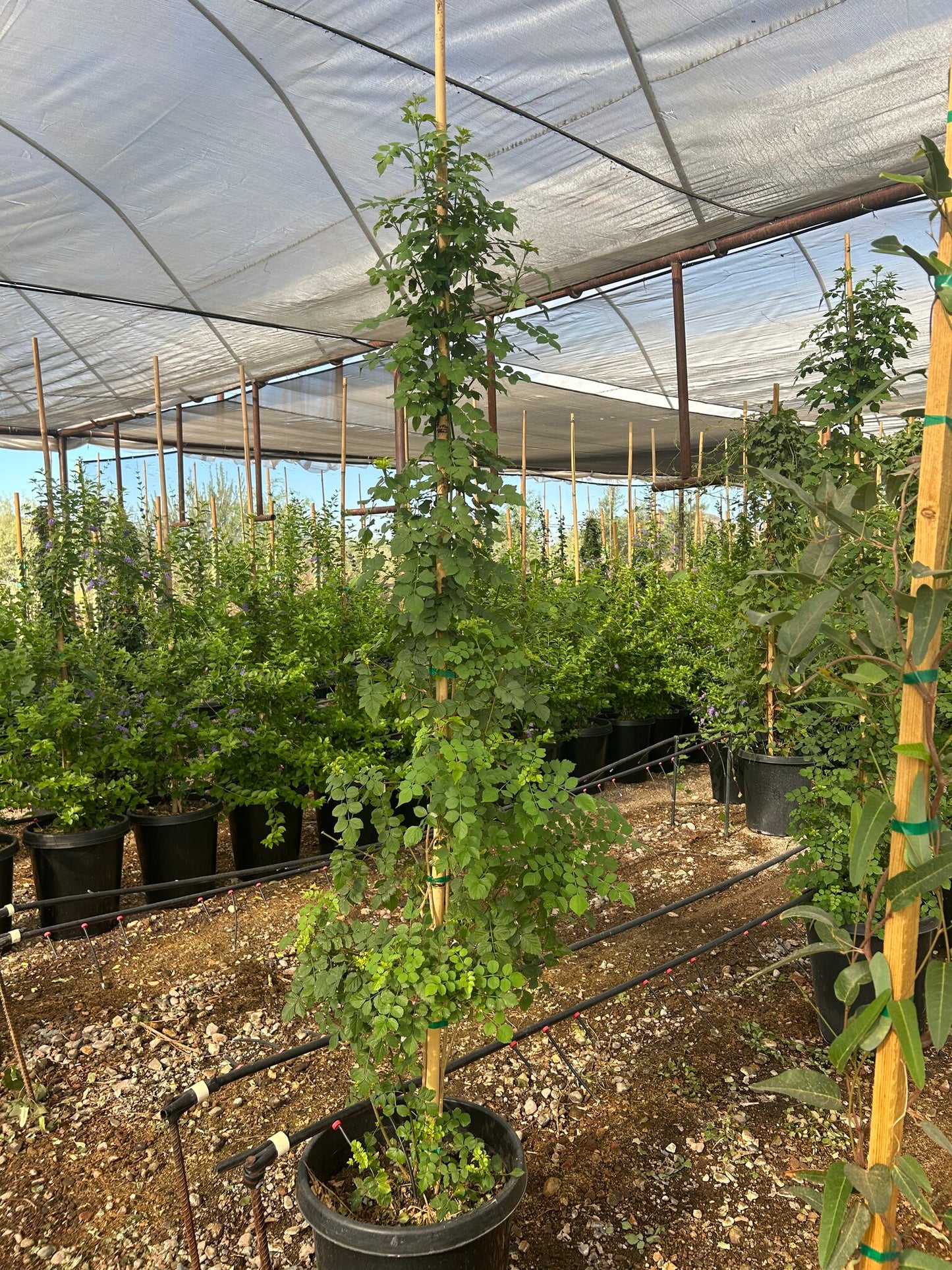
With its scrambling, vine-like growth habit, Cape Honeysuckle covers fences and walls faster than almost any other flowering plant in Phoenix. Tie young stems to a trellis or fence and they’ll quickly fill in with a mass of green foliage and red-orange flowers. It’s one of the most popular vine alternatives for desert landscapes.
Best Time to Plant Cape Honeysuckle in Phoenix
Fall (October–November) is ideal. The warm soil promotes rapid root establishment while cooler air reduces transplant stress. Spring (February–April) is the second-best window. Cape Honeysuckle is tough enough to handle summer planting with consistent watering, and its fast growth rate means it establishes quickly in any season.
How to Plant Cape Honeysuckle
- Dig wide, not deep — 2–3x the root ball width, same depth
- Check for caliche — break through any hardpan layer for drainage
- Backfill with native soil — a light 20% compost blend boosts early growth
- Spacing — 4–6 ft apart for a hedge; 6–8 ft as individual specimens
- Water basin — build a 3–4 inch ring to direct water to roots
- Mulch — 2–3 inches of bark or gravel mulch to retain moisture
Watering Cape Honeysuckle in Phoenix
First Year Watering Schedule
- Weeks 1–2: Every 2–3 days, deep and slow (20–30 min)
- Month 1–2: Every 3–4 days
- Month 3–6: Every 5–7 days (every 3–4 days in peak summer)
- After Year 1: Every 7–14 days summer; every 2–3 weeks winter
Drip Irrigation
Place emitters 18–24 inches from the trunk. Use 1–2 GPH emitters with 2–3 per plant. Cape Honeysuckle flowers more heavily with regular deep watering but tolerates dry periods well once established.
How fast does Cape Honeysuckle grow in Phoenix?
Very fast — expect 3–5 feet of new growth per year. A 1 gallon plant can reach 6–8 feet within 1–2 seasons with good watering.
Is Cape Honeysuckle frost tolerant?
Cape Honeysuckle handles Phoenix winters well but may suffer tip damage in hard freezes below 28°F. It recovers quickly in spring with aggressive new growth. In most Phoenix neighborhoods, it stays evergreen year-round.
Can I grow Cape Honeysuckle as a vine?
Yes. Cape Honeysuckle naturally scrambles and climbs when given support. Train it on a trellis, arbor, or fence for a flowering vine effect. It can reach 15+ feet as a vine and covers structures beautifully.
What’s the difference between red and yellow Cape Honeysuckle?
Red Cape Honeysuckle (this variety) has bright red-orange flowers and is slightly more vigorous. Yellow Cape Honeysuckle has golden-yellow flowers. Both are excellent Phoenix landscape plants with similar care needs.
You May Also Like
- Cape Honeysuckle-Yellow — golden-yellow version of this same tough, fast-growing shrub
- Bottlebrush Bush — red bottle-shaped flowers, another top hummingbird plant
- Mexican Honeysuckle — orange tubular flowers for partial shade gardens
- Yellow Bells — bright yellow trumpet flowers, Phoenix’s classic desert flowering shrub
How Many Cape Honeysuckle Do I Need?
For an informal flowering hedge or privacy screen, space plants about 5 feet apart on center so the scrambling growth knits into a continuous wall of color. Use this guide:
| Run Length | Plants Needed (5 ft spacing) |
|---|---|
| 10 ft | 2 to 3 plants |
| 20 ft | 4 to 5 plants |
| 30 ft | 6 to 7 plants |
| 40 ft | 8 to 9 plants |
As a single specimen or to cover a trellis or wall section, give one plant 6 to 8 feet of room (more if trained upward as a vine).
Cape Honeysuckle Season-by-Season in Phoenix
- Spring (Feb to Apr): Vigorous new growth and heavy flowering as warmth returns. Strong second planting window, and hummingbird traffic picks up fast.
- Summer (May to Sep): Keeps blooming through reflected heat with deep regular water. Fastest growth of the year, and monsoon humidity in July through September pushes another flush. Tie up or trim scrambling canes as needed.
- Fall (Oct to Nov): Best planting season and a peak bloom period that feeds migrating and resident hummingbirds.
- Winter (Dec to Jan): Stays evergreen and often keeps flowering in mild Valley neighborhoods. Tips can burn in hard freezes below about 28°F, but it recovers fast with spring growth. No routine frost cover needed in most yards.
At a Glance
✔ Hummingbird-Friendly ✔ Pollinator-Friendly ✔ Heat-Loving (Reflected-Heat Tolerant) ✔ Drought-Tolerant ✔ Evergreen ✔ Low-Maintenance
Plant It With
- Cape Honeysuckle-Yellow: the golden-flowered version for a two-tone screen of the same tough plant.
- Bottlebrush Bush: red bottlebrush blooms that build out a complete hummingbird habitat.
- Mexican Honeysuckle: soft orange tubular flowers for the shadier end of the bed.
- Arizona Yellow Bells: bright yellow trumpets and fast height to layer behind the hedge.
Is Cape Honeysuckle Right for Your Yard?
Cape Honeysuckle is right for you if you want fast, nearly year-round red-orange color and constant hummingbird activity from a tough plant that takes full sun, reflected heat, and caliche soil in stride, and can flex between hedge, screen, and trained vine. Not a fit if you want a tidy, low-care formal shape, since it scrambles vigorously and needs occasional trimming to stay neat, and tips can frost-burn in the coldest Valley pockets.
Customer Reviews
Delivered on time. One gallon Cape Honeysuckle well rooted, in excellent health. Not yet transplanted. Looks like it will be a good-looking ground cover.
Share