

Bursage
Bursage
Hardy gray native that anchors any desert planting
Couldn't load pickup availability
Phoenix's Toughest Native Groundcover Shrub — Bursage
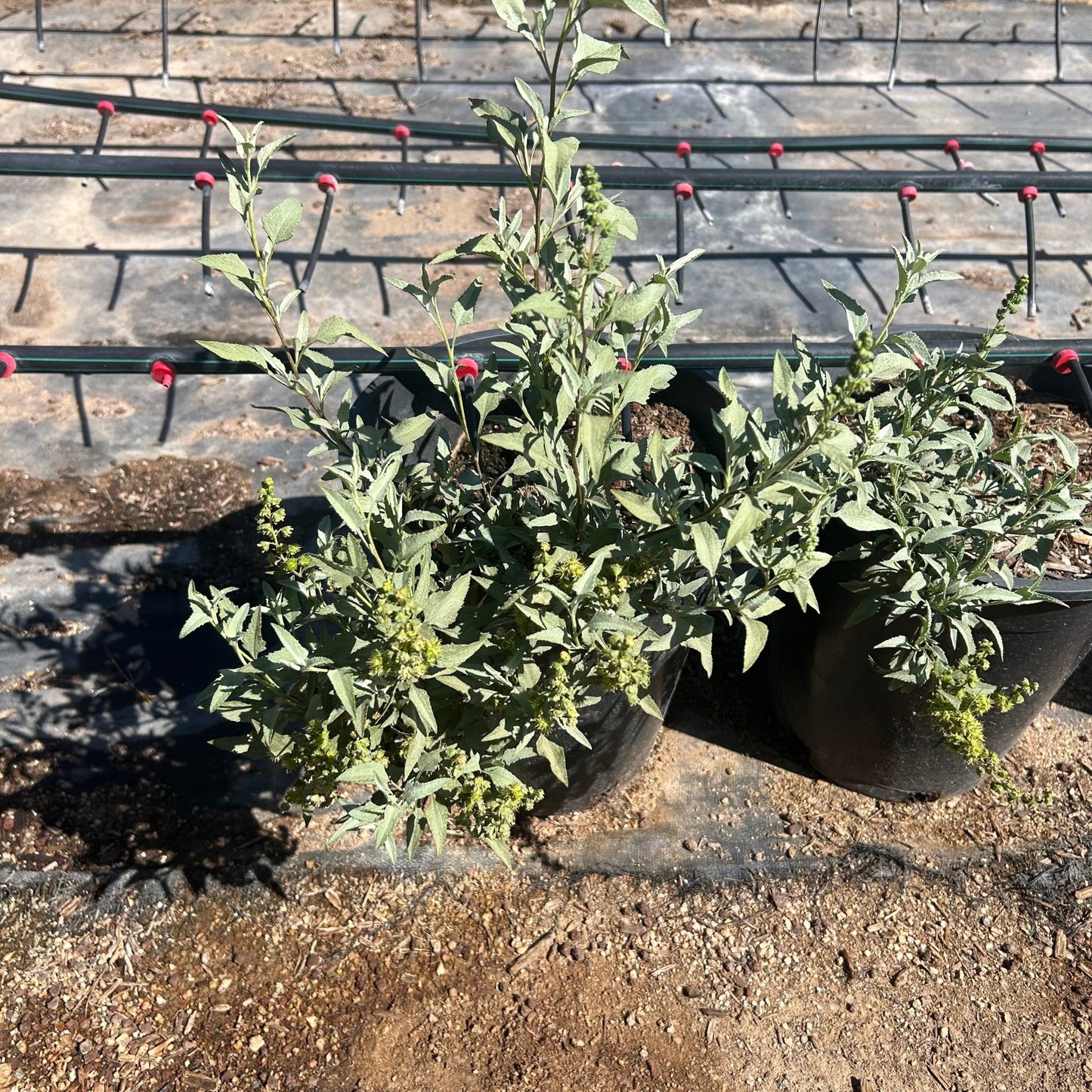
Bursage (Ambrosia deltoidea) is one of the most authentic and ecologically important native shrubs available for Phoenix Valley landscapes. This compact, silver-green Sonoran Desert native stays low and wide — reaching just 1–2 feet tall and spreading 2–4 feet — making it the perfect groundcover for naturalistic desert gardens, slopes, and xeriscape plantings. Its soft, silvery foliage reflects heat and requires almost no water once established. Whether you're recreating a true Sonoran Desert look in Scottsdale, stabilizing a slope in Chandler, or filling in a low-water planting bed in Mesa, Gilbert, or Tempe — Bursage is the native plant that makes it look effortless.
Bursage Plant Details
| Attribute | Detail |
|---|---|
| Scientific Name | Ambrosia deltoidea |
| Common Names | Bursage, Triangle-Leaf Bursage, Ragweed |
| Mature Height | 1–2 feet |
| Mature Width | 2–4 feet |
| Growth Rate | Slow to Moderate — ½–1 foot per year in Phoenix |
| Sun | Full sun (6+ hrs). Thrives in reflected desert heat. |
| Water | Very low once established. Survives on natural rainfall in Phoenix. |
| USDA Zones | 9–11 (Phoenix is Zone 9b–10a) |
| Soil | Well-draining rocky or sandy desert soil. Adapts to Arizona caliche. |
| Foliage | Semi-evergreen to evergreen; silvery-green with soft, hairy texture |
| Flower Color | Small greenish-yellow blooms; inconspicuous but ecologically valuable |
| Native Status | Native to Sonoran Desert — Arizona, California, Mexico |
| Wildlife Value | Critical habitat plant; supports native bees, birds, and Sonoran wildlife |
Bursage Uses in Phoenix Landscapes
Native Desert Groundcover
Bursage is the backbone of authentic Sonoran Desert restoration plantings. In nature, it grows beneath Saguaro cacti and Palo Verde trees as part of the classic Arizona desert plant community. In landscape use, it fills the low-growing layer beautifully — suppressing weeds, softening hardscape edges, and creating that genuine Sonoran look that no non-native plant can replicate. Space 4 feet apart for a continuous groundcover — a 40-foot bed needs about 10 plants.
Slope Stabilization and Erosion Control
Bursage's spreading root system makes it excellent for stabilizing rocky slopes and hillsides where erosion is a concern. Its low profile reduces wind resistance while its roots anchor loose desert soils. Plant on south- and west-facing slopes in full reflected sun — it thrives in exactly the conditions that defeat most other plants. Pair with Brittlebush, Desert Marigold, or Desert Ruellia for a naturalistic slope planting.
Under Canopy Planting with Native Trees
One of Bursage's most distinctive ecological roles is as an understory plant beneath desert trees. In the Phoenix Valley, it works beautifully under Blue Palo Verde, Desert Willow, or Ironwood as part of a layered native plant community. The light shade from overhead canopy actually suits it well — mimicking its natural habitat under nurse trees in the wild Sonoran Desert.
Water-Wise Border Filler
Bursage makes a superb filler in mixed native borders where you need a low-growing, textural, silver-toned plant that won't need supplemental irrigation after establishment. Its soft, slightly fuzzy foliage provides interesting texture contrast alongside the bold forms of Agave, Desert Spoon, or Ocotillo in modern desert designs across Peoria, Glendale, and Surprise.
Best Time to Plant Bursage in Phoenix
Fall (October–November) is the ideal planting window — warm soil encourages root development while cooler air temperatures reduce transplant stress. Plants put in the ground in fall get 6–8 months of root establishment before their first summer. Spring (February–April) is acceptable, though fall-planted Bursage establishes more quickly. Avoid summer planting if possible; while established plants laugh at Phoenix summers, new transplants need extra attention in extreme heat.
How to Plant Bursage
- Dig wide, not deep — excavate a hole 2–3 times the root ball width and the same depth as the container.
- Check for caliche — break through any hard white caliche layer with a breaker bar to ensure drainage.
- Backfill with native soil — do not amend heavily; Bursage is adapted to lean desert soils and over-enrichment reduces its drought tolerance.
- Spacing — 3–4 feet apart for groundcover; 5 feet apart in more open designs.
- Build a water basin — form a 3–4 inch berm around the drip line to direct water to the roots during establishment.
- Mulch — apply 2–3 inches of decomposed granite or gravel mulch to retain moisture and mimic natural desert floor conditions.
Watering Bursage in Phoenix
First Year Watering Schedule
Weeks 1–2: Water every 2–3 days, deep and slow (20 minutes). Month 1–2: Every 5–7 days. Month 3–6: Every 10–14 days. After Year 1: Bursage can survive entirely on natural Phoenix rainfall. Supplemental watering every 3–4 weeks in summer during extreme drought periods is beneficial but not required. This is one of the most drought-tolerant native plants available for Phoenix landscapes.
Drip Irrigation
Place a 0.5–1 GPH emitter 12–18 inches from the base during the establishment year. Run for 30–45 minutes per session. Once established (after 12–18 months), Bursage can be removed from drip irrigation entirely and left to naturalize on rainfall — which is exactly how it grows in the wild Sonoran Desert.
Does Bursage cause allergies? Bursage (Ambrosia deltoidea) is related to ragweed and does produce wind-dispersed pollen that can aggravate seasonal allergies in sensitive individuals. However, its pollen season in Phoenix is relatively short (late winter through spring). The plant is non-toxic and safe for pets and children.
How big does Bursage get in Phoenix? In Phoenix, Bursage typically stays quite compact — 1 to 2 feet tall and 2 to 4 feet wide. It rarely exceeds these dimensions even with supplemental irrigation.
Is Bursage invasive? No — Bursage is native to the Sonoran Desert and is not considered invasive. It actually supports the local ecosystem by providing habitat and food for native insects, birds, and other wildlife.
Does Bursage need fertilizer? No — Bursage evolved in extremely lean desert soils and doesn't benefit from fertilization. Over-fertilizing native desert plants like Bursage can actually harm them by stimulating excessive growth that's out of character with their natural form and drought tolerance.
You May Also Like
Desert Ruellia — A colorful native shrub that pairs with Bursage in authentic Sonoran Desert plantings while adding purple flower color.
Green Desert Spoon — A dramatic structural accent that creates bold contrast with Bursage's low, soft texture in native desert designs.
Purple Three Awn — A fine-textured native grass that complements Bursage's silvery color in naturalistic groundcover plantings.
Common Deer Grass — Another native grass that pairs beautifully with Bursage for a layered, low-water native meadow effect.
Blue Nolina — A striking blue-gray native accent that creates structural contrast in naturalistic desert gardens alongside Bursage.
How Many Bursage Do I Need?
Bursage spreads 2 to 4 feet wide and stays low, so it works best as a mass groundcover planted on roughly 4-foot centers (about 16 sq ft per plant). Measure the area you want to cover and use this guide:
| Area to Cover | Plants Needed (4 ft spacing) |
| 50 sq ft | 4 plants |
| 100 sq ft | 7 plants |
| 200 sq ft | 13 plants |
| 300 sq ft | 19 plants |
For a single 40-foot linear bed or border, plan on about 10 plants. Tighten to 3-foot spacing for faster fill on slopes.
Bursage Season-by-Season in Phoenix
- Spring (Feb–Apr): Fresh silvery growth and small greenish flowers. This is also its short wind-pollen season, worth noting for allergy-sensitive households. Good secondary planting window.
- Summer (May–Sep): Completely at home in full sun and reflected heat. Established plants coast through the worst of summer and respond to monsoon rain with a flush of new growth, needing little or no supplemental water.
- Fall (Oct–Nov): Prime planting season. Cooler nights let new plants root in before winter.
- Winter (Dec–Jan): Holds its silvery foliage as a semi-evergreen and is reliably cold-hardy for the Valley, taking brief lows near 20°F without trouble.
At a Glance
✔ Arizona Native ✔ Drought-Tolerant ✔ Heat-Loving (Reflected-Heat Tolerant) ✔ Low-Maintenance ✔ Evergreen ✔ Cold-Hardy to 20°F
Plant It With
- Desert Ruellia: adds purple flower color above Bursage's low silver mound in native plantings.
- Brittlebush: another Sonoran native for a classic silver-foliage, yellow-bloom slope combination.
- Desert Marigold: long-blooming yellow native that weaves through a Bursage groundcover.
- Desert Spoon: a bold architectural accent that contrasts Bursage's soft, low texture.
Is Bursage Right for Your Yard?
Bursage is ideal for native and restoration plantings, low-water slopes, and the understory layer beneath desert trees, in full sun with fast-draining soil and almost no irrigation once established. It is non-toxic and safe around pets and kids. Not a fit if anyone in the home has significant ragweed allergies, or if you want a showy flowering shrub: Bursage is valued for texture, toughness, and habitat rather than bloom.
Share