

Brittlebush
Brittlebush
Couldn't load pickup availability
Phoenix's Best Low-Water Flowering Shrub — Brittlebush
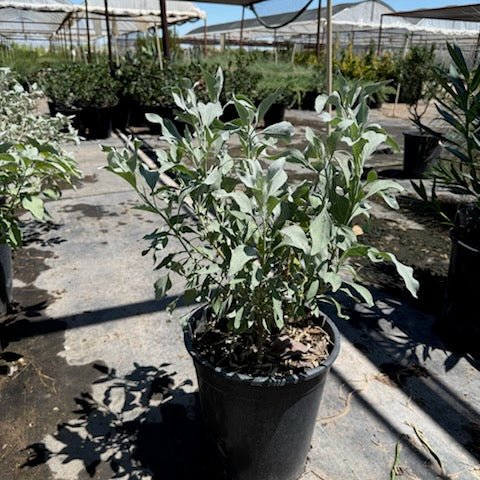
Brittlebush (Encelia farinosa) is the most iconic wildflower shrub in the Sonoran Desert, beloved for its dazzling yellow blooms and silver-gray foliage that thrives in extreme Arizona heat. Fast-growing and nearly indestructible once established, it rewards minimal watering with a spectacular floral display from late winter through spring. Whether you're adding color to a Scottsdale xeriscape, filling a desert garden in Chandler, brightening a rock landscape in Gilbert, or naturalizing a slope in Peoria — Brittlebush delivers year after year with almost no effort.
Brittlebush Plant Details
| Attribute | Detail |
|---|---|
| Scientific Name | Encelia farinosa |
| Common Names | Brittlebush, Incienso, White Brittlebush |
| Mature Height | 2–5 feet |
| Mature Width | 2–4 feet |
| Growth Rate | Fast — 1–2 feet per year in Phoenix |
| Sun | Full sun (6+ hrs). Handles reflected heat from walls and pavement. |
| Water | Very low once established. One of Arizona's most drought-tolerant shrubs. |
| USDA Zones | 9–11 (Phoenix is Zone 9b–10a) |
| Soil | Well-draining. Thrives in rocky, sandy soils. Tolerates Arizona caliche soils. |
| Foliage | Semi-evergreen — silver-gray aromatic leaves; may drop in extreme drought |
| Bloom Color | Bright yellow daisy-like flowers on tall stalks, late winter to spring |
| Native Status | Native to Sonoran and Mojave Deserts |
Brittlebush Uses in Phoenix Landscapes
Desert Wildflower Color
Few plants put on a show like Brittlebush in late February through April. The bright yellow daisy-like flowers rise above the silver foliage on tall stems, creating a stunning contrast that draws pollinators and admiring neighbors alike. In Phoenix and Scottsdale landscapes, it provides the most vibrant late-winter color of any native shrub. Plant in drifts of 3–5 for maximum visual impact along walkways, driveways, or open desert garden areas.
Slopes, Erosion Control & Naturalized Areas
Brittlebush is a go-to plant for stabilizing slopes, hillsides, and disturbed soils throughout the Phoenix Valley. Its deep root system anchors quickly in rocky or sandy soil, making it ideal for erosion-prone areas in Mesa, Tempe, and Chandler. It thrives with zero supplemental irrigation once established in naturalized desert settings, blending seamlessly with native boulders and decomposed granite.
Xeriscape & Low-Water Gardens
As one of the most drought-adapted native shrubs in the Sonoran Desert, Brittlebush is a cornerstone plant in xeriscape design. It pairs beautifully with Desert Marigold, Blackfoot Daisy, Red Yucca, and Desert Sage to create a pollinator-friendly, water-wise garden that looks incredible with virtually no irrigation. Space plants 3–4 feet apart for a naturalized look, or 2 feet apart for a denser wildflower border.
Pollinator & Wildlife Gardens
Brittlebush is a magnet for bees, butterflies, and hummingbirds throughout its long bloom season. The flowers are a critical early-season nectar source for pollinators in Glendale, Peoria, and across the Phoenix metro. Native birds also use the dried seed heads. Planting Brittlebush alongside Chuparosa, Desert Ruellia, and Autumn Sage creates a multi-season wildlife habitat that supports the local ecosystem.
Best Time to Plant Brittlebush in Phoenix
Fall (October–November) is the ideal planting window for Brittlebush in the Phoenix area. The soil is still warm enough to encourage root development, cooler air temperatures dramatically reduce transplant stress, and the plant gets 6–8 months of establishment time before its first Phoenix summer. Spring planting (February–April) is a good second choice — you may even catch a bloom cycle shortly after planting. Avoid planting in the peak of summer (June–August) if possible, as heat stress can set back new transplants significantly.
How to Plant Brittlebush
- Dig wide, not deep — Excavate a hole 2–3x the width of the root ball but only as deep as the root ball. Brittlebush likes its crown at or slightly above grade.
- Check for caliche — Break through any hardpan caliche layer below the hole to ensure water can drain freely and roots can penetrate.
- Backfill with native soil — Use the excavated soil to backfill. A light mix of 20% organic compost is fine but not required; Brittlebush thrives in lean, native Arizona soils.
- Spacing — Space 3–4 feet apart for naturalized planting; 2 feet apart for a denser wildflower border effect.
- Build a water basin — Create a 3–4 inch earthen ring around the plant to direct water to the root zone during establishment.
- Mulch — Apply 2–3 inches of decomposed granite or gravel mulch around the base to retain moisture and regulate soil temperature.
Watering Brittlebush in Phoenix
First Year Watering Schedule
- Weeks 1–2: Water every 1–2 days, deep and slow (20–30 minutes). The goal is to soak the entire root ball and surrounding soil.
- Months 1–2: Reduce to every 3–4 days as roots begin extending into native soil.
- Months 3–6: Water every 7–10 days (every 5–7 days during peak Phoenix summer heat).
- After Year 1: Established Brittlebush is extremely drought-tolerant. Water every 10–14 days in summer, every 3–4 weeks in winter, or rely on natural rainfall entirely.
Drip Irrigation
Place drip emitters 12–18 inches from the base of the plant. Use 1 GPH emitters for 1 gallon plants and 2 GPH for 5 gallon plants. Once established (after the first year), Brittlebush needs very little supplemental irrigation — many mature plants survive solely on Phoenix's natural rainfall with no additional watering.
How fast does Brittlebush grow in Phoenix?
Brittlebush grows quickly in Phoenix's warm climate, typically adding 1–2 feet per year and reaching its mature size of 2–5 feet within 2–3 seasons. The combination of warm soil, abundant sunshine, and periodic irrigation accelerates growth significantly compared to plants in cooler climates.
Is Brittlebush truly drought-tolerant once established?
Yes — Brittlebush is one of the most drought-tolerant native shrubs available for Phoenix landscapes. After its first full year in the ground, established plants often survive on rainfall alone in typical Phoenix winters. In summer, some supplemental irrigation every 2–3 weeks keeps the plant looking its best, though mature plants can survive extended dry periods by temporarily dropping leaves.
Does Brittlebush come back after it drops its leaves?
Yes. Brittlebush may drop leaves during extreme summer drought or cold snaps as a natural survival mechanism. This is normal — the plant is reducing moisture loss, not dying. Once temperatures moderate or irrigation resumes, it quickly rebounds with fresh silvery growth. Do not overwater in response to leaf drop; simply maintain your normal schedule.
Can Brittlebush handle Phoenix's reflected heat?
Brittlebush is exceptionally adapted to Phoenix's extreme heat, including the reflected heat from walls, patios, and pavement that kills less hardy plants. It's a common sight growing wild on rocky south-facing slopes — the hottest, most challenging microclimate in the Sonoran Desert. In Phoenix landscapes, it performs well even in full south or west exposures against block walls.
Is Brittlebush deer resistant?
Brittlebush has good deer resistance, particularly due to its aromatic foliage. While no plant is completely deer-proof in times of drought stress, Brittlebush is rarely browsed heavily and is a reliable choice for properties near desert preserves in Scottsdale, Cave Creek, and the North Phoenix foothills.
You May Also Like
- Desert Marigold — Another brilliant yellow native wildflower with an even longer bloom season, perfect for pairing with Brittlebush in pollinator gardens.
- Damianita — A compact, golden-flowering native shrub that complements Brittlebush beautifully in low-water borders and rock gardens.
- Red Yucca — A striking architectural accent plant that pairs well with Brittlebush's soft mounding form in xeriscape designs.
- Autumn Sage — A long-blooming native salvia that extends your garden's color season before and after Brittlebush's spring bloom peak.
- Desert Ruellia — A tough, spreading native groundcover that fills in beautifully around Brittlebush in naturalized desert planting schemes.
How Many Brittlebush Do I Need?
Brittlebush matures around 2 to 4 feet wide. For a natural-looking drift space plants about 3 feet apart; tighten to 2 feet for a denser wildflower border or slope cover. Measure your area and use this guide:
| Run or Border | Plants Needed (3 ft spacing) |
| 10 ft | 3 to 4 plants |
| 20 ft | 7 plants |
| 30 ft | 10 plants |
| 40 ft | 13 plants |
For the classic Sonoran look, plant in odd-numbered drifts of 3 or 5 rather than a single straight row. On slopes, stagger the rows to slow runoff and lock in soil.
Brittlebush Season-by-Season in Phoenix
- Spring (Feb–Apr): Peak season. A flush of bright yellow daisies rises above the silver foliage and pulls in bees and butterflies. This is the plant at its showiest.
- Summer (May–Sep): Built for desert heat and reflected heat off walls and pavement. In extreme drought it may shed leaves to conserve moisture, then rebound with silvery new growth after monsoon rain. Do not overwater in response to leaf drop.
- Fall (Oct–Nov): Prime planting season. Cooler nights bring back fresh foliage and set the plant up for the spring bloom.
- Winter (Dec–Jan): Holds silver foliage and is reliably cold-hardy for the Valley, taking brief lows near 20°F. Earliest plants can start opening flowers by late winter in warm years.
At a Glance
✔ Arizona Native ✔ Pollinator-Friendly ✔ Hummingbird-Friendly ✔ Drought-Tolerant ✔ Heat-Loving (Reflected-Heat Tolerant) ✔ Low-Maintenance ✔ Deer & Rabbit-Resistant ✔ Cold-Hardy to 20°F
Plant It With
- Desert Marigold: another yellow native with an even longer bloom season for nonstop pollinator color.
- Damianita: a compact golden-flowering native that mounds neatly in front of taller Brittlebush.
- Red Yucca: an architectural accent whose coral spikes contrast the soft silver mounds.
- Desert Ruellia: a tough spreading native that fills in around Brittlebush in naturalized schemes.
Is Brittlebush Right for Your Yard?
Brittlebush is ideal for full-sun, low-water desert gardens, rocky slopes, and hot south or west exposures against block walls. It wants fast-draining soil (break through caliche at planting) and almost no irrigation once established. Not a fit if you want a tidy, year-round formal hedge or a plant for shade or moist, heavily irrigated beds: in rich, overwatered soil it gets leggy and short-lived.
Share