

Boxwood Beauty sizes, side by side
Typical height of the plants we have in stock now, measured from the soil to the top. Every plant is a little different.
| Size | At delivery | Price |
|---|
Boxwood Beauty
Boxwood Beauty
Couldn't load pickup availability
Boxwood Beauty Natal Plum: Phoenix's Thornless Low Hedge
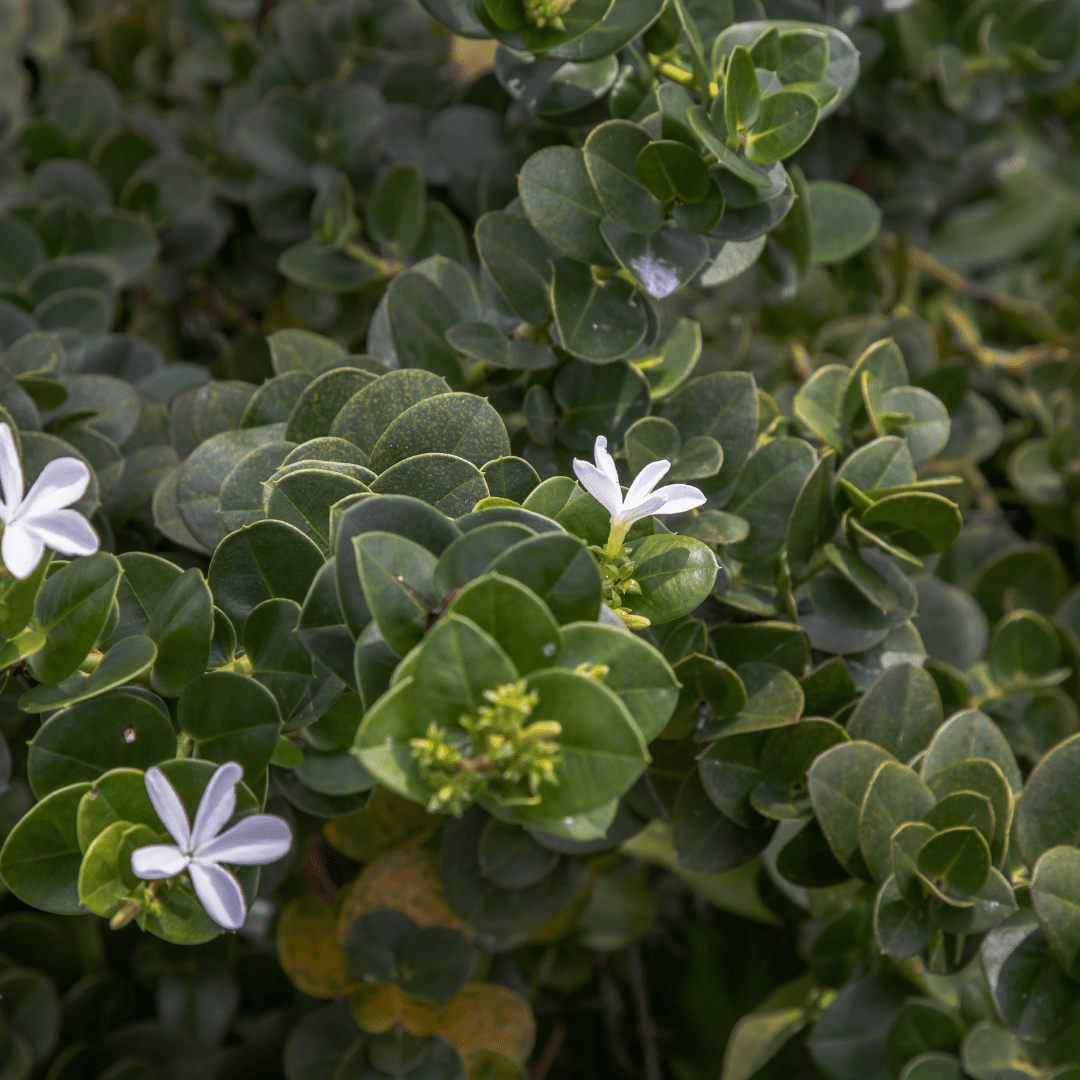
Boxwood Beauty Natal Plum (Carissa macrocarpa 'Boxwood Beauty') is one of the most versatile low hedge and border plants in the Phoenix Valley. With dense, dark green glossy foliage, fragrant white star-shaped flowers, and a naturally compact growth habit, it delivers year-round beauty with minimal maintenance. Unlike standard Natal Plum, this compact cultivar is thornless, so it is easy to handle around walkways and patios. Whether you're planting a low formal hedge in Scottsdale, edging a pool deck in Chandler, or designing a low-maintenance landscape in Gilbert, Boxwood Beauty gets the job done beautifully.
Boxwood Beauty Plant Details
| Attribute | Detail |
| Scientific Name | Carissa macrocarpa 'Boxwood Beauty' |
| Common Names | Boxwood Beauty, Natal Plum, Boxwood Beauty Natal Plum |
| Mature Height | 1–3 feet (naturally compact) |
| Mature Width | 2 to 4 feet |
| Growth Rate | Slow to moderate, dense and compact |
| Sun | Full sun to partial shade. Handles reflected heat from walls and patios. |
| Water | Low to moderate once established. Tolerates dry spells after year one but looks best with regular deep summer water. |
| USDA Zones | 9–11 (Phoenix is Zone 9b–10a) |
| Soil | Well-draining. Adapts well to Arizona caliche soils with proper drainage. |
| Foliage | Evergreen — dark glossy green year-round |
| Bloom Color | White star-shaped, fragrant flowers (spring through summer) |
| Special Feature | Thornless, compact Natal Plum cultivar |
Boxwood Beauty Uses in Phoenix Landscapes
Low Hedges and Border Edging
Boxwood Beauty is a go-to low hedge shrub in Phoenix because it combines dense, boxwood-like foliage with a naturally compact form. It stays about 1 to 3 feet tall on its own and takes shearing well, so it is ideal for edging driveways, walkways, garden beds and the base of walls. It is a border plant, not a privacy screen: for screening above eye level, plant a taller shrub behind it. Plant spacing for a continuous low hedge: about 2.5 feet apart. Planting guide: 20 ft run: 8 plants / 40 ft run: 16 plants.
Pool-Friendly Landscaping
Unlike many flowering shrubs, Boxwood Beauty produces minimal leaf and flower drop, making it a great choice for poolside planting in Mesa, Tempe, and Chandler. The evergreen glossy foliage stays attractive year-round without seasonal mess. Because it naturally stays low, it can edge a pool deck or line a pool fence without blocking views, and with no thorns it is comfortable to brush past barefoot. Pair with Desert Spoon or Agave for a modern, low-maintenance poolscape.
Walkways, Entries and Containers
Because 'Boxwood Beauty' is thornless, it works where standard Natal Plum would snag: along front walks, beside patio seating, around play areas and in large containers by the door. Use it as a low foundation planting under windows, mass several plants as a dense evergreen groundcover, or shear a pair into tidy mounds flanking an entry. It keeps its shape with a light trim a few times a year.
Desert Border Design
Boxwood Beauty's tolerance for heat, reflected light, and moderate irrigation once established makes it a good fit for water-wise Phoenix landscapes. Its dark green glossy leaves contrast beautifully with gravel mulch and light-colored desert walls. Use it as the low front layer of a border in front of taller shrubs like Purple Hopseed Bush, Texas Sage, and Mexican Bird of Paradise across Peoria, Glendale, and Surprise.
Best Time to Plant Boxwood Beauty in Phoenix
Fall (October–November) is the ideal planting window for Boxwood Beauty in Phoenix. Cooler air temperatures reduce transplant stress while warm soil encourages root development. Planting in fall gives the shrub 6–8 months to establish its root system before facing its first Phoenix summer. Spring (February–April) is the second-best option. Avoid summer planting if possible — new transplants struggle with 110°F+ heat without intensive irrigation support.
How to Plant Boxwood Beauty
- Dig wide, not deep — excavate a hole 2–3x the root ball width and the same depth. Wide holes allow lateral root spread.
- Check for caliche — break through any hardpan layer. Caliche prevents drainage and can cause root rot in Boxwood Beauty.
- Backfill with native soil — a 10–20% organic compost blend helps root establishment. Avoid heavy organic amendments.
- Spacing: about 2 to 3 feet apart for a continuous low hedge or border; 3 to 4 feet for individual mounded plants; 18 inches to 2 feet for a groundcover-style mass planting.
- Water basin — build a 3–4 inch soil ring around the planting zone to direct water to the root zone.
- Mulch — apply 2–3 inches of bark mulch or decomposed granite to retain soil moisture and regulate temperature.
Watering Boxwood Beauty in Phoenix
First Year Watering Schedule
- Weeks 1 to 2: Every 1 to 2 days in summer, every 3 to 4 days fall through spring, deep and slow (20 to 30 min per session)
- Weeks 3 to 8: Stretch gradually to about every 5 to 7 days in summer and every 7 to 10 days in cooler months
- Months 3 to 12: Every 7 days in summer (every 5 days during July to September peak heat), every 10 to 14 days in spring and fall
- After Year 1: Every 7 to 14 days in summer, every 10 to 21 days in spring and fall, and every 14 to 21 days in winter, soaking about 2 feet deep
Drip Irrigation
Place one 2 GPH drip emitter 12–18 inches from the base of each plant. Run 30–45 minutes per cycle during the establishment year. Once established, Boxwood Beauty is forgiving of a missed watering, but it is not a true desert plant: regular deep watering through the summer keeps the foliage glossy and dense. Adjust emitter count for larger 10–15 gallon plants (use 2 emitters per plant).
How fast does Boxwood Beauty grow in Phoenix?
Boxwood Beauty is a slow to moderate grower that stays dense and compact. A 1-gallon plant typically fills out to about 1.5 to 2 feet tall and wide in 2 to 3 seasons. Larger 10-gallon transplants give a nearly finished low border right away.
Is Boxwood Beauty drought tolerant?
Yes, moderately. Once established after its first year in the ground, Boxwood Beauty handles dry spells and Phoenix heat well. It still needs regular deep watering in summer to look its best, but it is forgiving if irrigation is missed now and then.
What's the difference between Boxwood Beauty and regular Natal Plum?
Standard Natal Plum (Carissa macrocarpa) can grow 6–10 feet tall without heavy pruning. Boxwood Beauty is a compact cultivar that naturally stays smaller — typically 1 to 3 feet — making it much more manageable as a hedge or border plant in Phoenix landscapes without constant pruning.
Is Boxwood Beauty pool-friendly?
Yes. Boxwood Beauty produces minimal messy debris compared to other flowering shrubs. Its evergreen glossy foliage stays tidy year-round. Just keep it trimmed back from the pool edge and it makes an excellent low poolside hedge in Scottsdale and Mesa.
Does Boxwood Beauty have thorns?
No. Standard Carissa macrocarpa has sharp thorns, but 'Boxwood Beauty' is a thornless cultivar, which makes it an easy choice near pools, walkways, and play areas.
You May Also Like
Green Hopseed Bush — Fast-growing privacy hedge for Phoenix, can reach 12 feet with minimal pruning.
Purple Hopseed Bush — Stunning bronze-purple foliage privacy screen, similar size and low-water needs.
Wax Leaf Privet — Another dense evergreen hedge shrub, fast-growing and popular for Phoenix borders.
Myoporum — Fast-growing, very low water screening shrub ideal for large Phoenix property borders.
Japanese Boxwood — Compact, fine-textured hedge shrub for manicured borders and formal Phoenix landscapes.
How Many Boxwood Beauty Do I Need?
Boxwood Beauty matures around 2 to 4 feet wide, so space plants about 2.5 feet apart for a solid low hedge or border (closer, at about 2 feet, if you want it to fill in fast). Measure your run and use this guide:
| Hedge Run | Plants Needed (2.5 ft spacing) |
| 10 ft | 4 plants |
| 20 ft | 8 plants |
| 30 ft | 12 plants |
| 40 ft | 16 plants |
| 50 ft | 20 plants |
For a single foundation accent or a pair flanking an entry, one to two plants is plenty. Round up if you want the hedge to fill in quickly.
Boxwood Beauty Season-by-Season in Phoenix
- Spring (Feb–Apr): Fragrant white star flowers open and a fresh flush of glossy growth fills in. Excellent second planting window once nights stay above 50°F.
- Summer (May–Sep): Holds up to full sun and reflected heat off walls and pavers. Blooms continue on and off, and monsoon humidity gives a noticeable growth push. Keep year-one plants on deep, regular water.
- Fall (Oct–Nov): Prime planting season and the best time to set a new hedge. Edible red plum-like fruit can follow the summer flowers.
- Winter (Dec–Jan): Stays fully evergreen and dense. Established plants are rated hardy to about 20°F, but young plants and tender new growth can burn in a hard frost, so cover first-winter plants on frost nights in the cooler outlying Valley.
At a Glance
✔ Evergreen ✔ Thornless ✔ Pool-Friendly (Low-Litter) ✔ Heat-Loving (Reflected-Heat Tolerant) ✔ Low-Maintenance ✔ Pollinator-Friendly
Plant It With
- Green Hopseed: a taller fast-growing evergreen screen behind a low Boxwood Beauty border.
- Purple Hopseed: bronze-purple foliage that contrasts beautifully with the glossy dark green leaves.
- Texas Sage: silver foliage and purple bloom flushes for a layered low-water border.
- Desert Spoon: an architectural accent that pops against the dense hedge form.
Is Boxwood Beauty Right for Your Yard?
Boxwood Beauty thrives in full sun to part shade, takes reflected heat off walls and patios, and only needs well-draining soil (break through caliche at planting). It is one of the best low-litter, thornless choices for low hedges, pool edges, walkways and play areas. It is not a fit if you need a privacy screen or a tall barrier, since it stays about 1 to 3 feet tall, or if your site sits in a frost pocket that regularly drops near 20°F without any cover.
Customer Reviews
Plants are in beautiful condition, very healthy and staying healthy!
Share