

Bottle Brush Tree
Bottle Brush Tree
Couldn't load pickup availability
Phoenix's Best Hummingbird Tree with Year-Round Color
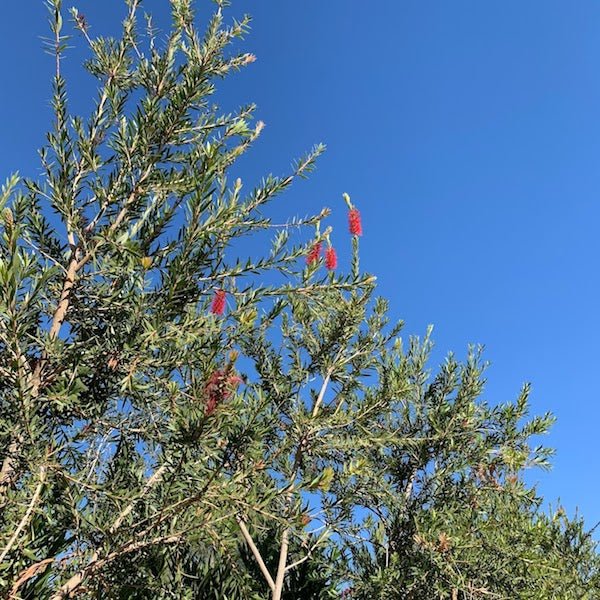
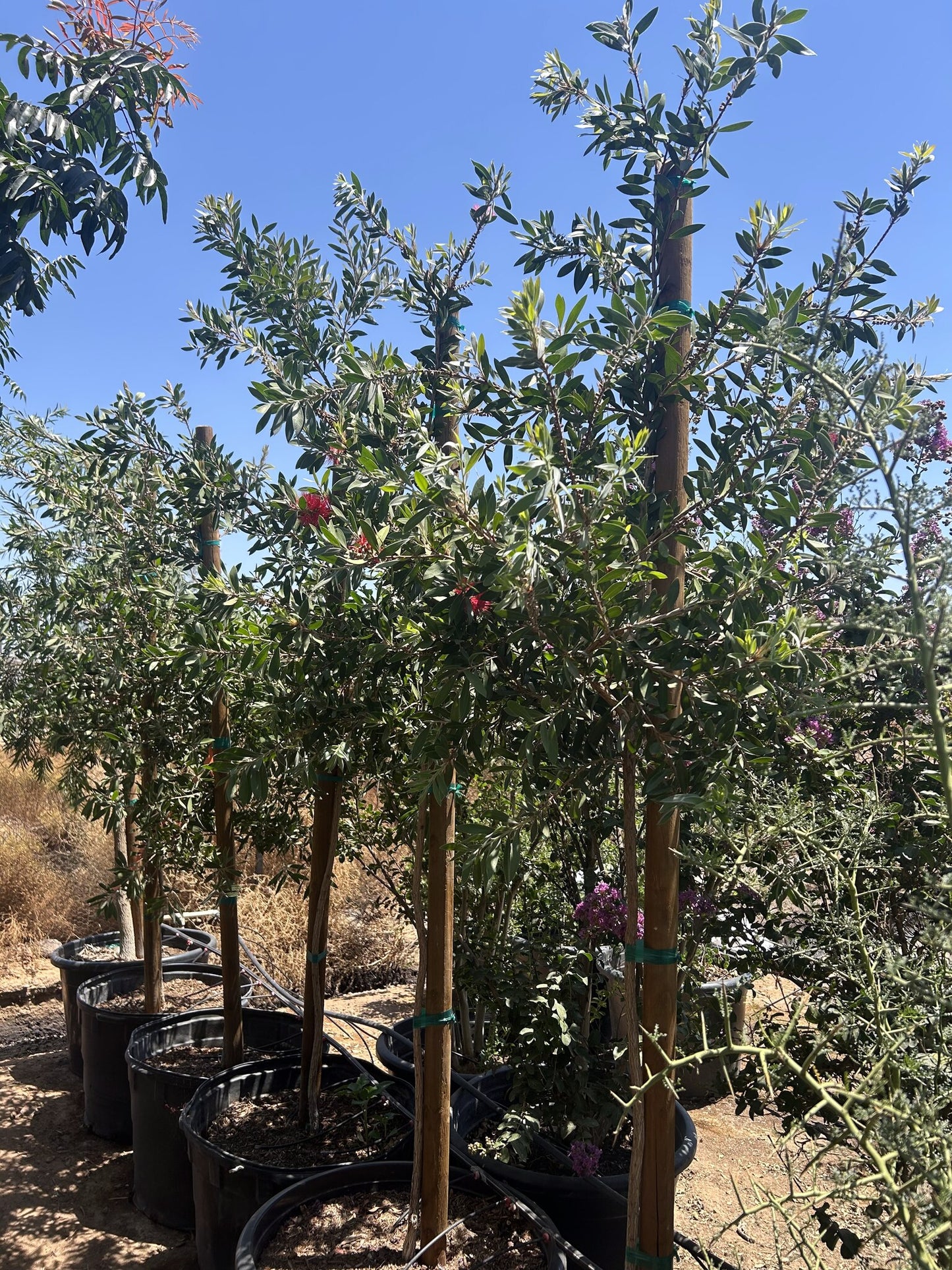
Bottle Brush Tree (Callistemon) is one of the most colorful evergreen trees you can plant in the Phoenix Valley. Famous for its brilliant red, brush-shaped flowers that bloom multiple times per year, this Australian native thrives in Arizona's heat and attracts hummingbirds, butterflies, and bees to your yard. Whether you're adding a flowering accent tree in Scottsdale, creating a colorful border along a fence in Mesa, or planting a wildlife-friendly specimen in Chandler — Bottle Brush Tree delivers nonstop visual interest with minimal maintenance.
Bottle Brush Tree Plant Details
| Attribute | Detail |
|---|---|
| Scientific Name | Callistemon spp. |
| Common Names | Bottle Brush Tree, Bottlebrush, Callistemon |
| Mature Height | 10–25 feet |
| Mature Width | 10–15 feet |
| Growth Rate | Moderate — 1–2 feet per year in Phoenix |
| Sun | Full sun (6+ hrs). Handles reflected heat from walls and pavement. |
| Water | Low to moderate once established. Drought tolerant. |
| USDA Zones | 9–11 (Phoenix is Zone 9b–10a) |
| Soil | Well-draining. Adapts to Arizona caliche soils. |
| Foliage | Evergreen — narrow, leathery leaves stay green year-round |
| Bloom Color | Bright red (some varieties pink, yellow, or white); blooms spring through fall |
Bottle Brush Tree Uses in Phoenix Landscapes
Colorful Accent Tree
With its vibrant red flowers and compact evergreen form, Bottle Brush Tree is the perfect accent tree for front yards, entryways, and courtyard gardens. It adds dramatic color without taking up too much space — ideal for smaller Phoenix lots where you want visual impact without a massive canopy. Plant as a single specimen or in a grouping of 3 for a bold statement.
Wildlife and Pollinator Garden
Bottle Brush Tree is a magnet for hummingbirds, butterflies, and native bees. The tubular flower structure is perfectly designed for hummingbird feeding, making this one of the best wildlife trees for Phoenix gardens. Pair with Red Bird of Paradise, Chuparosa, and Desert Willow to create a continuous-bloom hummingbird habitat from spring through fall.
Pool-Friendly Flowering Tree
The compact size, minimal leaf litter, and non-invasive root system make Bottle Brush Tree an excellent choice for pool-adjacent plantings. It provides color and screening without the mess or root problems associated with larger flowering trees. Plant 6–8 feet from the pool edge for a splash of tropical color.
Best Time to Plant Bottle Brush Tree in Phoenix
Fall (October–November) is the ideal planting window. The soil is still warm for root development while cooler air reduces transplant stress. This gives the tree 6–8 months of establishment before its first Phoenix summer. Spring (February–April) is also a good option. Bottle Brush Tree is tough enough to handle warm-season planting if you water consistently.
How to Plant Bottle Brush Tree
- Dig wide, not deep — excavate 2–3x the root ball width, same depth as the root ball.
- Check for caliche — break through any hardpan layer to ensure proper drainage. Bottle Brush does not tolerate waterlogged soil.
- Backfill with native soil — a light 20% organic blend is fine but not required.
- Spacing — 8–10 feet apart for a hedge row; 12–15 feet for individual specimens.
- Water basin — build a 3–4 inch soil ring around the root zone to direct water to roots.
- Mulch — apply 2–3 inches of bark or gravel mulch to retain moisture and regulate soil temperature.
Watering Bottle Brush Tree in Phoenix
First Year Watering Schedule
Weeks 1–2: Water every 1–2 days, deep and slow (20–30 minutes). Month 1–2: Every 3–4 days. Month 3–6: Every 5–7 days (every 3–5 days in peak summer). After Year 1: Every 7–14 days in summer; every 3–4 weeks in winter.
Drip Irrigation
Place emitters 18–24 inches from the trunk, using 2–4 GPH drip heads. Established Bottle Brush Trees are quite drought tolerant and need minimal supplemental water once their root system is developed. Overwatering can actually harm this tree — let the soil dry between irrigations.
How fast does Bottle Brush Tree grow in Phoenix?
Bottle Brush Tree grows at a moderate rate of 1–2 feet per year in the Phoenix Valley. It reaches a manageable 10–25 feet at maturity depending on the variety, making it a great fit for smaller to mid-sized landscapes.
Does Bottle Brush Tree attract hummingbirds?
Absolutely — Bottle Brush Tree is one of the top hummingbird-attracting trees in Arizona. The bright red tubular flowers are a favorite food source for Anna's and Costa's hummingbirds, both common Phoenix Valley residents.
Is Bottle Brush Tree drought tolerant?
Yes. Once established, Bottle Brush Tree is very drought tolerant and thrives on minimal supplemental irrigation. It's well-adapted to Phoenix's hot, dry climate and actually prefers drier conditions over soggy soil.
Does Bottle Brush Tree stay green year-round?
Yes — Bottle Brush Tree is evergreen in Phoenix, providing green foliage and periodic blooms throughout the year. It may have a heavier bloom cycle in spring and fall, with lighter flowering during the hottest summer months.
You May Also Like
Desert Willow (Chilopsis linearis) — A native flowering tree that also attracts hummingbirds with tubular blooms.
Pineapple Guava (Feijoa sellowiana) — An evergreen fruit tree with unique red and white flowers.
Crown Jewel Mesquite (Prosopis alba) — A thornless, fast-growing shade tree with a clean canopy.
Texas Ebony (Ebenopsis ebano) — A dense evergreen tree with fragrant cream flowers.
How Many Bottle Brush Tree Do I Need?
Bottle Brush Tree stays compact at 10 to 15 feet wide, so it works as a single flowering accent, an odd-numbered grouping, or a colorful evergreen screen. For a screen, space the trees so the canopies grow together; for specimens, give each one room to round out.
| Planting | Spacing Guidance |
|---|---|
| Single accent specimen | 12 to 15 ft from the next tree or structure |
| Evergreen screen / hedge row | 8 to 10 ft on center |
| Bold grouping | Odd-numbered groups of 3, 10 ft apart |
Compact size and minimal litter let you plant it 6 to 8 feet from a pool edge.
Bottle Brush Tree Season-by-Season in Phoenix
- Spring (Feb–Apr): Heavy flush of brilliant red brush flowers, drawing Anna's and Costa's hummingbirds, butterflies, and bees. Strong second planting window.
- Summer (May–Sep): Evergreen and heat-loving, holding up to reflected heat off walls and pavement. Bloom lightens in peak heat then picks back up with the monsoon. Let the soil dry between deep waterings.
- Fall (Oct–Nov): Second strong bloom cycle and prime planting season in the Valley.
- Winter (Dec–Jan): Stays evergreen and green through winter. Hardy through normal Valley frost; young trees can show tip damage in a hard freeze below the low 20s, so cover them on the coldest nights.
At a Glance
✔ Pollinator-Friendly ✔ Hummingbird-Friendly ✔ Heat-Loving (Reflected-Heat Tolerant) ✔ Drought-Tolerant ✔ Pool-Friendly (Low-Litter) ✔ Evergreen ✔ Low-Maintenance ✔ Cold-Hardy to 20°F
Plant It With
- Bottlebrush Bush: The shrub form of the same plant for layering brush-flower color at a lower height.
- Desert Willow: Native flowering tree that extends the hummingbird bloom with tubular flowers.
- Chuparosa: Low, airy native shrub that keeps the hummingbird feeding going at ground level.
- Red Yucca: Low-water accent whose coral spikes echo the red flowers and feed hummingbirds.
Is Bottle Brush Tree Right for Your Yard?
Bottle Brush Tree is a fit for full-sun spots that want year-round green plus repeat red bloom on a small footprint: front yards, entries, poolside, and hummingbird gardens, all on low to moderate water once established. It needs sharp drainage and dislikes soggy soil, which causes chlorosis and root rot. It is not a fit for deep-shade locations, where bloom drops off, or for gardeners wanting a large shade canopy, since it tops out around 25 feet.
Share