

Blue Hibiscus-Staked
Blue Hibiscus-Staked
Couldn't load pickup availability
Exotic Blue-Purple Flowering Shrub for Phoenix Landscapes
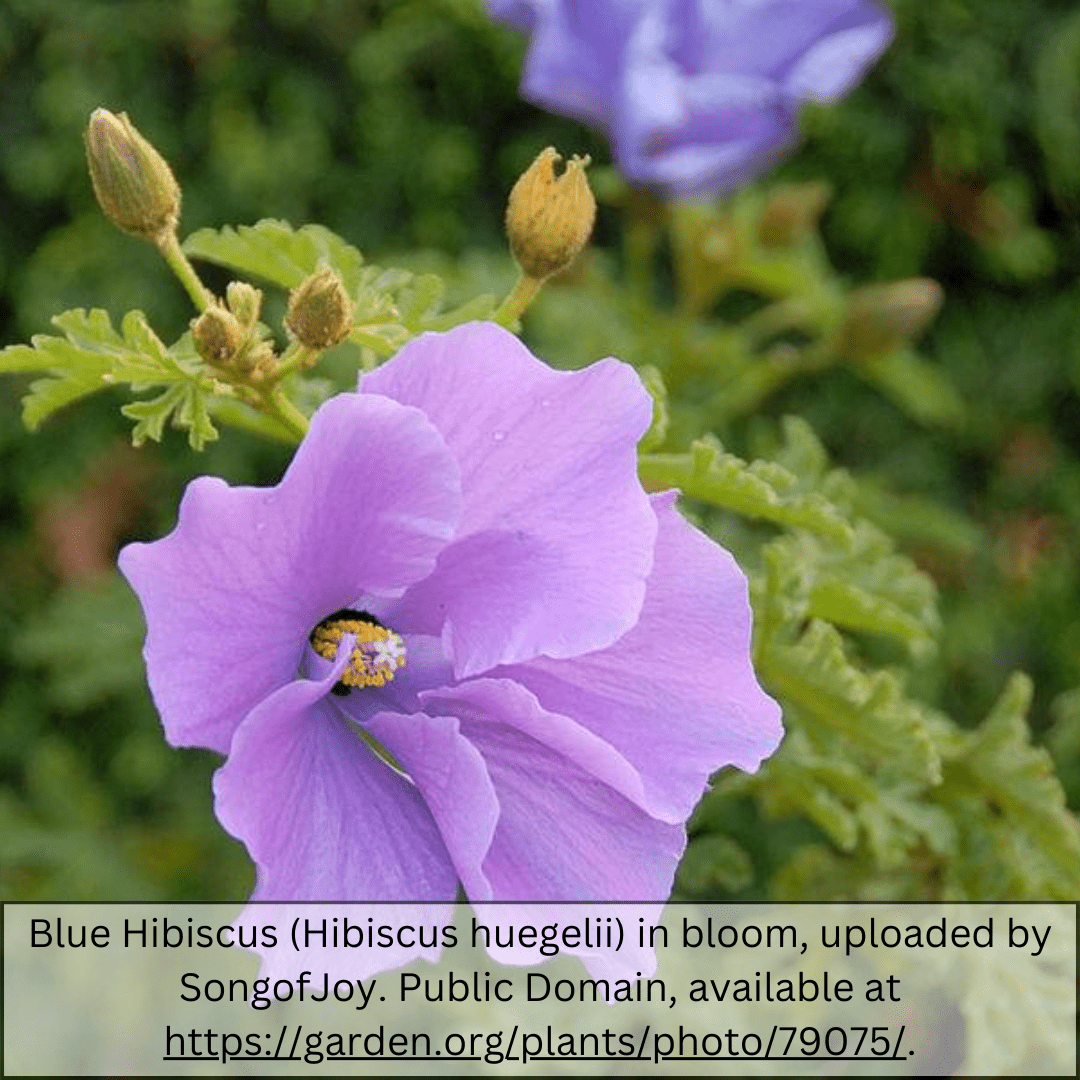
Blue Hibiscus Staked (Alyogyne huegelii) is one of the most striking and easy-care flowering shrubs you can grow in the Phoenix Valley. Despite its common name, Blue Hibiscus isn't a true hibiscus — it's an Australian native that's perfectly adapted to hot, dry climates. It produces large, lavender-blue flowers with deep purple centers that bloom almost year-round in Phoenix's mild winters. This staked form comes trained upright for a clean, tree-like silhouette that works beautifully as a patio accent or focal point. Whether you're adding color to a Scottsdale courtyard, creating a tropical look in Gilbert, or dressing up a Mesa entryway — Blue Hibiscus Staked delivers exotic beauty with desert-tough durability.
Blue Hibiscus Staked Plant Details
| Attribute | Detail |
|---|---|
| Scientific Name | Alyogyne huegelii |
| Common Names | Blue Hibiscus, Lilac Hibiscus, Australian Hibiscus |
| Mature Height | 6–8 feet |
| Mature Width | 4–6 feet |
| Growth Rate | Fast — 2–3 feet per year in Phoenix |
| Sun | Full sun (6+ hrs). Handles reflected heat from walls. |
| Water | Low to moderate once established. Very drought-tolerant. |
| USDA Zones | 9–11 (Phoenix is Zone 9b–10a) |
| Soil | Well-draining. Adapts to Arizona caliche soils. Avoid heavy clay. |
| Foliage | Evergreen — deep green, deeply lobed leaves year-round |
| Bloom Color | Lavender-blue with deep purple center, nearly year-round |
| Form | Staked upright — clean, tree-like silhouette |
Blue Hibiscus Uses in Phoenix Landscapes
Patio Accent & Focal Point
The staked form of Blue Hibiscus creates a stunning patio tree with a single trunk and rounded canopy of blue-purple blooms. Place it where you want a conversation starter — courtyard center, entryway flanker, or poolside accent. The unique flower color is rare in the desert plant palette and draws attention immediately.
Container Planting
Blue Hibiscus performs excellently in large containers (15–25 gallon) on patios, balconies, and rooftops. The staked form stays upright and tidy, making it ideal for tight spaces. Use well-draining potting mix and water slightly more frequently than in-ground plants during summer.
Mixed Flowering Border
Use Blue Hibiscus as the tallest element in a layered flowering border. Its blue-purple blooms contrast beautifully with Red Hibiscus, Yellow Bells, and Orange Bougainvillea for a vibrant, multi-color display in Chandler, Tempe, and Peoria landscapes.
Pool-Friendly Landscaping
Blue Hibiscus is evergreen with minimal leaf drop, making it a great choice near pool areas. The exotic blooms add a resort-style feel, and the staked form keeps the canopy elevated above pool equipment and walkways.
Best Time to Plant Blue Hibiscus in Phoenix
Fall (October–November) is the ideal planting window. Warm soil promotes root establishment while cooler air reduces transplant stress. Spring (March–April) is the second-best window. Avoid planting during peak summer heat (June–August) when transplant stress is highest.
How to Plant Blue Hibiscus Staked
- Dig wide, not deep — 2–3x the width of the root ball and the same depth.
- Check for caliche — Break through any hardpan layer for drainage. Blue Hibiscus is sensitive to waterlogged soil.
- Backfill with native soil — A light 20% compost blend is fine but not required.
- Keep the stake — Leave the support stake in place until the trunk is strong enough to stand alone (usually 1–2 years).
- Spacing — 5–6 feet apart for multiple plantings; 3–4 feet from walls for accent placement.
- Mulch — 2–3 inches of gravel or bark mulch. Keep mulch away from the trunk.
Watering Blue Hibiscus in Phoenix
First Year Watering Schedule
Weeks 1–2: Water every 1–2 days, deep and slow. Month 1–2: Every 3–4 days. Month 3–6: Every 5–7 days. After Year 1: Every 7–10 days in summer; every 14–21 days in winter.
Drip Irrigation
Place two 2-GPH emitters 18–24 inches from the trunk. Run drip for 30–45 minutes per cycle. Blue Hibiscus is more drought-tolerant than true hibiscus varieties and needs significantly less water once established.
Is Blue Hibiscus actually a hibiscus?
No — despite the name, Blue Hibiscus (Alyogyne huegelii) is not a true Hibiscus. It's a related Australian native in the mallow family. The flowers look similar to tropical hibiscus but the plant is far more drought-tolerant and cold-hardy. It's perfectly suited to Phoenix's climate.
How long do Blue Hibiscus flowers last?
Individual flowers last 1–2 days, but the plant produces new blooms continuously for months. In Phoenix, you can expect flowers from spring through fall, with sporadic blooms even in winter during mild years.
Does Blue Hibiscus need a lot of pruning?
Minimal. Prune lightly after heavy bloom cycles to maintain shape. The staked form needs occasional tip pruning to keep the canopy rounded. Remove any suckers that sprout below the graft point on the trunk.
Can Blue Hibiscus handle Phoenix summer heat?
Yes — it thrives in full sun and handles reflected heat. As an Australian native, it's adapted to hot, dry conditions similar to Phoenix. It may slow blooming slightly in the very hottest weeks but rebounds quickly.
You May Also Like
Blue Hibiscus Tree — The tree form of the same plant, trained into a standard with a rounded canopy.
Red Hibiscus — Classic tropical-look hibiscus with bold red blooms for warm-color contrast.
White Hibiscus — Pure white hibiscus flowers for a clean, elegant complement to the blue variety.
Pink Hibiscus — Soft pink double blooms that pair beautifully with the blue-purple flowers.
Yellow Bells — Bright yellow trumpet blooms on a heat-loving shrub — great warm-color companion.
How Many Blue Hibiscus Staked Do I Need?
The staked form is trained as a single upright trunk, so it shines as a specimen or matched pair rather than a hedge. Use one to anchor a courtyard or entry, or set a matched pair on either side of a doorway, gate, or pool feature. For a row of patio accents along a wall or drive, space plants 5 to 6 ft apart so each canopy has room to round out. It also grows beautifully in a 15 to 25 gallon container.
Blue Hibiscus Staked Season-by-Season in Phoenix
- Spring (Feb to Apr): Heavy flush of lavender-blue bloom and fast new growth. Tip-prune lightly to keep the canopy rounded.
- Summer (May to Sep): Blooms through the heat in full sun and shrugs off reflected heat. May pause briefly in the hottest weeks, then rebounds with monsoon humidity.
- Fall (Oct to Nov): Prime planting season and a renewed bloom as nights cool.
- Winter (Dec to Jan): Stays evergreen and may bloom sporadically in mild winters. Foliage can show frost damage below about 25°F, so cover the canopy on hard frost nights, especially in containers.
At a Glance
✔ Evergreen ✔ Drought-Tolerant ✔ Heat-Loving (Reflected-Heat Tolerant) ✔ Pollinator-Friendly ✔ Low-Maintenance
Plant It With
- Blue Hibiscus Tree: the matching standard form for a coordinated patio look.
- Lavender Starflower: a low shrub that echoes the purple blooms at ground level.
- Texas Sage: silver foliage and purple flowers that share the same low-water needs.
- Desert Spoon: a bold architectural accent beneath the staked canopy.
Is Blue Hibiscus Staked Right for Your Yard?
This staked accent fits a sunny courtyard, entry, or pool-side bed with well-draining soil and room for a 6 to 8 ft canopy. It loves full sun and reflected heat and asks only for deep, spaced watering once established. It is not the best fit for deep shade, soggy clay that holds water, or fully exposed sites where winter lows regularly drop below 25°F without frost cover.
Customer Reviews
She's a beauty. Tall and blossoming.
Share