

Blue Hibiscus
Blue Hibiscus
Couldn't load pickup availability
Phoenix's Best Low-Water Flowering Shrub — Blue Hibiscus for Desert Landscapes
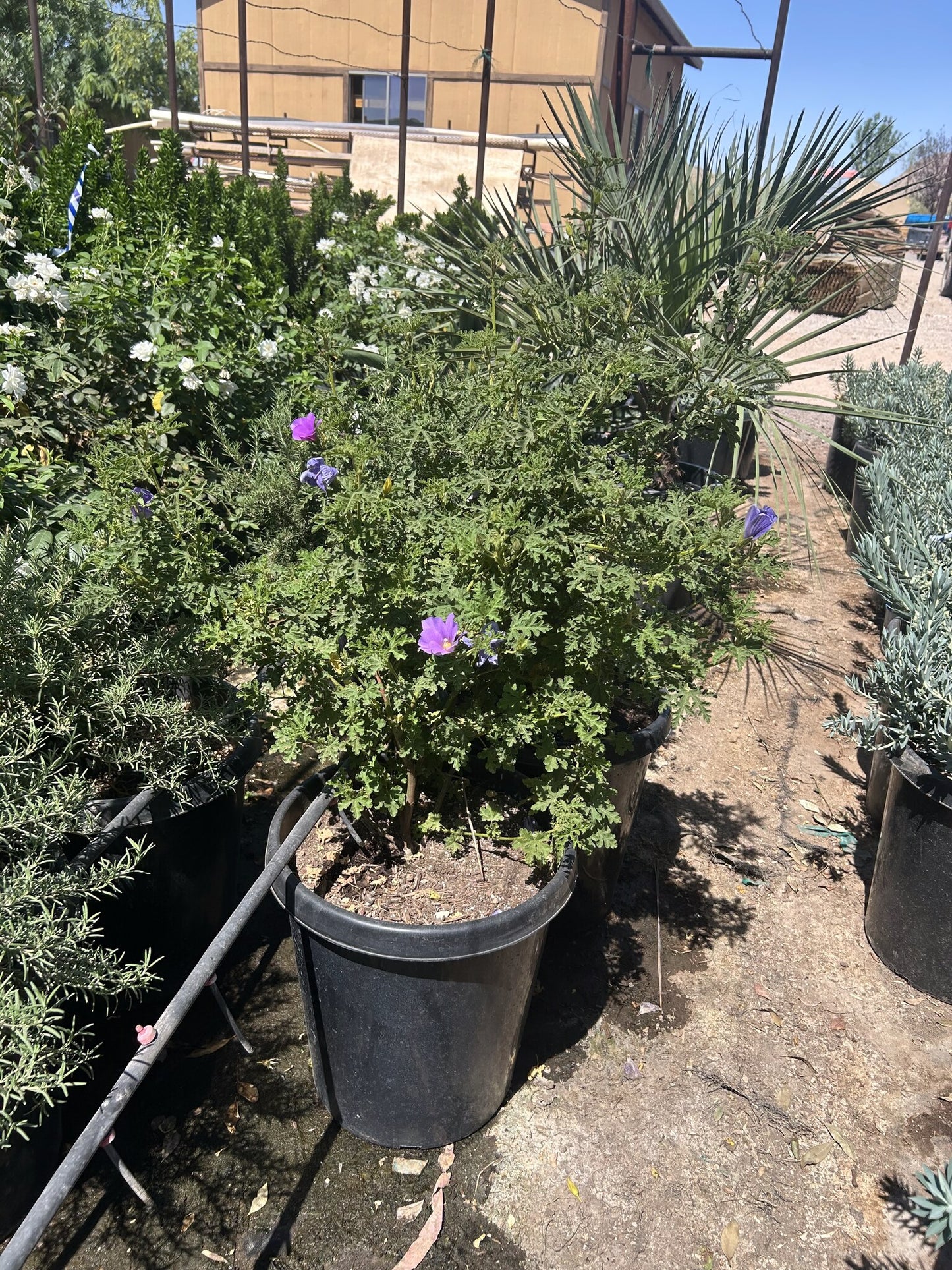
Blue Hibiscus (Alyogyne huegelii), also called Lilac Hibiscus, is Phoenix's premier low-water flowering shrub for dramatic, year-round color. Native to Australia's arid regions, this evergreen shrub produces large, silky, lavender-blue blooms — 4–5 inches across — that look remarkably like tropical hibiscus flowers while thriving on a fraction of the water. Unlike true tropical hibiscus that demands regular irrigation, Blue Hibiscus is highly drought-tolerant once established, making it ideal for Scottsdale, Mesa, and Gilbert homeowners who want exotic, resort-style beauty without a high water bill. Hardy in Zones 9–11 and perfectly adapted to Phoenix's Zone 9b–10a climate, Blue Hibiscus is one of the most rewarding flowering shrubs available for the Phoenix Valley.
Blue Hibiscus Plant Details
| Attribute | Detail |
|---|---|
| Scientific Name | Alyogyne huegelii |
| Common Names | Blue Hibiscus, Lilac Hibiscus, Australian Hibiscus |
| Mature Height | 5–8 ft. |
| Mature Width | 4–6 ft. |
| Growth Rate | Moderate to fast — 2–3 ft. per year in Phoenix |
| Sun | Full sun (6+ hrs). Handles reflected heat from walls exceptionally well. |
| Water | Low once established. Highly drought-tolerant — one of the best for Phoenix. |
| USDA Zones | 9–11 (Phoenix is Zone 9b–10a) |
| Soil | Well-draining. Naturally adapts to Arizona caliche soils once established. |
| Foliage | Evergreen — stays green year-round |
| Bloom Color | Lavender-blue to deep lilac |
| Bloom Season | Spring through fall; can bloom year-round in mild Phoenix winters |
Blue Hibiscus Uses in Phoenix Landscapes
Low-Water Flowering Focal Point
Blue Hibiscus is unmatched as a drought-tolerant focal point shrub for Phoenix gardens. Its large, jewel-toned lavender-blue flowers create the look of an exotic tropical planting while using far less water than true tropical hibiscus. Plant it as a centerpiece in a desert garden, at an entryway corner, or in a mixed shrub border with Texas Sage and Lavender Starflower for continuous color from spring through fall. Individual specimens spaced 5–6 ft. from structures make stunning focal points in Chandler and Peoria yards.
Privacy Hedge and Screen
Blue Hibiscus grows to 5–8 feet with an upright, dense habit — making it an excellent mid-height privacy shrub for Phoenix properties. Unlike purely structural hedges, Blue Hibiscus adds a spectacular flowering display to the privacy function. For a 20-foot privacy run: plant 3–4 shrubs spaced 5–6 ft. apart. For 40 feet: 6–8 plants. Combine with Desert Spoon and Bougainvillea for a layered, low-water privacy border.
Pool-Friendly Desert Landscape
Blue Hibiscus is one of the cleanest flowering shrubs for Phoenix pool areas — the blooms are attractive but don't create excessive debris in the water. Its lavender-blue flowers and evergreen foliage complement pool coping, gravel finishes, and tropical design themes while using far less water than typical pool-area plantings. Pair with Bird of Paradise and Mexican Fan Palm for a complete resort-style pool landscape.
Modern Desert and Xeriscape Design
In low-water xeriscape designs, Blue Hibiscus provides the pop of flowering color that's often missing from purely succulent plantings. It blends beautifully with agaves, desert spoons, and native grasses while providing continuous floral interest. Plant in groups of 3 for a natural, clustered look in a gravel or decomposed granite xeriscape bed in Tempe or Glendale.
Best Time to Plant Blue Hibiscus in Phoenix
Fall (October–November) is the ideal planting window for Blue Hibiscus in the Phoenix Valley. Warm soil temperatures allow rapid root establishment while cooler air temperatures reduce transplant stress. Six to eight months of root growth before the first Phoenix summer gives Blue Hibiscus the resilience to thrive through triple-digit heat. Spring (February–April) is the second-best window, and you may catch early blooms soon after planting. Avoid summer planting if possible, as new transplants need extra irrigation during peak heat to survive.
How to Plant Blue Hibiscus
- Dig wide, not deep — excavate 2–3x the root ball width and the same depth. Avoid planting too deep.
- Check for caliche — break through any caliche hardpan layer to ensure proper drainage. Arizona caliche traps water and can cause root problems if not addressed.
- Backfill with native soil — a light 20% organic amendment is fine; Blue Hibiscus adapts well to native desert soil and doesn't need heavy enrichment.
- Spacing — plant 5–6 ft. apart for hedges and screens; 5–7 ft. for individual specimens.
- Water basin — build a 3–4 inch soil ring to direct irrigation to the root zone.
- Mulch — apply 2–3 inches of gravel or bark mulch to retain moisture and moderate soil temperature.
Watering Blue Hibiscus in Phoenix
First Year Watering Schedule
Consistent watering through the first year establishes deep roots that enable drought tolerance in subsequent years.
- Weeks 1–2: Water every 1–2 days, deep and slow (20–30 minutes per session)
- Months 1–2: Water every 3–4 days
- Months 3–6: Water every 7–10 days (every 5–7 days during peak Phoenix summer)
- After Year 1: Every 14–21 days in summer; every 3–5 weeks in winter
Drip Irrigation
Install drip emitters 18–24 inches from the trunk, using 1 GPH emitters per plant. Once established, Blue Hibiscus is extremely efficient with water — one of the best flowering shrubs for smart irrigation systems in Phoenix. Established plants in gravel mulch can often go 3–4 weeks between waterings in winter with no stress.
How often does Blue Hibiscus bloom in Phoenix?
In Phoenix's warm climate, Blue Hibiscus produces new blooms almost continuously from spring through fall, and often into winter during mild years. Each individual flower lasts 1–3 days, but the plant produces new flowers constantly, keeping the display going for months.
Is Blue Hibiscus actually drought-tolerant?
Yes — Blue Hibiscus (Alyogyne huegelii) is genuinely drought-tolerant once established, unlike true tropical hibiscus (Hibiscus rosa-sinensis). It's native to arid Australia and thrives on low water, making it one of the best choices for Phoenix water-wise landscapes that still want big flowering impact.
What's the difference between Blue Hibiscus and regular Hibiscus?
Blue Hibiscus (Alyogyne huegelii) and tropical Hibiscus (Hibiscus rosa-sinensis) look similar but have different water needs. Blue Hibiscus is drought-tolerant and arid-adapted; tropical hibiscus needs regular irrigation. Blue Hibiscus blooms are typically lavender-blue; tropical hibiscus comes in red, orange, yellow, and pink. For Phoenix water-wise gardens, Blue Hibiscus is the superior choice.
Can Blue Hibiscus handle Phoenix reflected heat?
Yes — it excels in reflected heat situations that stress other plants. West-facing walls and sun-baked parking strips that cook other flowering shrubs are where Blue Hibiscus often performs best. Its Australian origins make it naturally heat-adapted beyond most flowering shrubs.
Does Blue Hibiscus work as a privacy screen?
Yes — its upright habit and dense evergreen foliage make it an excellent mid-height privacy screen (5–8 ft. at maturity) with the added bonus of lavender-blue blooms throughout the growing season.
You May Also Like
- Lavender Starflower (Grewia caffra) — a companion low-water shrub with similar lavender-purple star-shaped blooms that pairs beautifully with Blue Hibiscus in mixed desert shrub borders.
- Texas Sage (Leucophyllum frutescens) — a classic Phoenix low-water flowering shrub that creates a stunning purple-pink and lavender-blue combination when planted alongside Blue Hibiscus.
- Florida Sunset Hibiscus — for those who want tropical hibiscus appeal with orange-red blooms in wetter microclimates or container plantings.
- Desert Spoon (Dasylirion wheeleri) — a bold structural desert accent that contrasts dramatically with Blue Hibiscus's soft, flowing blooms.
- Lilac Vine (Hardenbergia violacea) — a complementary lavender-purple climbing vine for fences and trellises near Blue Hibiscus plantings.
How Many Blue Hibiscus Do I Need?
Blue Hibiscus matures to 4 to 6 ft wide, so space plants about 5 ft on center for a continuous flowering hedge or screen. Use this guide as a starting point:
| Hedge Run | Plants Needed (5 ft spacing) |
|---|---|
| 10 ft | 2 plants |
| 20 ft | 4 plants |
| 30 ft | 6 plants |
| 40 ft | 8 plants |
For specimen or focal-point use, plant single or in an odd-numbered group of 3 spaced 5 to 6 ft apart so each shrub keeps its full rounded form.
Blue Hibiscus Season-by-Season in Phoenix
- Spring (Feb to Apr): Heavy flush of lavender-blue bloom and vigorous new growth. A strong second planting window once nights stay above 50°F.
- Summer (May to Sep): Thrives in extreme heat and reflected heat off west-facing walls where many flowering shrubs struggle. Bloom continues through the monsoon with deep, infrequent water.
- Fall (Oct to Nov): Prime planting season and a second strong bloom as temperatures ease. Roots establish fast in still-warm soil.
- Winter (Dec to Jan): Stays evergreen and often keeps blooming in mild Valley winters. Foliage can show damage below about 25°F, so cover young plants on hard frost nights.
At a Glance
✔ Evergreen ✔ Drought-Tolerant ✔ Heat-Loving (Reflected-Heat Tolerant) ✔ Pollinator-Friendly ✔ Low-Maintenance
Plant It With
- Lavender Starflower: echoes the lavender-purple blooms for a coordinated low-water border.
- Texas Sage: silver foliage and purple flowers contrast the deep blue and share the same low-water needs.
- Desert Spoon: a bold architectural accent that sets off the soft, flowing flowers.
- Lilac Vine: carries the lavender color theme up a nearby wall or trellis.
Is Blue Hibiscus Right for Your Yard?
Blue Hibiscus thrives in full sun, including hot reflected-heat spots, and adapts to caliche soils as long as the planting hole drains. Give it 5 to 6 ft of room and deep, infrequent water once established. It is not the best fit for deep shade, soggy low spots, or unprotected exposures where winter lows regularly drop below 25°F without frost cover.
Share