

Blue Ghost
Blue Ghost
Couldn't load pickup availability
Stunning Blue Columnar Cactus — The Ultimate Desert Statement Plant
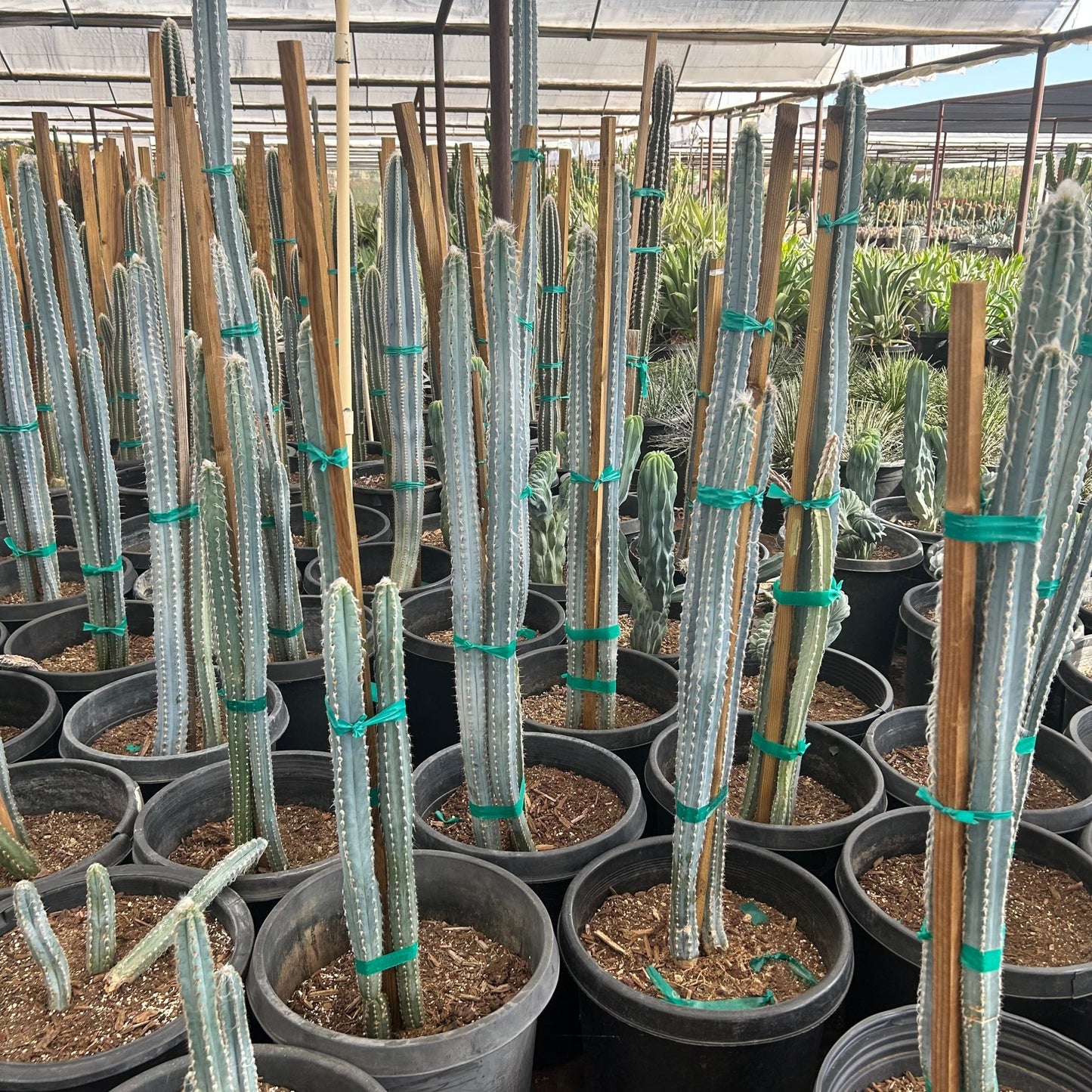
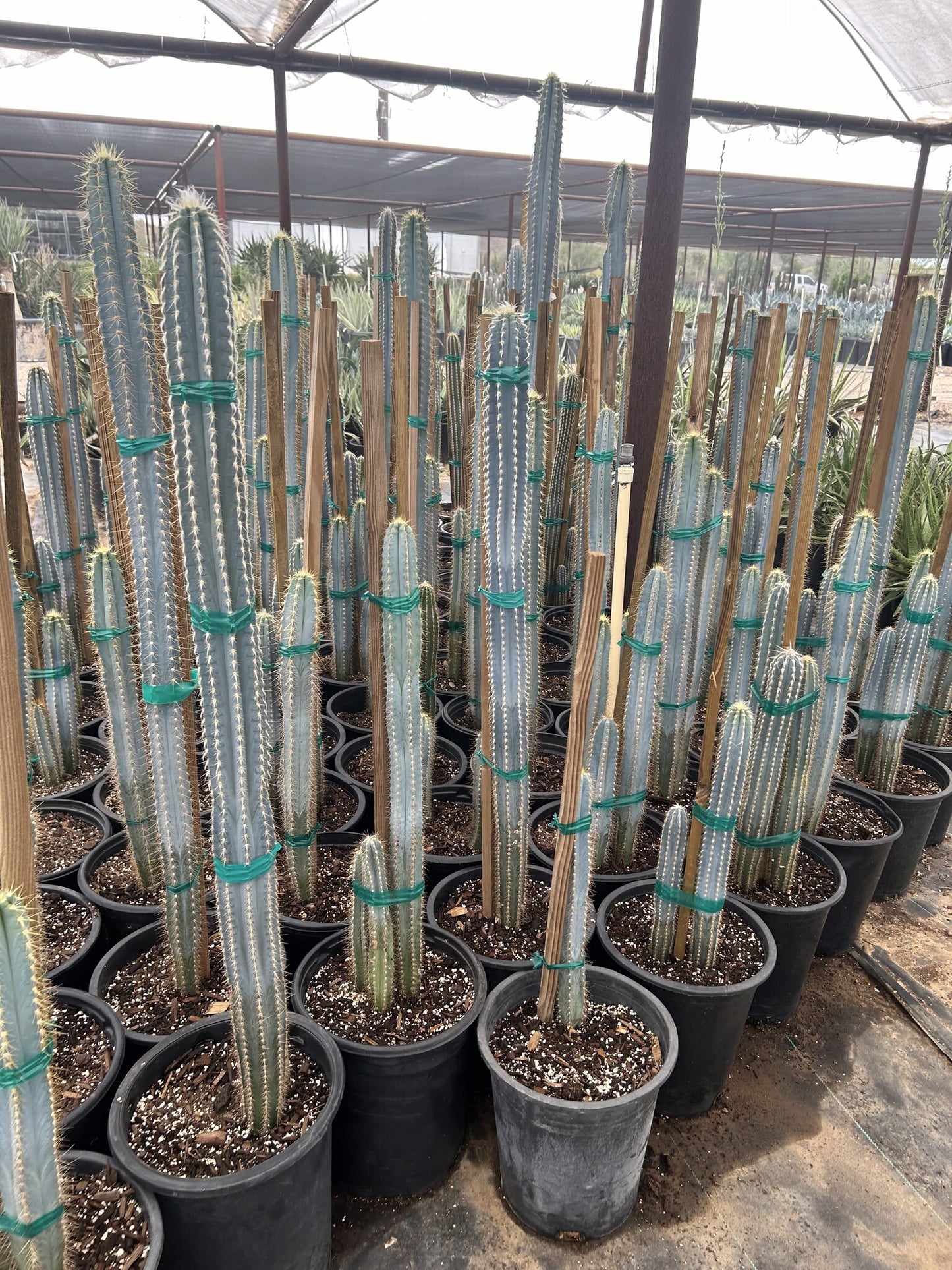
The Blue Ghost (Pilosocereus azureus) is hands-down one of the most visually striking columnar cacti available for Phoenix landscapes. Its ghostly blue-silver stems create an otherworldly presence that stops people in their tracks. Native to Brazil's arid regions, this cactus is perfectly suited to Phoenix Valley heat, growing 10–20 feet tall with an upright branching habit. The blue coloration intensifies with sun exposure, making it even more dramatic in Phoenix's intense light. Whether you're designing a modern Scottsdale courtyard, creating a statement entry in Paradise Valley, or adding sculptural drama to a Mesa xeriscape — the Blue Ghost delivers color and form no other cactus can match.
Blue Ghost Plant Details
| Attribute | Detail |
|---|---|
| Scientific Name | Pilosocereus azureus |
| Common Names | Blue Ghost, Blue Torch Cactus, Blue Columnar Cactus |
| Mature Height | 10–20 feet |
| Mature Width | 4–6 feet (branching) |
| Growth Rate | Moderate — 1–2 feet per year in Phoenix |
| Sun | Full sun (6+ hrs). Blue color intensifies with more sun exposure. |
| Water | Low once established. Highly drought-tolerant. |
| USDA Zones | 9b–11 (Phoenix is Zone 9b–10a) |
| Soil | Well-draining. Adapts to Arizona caliche soils with adequate drainage. |
| Foliage | Evergreen — stunning blue-silver stems with golden areoles year-round |
| Bloom | White nocturnal flowers on mature specimens, followed by purple fruit |
Blue Ghost Uses in Phoenix Landscapes
Modern Desert Focal Point
Nothing creates a more dramatic focal point than a Blue Ghost cactus against a white or tan stucco wall. The electric blue stems pop against neutral backgrounds, creating an almost surreal visual effect. Plant a single specimen or a group of three in ascending sizes for a contemporary sculptural installation. This look is especially popular in Scottsdale, Paradise Valley, and Arcadia neighborhoods where modern desert design is the aesthetic goal.
Architectural Accent & Entry Planting
Frame a front entry, courtyard gate, or driveway turn with Blue Ghost specimens for an unforgettable first impression. The upright columnar form provides vertical structure without blocking sightlines, and the blue color creates a striking contrast with desert browns and greens. Pair with orange-flowering Ruellia or red Hesperaloe for a complementary color scheme that looks intentional and sophisticated.
Pool-Friendly Landscape Design
Blue Ghost is ideal near pools and outdoor living areas in Chandler, Gilbert, and Tempe. Its upright growth stays contained, it drops no leaves or debris, and the blue stems look stunning reflected in pool water. Maintain a 4-foot setback from the pool edge and position where the blue color catches afternoon light for maximum visual impact.
Desert Color Garden
Create a desert color garden by pairing Blue Ghost with other colorful cacti and succulents: Golden Barrel for warm contrast, Purple Prickly Pear for cool-tone harmony, and Red Yucca for height variation. The result is a water-wise garden that's more colorful than many traditional landscapes — and uses almost no water once established.
Best Time to Plant Blue Ghost in Phoenix
Fall (October–November) is ideal. Warm soil supports root growth while cooler air minimizes transplant stress. Blue Ghost is slightly more cold-sensitive than some columnar cacti, so fall planting gives it a full season to establish roots before any winter cold. Spring (February–April) is the second-best window. Avoid summer planting — the combination of transplant shock and extreme heat is hardest on this species.
How to Plant Blue Ghost
- Dig wide, not deep — 2–3x the root ball width, same depth as the nursery container.
- Check for caliche — break through any hardpan layer completely. Blue Ghost is especially sensitive to standing water.
- Backfill with native soil — amend with 20–30% coarse sand, pumice, or perlite for extra drainage.
- Spacing — 4–6 feet apart for groupings; 6+ feet from structures for mature specimens.
- Plant at nursery depth — never bury the stem deeper than it sat in the pot.
- Gravel mulch — 2–3 inches of light-colored decomposed granite looks best against the blue stems.
Watering Blue Ghost in Phoenix
First Year Watering Schedule
Weeks 1–2: Every 4–5 days, deep and slow. Month 1–3: Every 7–10 days. Month 3–6: Every 10–14 days (every 7 days during peak summer). After Year 1: Every 2–3 weeks in summer; monthly or less in winter. Blue Ghost is drought-tolerant but benefits from slightly more water than some columnar cacti during its first year.
Drip Irrigation Tips
Place one 2 GPH emitter 18–24 inches from the trunk. For mature branching plants, add a second emitter on the opposite side. Ensure the area drains completely between waterings — this species will not tolerate soggy roots.
How fast does Blue Ghost grow in Phoenix?
Moderate growth at 1–2 feet per year. Branching typically begins once the main stem reaches 4–5 feet. A 5-gallon plant can reach 6–8 feet within 3–4 years with consistent care.
Does the blue color stay year-round?
Yes. The blue coloration is a natural waxy coating on the stems that persists year-round. It actually intensifies with more sun exposure, so full-sun placement gives the most vivid blue color.
Is Blue Ghost frost-hardy?
It's hardy to about 25–28°F, which covers most Phoenix Valley winters. Protect young plants with frost cloth during cold snaps below 28°F. Once established and taller than 4–5 feet, Blue Ghost handles typical Phoenix winters without protection.
Does it bloom?
Yes. Mature specimens produce white nocturnal flowers that attract bats and moths. The flowers are followed by small purple fruits. Blooming typically begins once the plant reaches 5+ feet in height.
What other plants pair well with Blue Ghost?
Golden Barrel cactus, Agave americana, Red Yucca, Orange Jubilee, and Fire Sticks Euphorbia all create stunning color contrasts against the blue stems.
You May Also Like
Blue Myrtle Cactus — another blue-stemmed columnar cactus with a slightly different form and growth habit.
Mexican Fence Post — a clean green columnar cactus that creates beautiful contrast when planted alongside Blue Ghost.
Golden Torch — golden-spined columnar that pairs dramatically with Blue Ghost's cool blue tones.
San Pedro — a fast-growing green columnar for adding height quickly alongside developing Blue Ghost specimens.
How Many Blue Ghost Do I Need?
Blue Ghost is a tall, branching columnar specimen (10 to 20 ft high, 4 to 6 ft wide), so it is used for vertical drama rather than a hedge. Plant a single column as a focal point against a stucco wall, or stage odd-numbered groups of 3 to 5 in ascending heights spaced 4 to 6 ft apart for a sculptural installation. Give mature specimens 6+ ft of clearance from structures and eaves, and hold a 4 ft setback from pool edges and walkways.
| Planting | Spacing | Plants needed |
|---|---|---|
| Single focal column | standalone | 1 |
| Stepped sculptural group | 4 to 6 ft apart | 3 |
| Bold entry or wall composition | 4 to 6 ft apart | 5 |
Blue Ghost Season-by-Season in Phoenix
- Spring (Feb to Apr): New stem growth flushes and the waxy blue coating brightens as light intensifies. Best second planting window once nights stay above the upper 40s.
- Summer (May to Sep): Thrives in full Phoenix sun and reflected heat, where the blue color is most vivid. Mature plants open white night flowers that draw bats and moths. Let the soil dry fully between waterings, especially through monsoon humidity, since standing water is this plant's main weakness.
- Fall (Oct to Nov): Prime planting season. Warm soil and mild air give roots a full season to establish before cold. Purple fruit may follow summer flowers on mature columns.
- Winter (Dec to Jan): Holds its blue color and upright form. Hardy to about 25 to 28 F, so established plants handle typical Valley winters. Cover young or recently planted specimens with frost cloth on nights forecast below 28 F.
At a Glance
✔ Heat-Loving (Reflected-Heat Tolerant) ✔ Drought-Tolerant ✔ Evergreen ✔ Low-Maintenance ✔ Pollinator-Friendly ✔ Pool-Friendly (Low-Litter) ✔ Deer & Rabbit-Resistant
Plant It With
- Blue Myrtle Cactus: another blue-stemmed columnar that builds a tonal blue grouping.
- Mexican Fence Post: clean green columns that contrast against Blue Ghost's silver-blue stems.
- Golden Torch: golden-spined columnar for a warm-against-cool color play.
- Golden Barrel: gold-spined globe at the base of the columns for warm ground-level contrast.
Is Blue Ghost Right for Your Yard?
Blue Ghost thrives in full sun with fast-draining soil, where reflected heat only deepens its blue color, and it stays clean enough for poolside and patio plantings. It is not a fit if your soil holds water or the spot stays shaded, since soggy roots are fatal to this species, and young plants need frost-cloth protection on the coldest Valley nights until they are well established and 4 to 5 ft tall.
Share