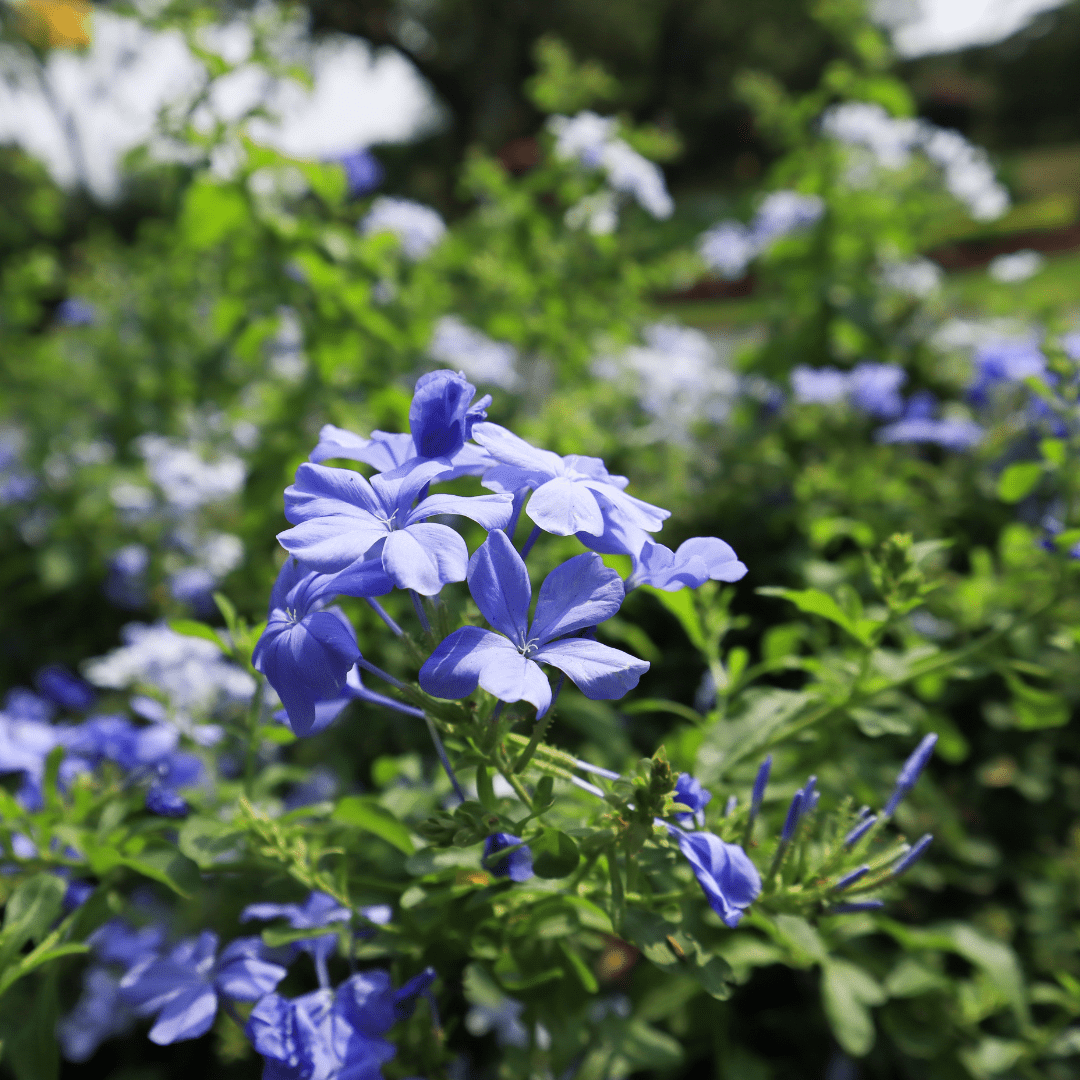


Blue Cape Plumbago
Blue Cape Plumbago
Couldn't load pickup availability
The Easiest Blue-Flowering Shrub for Phoenix Landscapes
Blue Cape Plumbago (Plumbago auriculata) is the easiest way to add cool, sky-blue color to your Phoenix landscape year after year. This fast-growing South African native blooms nonstop from spring through fall, producing clusters of soft blue flowers that attract butterflies and brighten any space. Whether you're filling a border bed in Scottsdale, softening a block wall in Chandler, or creating a flowing cottage-style garden in Mesa — Blue Cape Plumbago delivers reliable color with minimal effort.
Blue Cape Plumbago Plant Details
| Attribute | Detail |
|---|---|
| Scientific Name | Plumbago auriculata |
| Common Names | Blue Cape Plumbago, Cape Leadwort, Blue Plumbago |
| Mature Height | 4–8 feet |
| Mature Width | 6–10 feet |
| Growth Rate | Fast — 2–3 feet per year in Phoenix |
| Sun | Full sun to partial shade. Handles reflected heat from walls. |
| Water | Low to moderate once established. Drought tolerant. |
| USDA Zones | 8–11 (Phoenix is Zone 9b–10a) |
| Soil | Well-draining preferred. Adapts to Arizona caliche soils. |
| Foliage | Semi-evergreen — stays green most of the year; may freeze back in coldest weeks |
| Bloom Color | Pale sky-blue; blooms spring through fall with heaviest flushes in warm months |
Blue Cape Plumbago Uses in Phoenix Landscapes
Colorful Border and Foundation Planting
Blue Cape Plumbago is one of the best flowering shrubs for border beds and foundation plantings in the Phoenix Valley. Its mounding, arching habit fills space quickly and produces waves of blue flowers from March through November. Plant 3–4 feet apart along a walkway, driveway, or house foundation for a continuous band of cool blue color. Works beautifully against warm-toned stucco walls and desert gravel.
Wall and Fence Softener
The arching, semi-vining growth habit of Blue Cape Plumbago makes it perfect for softening block walls, wrought iron fences, and pool enclosures. It naturally leans into and drapes over structures without requiring a formal trellis. Plant 2–3 feet from the base of a wall and let it fill in — within one growing season, you'll have a flowering curtain of blue.
Butterfly and Pollinator Garden
Blue Cape Plumbago is a butterfly magnet, especially for painted ladies and Gulf fritillaries. The clusters of tubular blue flowers provide nectar from spring through fall, making it an essential plant for any Phoenix pollinator garden. Pair with Autumn Sage, Lantana, and Desert Milkweed for a continuous-bloom butterfly habitat.
Best Time to Plant Blue Cape Plumbago in Phoenix
Fall (October–November) is ideal. The soil is still warm for root growth while cooler air temperatures reduce transplant stress. Spring (February–April) is also excellent — Plumbago establishes quickly in warm soil and will bloom its first season. Avoid planting in peak summer if possible, though Plumbago is tough enough to handle it with consistent watering.
How to Plant Blue Cape Plumbago
- Dig wide, not deep — excavate 2–3x the root ball width, same depth as the root ball.
- Check for caliche — break through any hardpan layer to ensure proper drainage.
- Backfill with native soil — a light 20% organic blend is fine but not required.
- Spacing — 3–4 feet apart for a border hedge; 5–6 feet for individual specimens.
- Water basin — build a 3–4 inch soil ring around the root zone to direct water to roots.
- Mulch — apply 2–3 inches of bark or gravel mulch to retain moisture and regulate soil temperature.
Watering Blue Cape Plumbago in Phoenix
First Year Watering Schedule
Weeks 1–2: Water every 1–2 days, deep and slow (15–20 minutes). Month 1–2: Every 3–4 days. Month 3–6: Every 5–7 days (every 3–4 days in peak summer). After Year 1: Every 7–14 days in summer; every 3–4 weeks in winter.
Drip Irrigation
Place 1–2 GPH emitters 12–18 inches from the base for small plants, expanding as the shrub grows. Plumbago is moderately drought tolerant once established but produces its best blooms with regular deep watering during the growing season. Let the soil dry slightly between irrigations — it does not like soggy feet.
How fast does Blue Cape Plumbago grow in Phoenix?
Very fast — expect 2–3 feet of growth per year in the Phoenix Valley. A 1-gallon plant can fill a 4–5 foot space within 1–2 growing seasons. Prune in late winter to control size and shape.
Is Blue Cape Plumbago drought tolerant?
Yes. Once established, Blue Cape Plumbago is quite drought tolerant and will survive on minimal water. However, it blooms best with regular irrigation during the warm months. Cut back on water in winter when the plant slows growth.
Does Blue Cape Plumbago freeze in Phoenix?
In most Phoenix Valley locations, Blue Cape Plumbago stays evergreen or semi-evergreen year-round. In unusually cold winters or frost-prone areas (north Scottsdale, Cave Creek), it may freeze back to the ground but regrows vigorously from the roots in spring.
Does Blue Cape Plumbago attract butterflies?
Absolutely. Plumbago is one of the top butterfly-attracting shrubs in Phoenix. The pale blue flower clusters are especially popular with painted lady and Gulf fritillary butterflies throughout the warm season.
You May Also Like
White Cape Plumbago (Plumbago auriculata 'Alba') — The white-flowering cousin for a softer, moonlight-garden look.
Purple Trailing Lantana (Lantana montevidensis) — A low-growing, drought-tough groundcover with purple blooms.
Autumn Sage (Salvia greggii) — A compact, hummingbird-attracting shrub with red, pink, or coral flowers.
Texas Sage (Leucophyllum frutescens) — Arizona's iconic purple-flowering drought shrub.
How Many Blue Cape Plumbago Do I Need?
This is a large, mounding shrub at 6 to 10 feet wide. For a flowing border or color band, space plants about 4 feet apart and let them knit together; for single specimens give each 5 to 6 feet of room. Use this table to estimate plant count for a border:
| Border Length | Plants Needed (4 ft spacing) |
|---|---|
| 12 ft | 3 plants |
| 20 ft | 5 plants |
| 30 ft | 8 plants |
| 40 ft | 10 plants |
Blue Cape Plumbago Season-by-Season in Phoenix
- Spring (Feb–Apr): New growth flushes fast after a late-winter cutback, and the first wave of sky-blue flowers opens, drawing painted lady and Gulf fritillary butterflies. A strong planting window.
- Summer (May–Sep): Peak bloom. Plumbago loves heat and reflected warmth off walls, flowering hardest through the hottest months. Monsoon rains (Jul–Sep) push extra growth, so guide or trim the arching stems as needed.
- Fall (Oct–Nov): Bloom continues strong as temperatures ease. Prime planting season in Phoenix.
- Winter (Dec–Jan): Growth slows and it may drop leaves; in frost-prone areas like north Scottsdale or Cave Creek it can freeze back below about 28°F but regrows vigorously from the roots in spring. Cut back in late winter to reshape.
At a Glance
✔ Heat-Loving (Reflected-Heat Tolerant) ✔ Drought-Tolerant ✔ Pollinator-Friendly ✔ Low-Maintenance
Plant It With
- Texas Sage: silver foliage and purple blooms that pair coolly with plumbago's sky-blue.
- Autumn Sage: red blooms and hummingbird traffic that contrast the blue flower clusters.
- Desert Milkweed: a monarch host plant that builds out the butterfly habitat alongside the plumbago.
- Desert Ruellia: a tidy purple bloomer that fills the lower edge of the same border.
Is Blue Cape Plumbago Right for Your Yard?
Blue Cape Plumbago is a fit for full sun to partial shade, tolerates reflected heat, and asks only for fast-draining soil and moderate water once established, rewarding you with cool blue color all summer and a steady butterfly show. Give it room to mound 6 to 10 feet wide and break through caliche at planting. It is not a fit for tight, formal spaces or frost-prone low spots, where it can sprawl past its bounds or freeze back in a hard winter.
Customer Reviews
Extremely healthy, bright green and covered in flowers despite the heat
Share