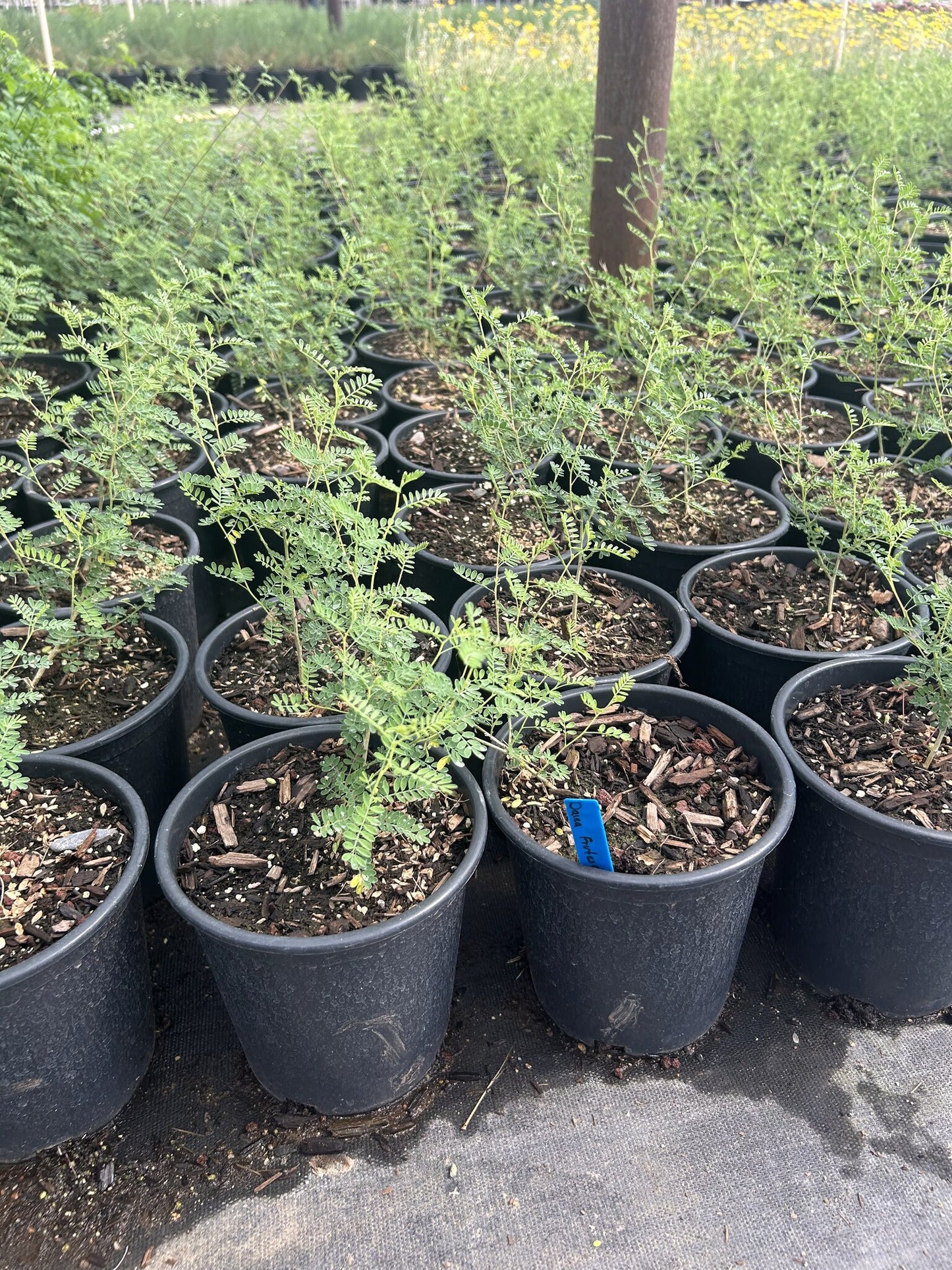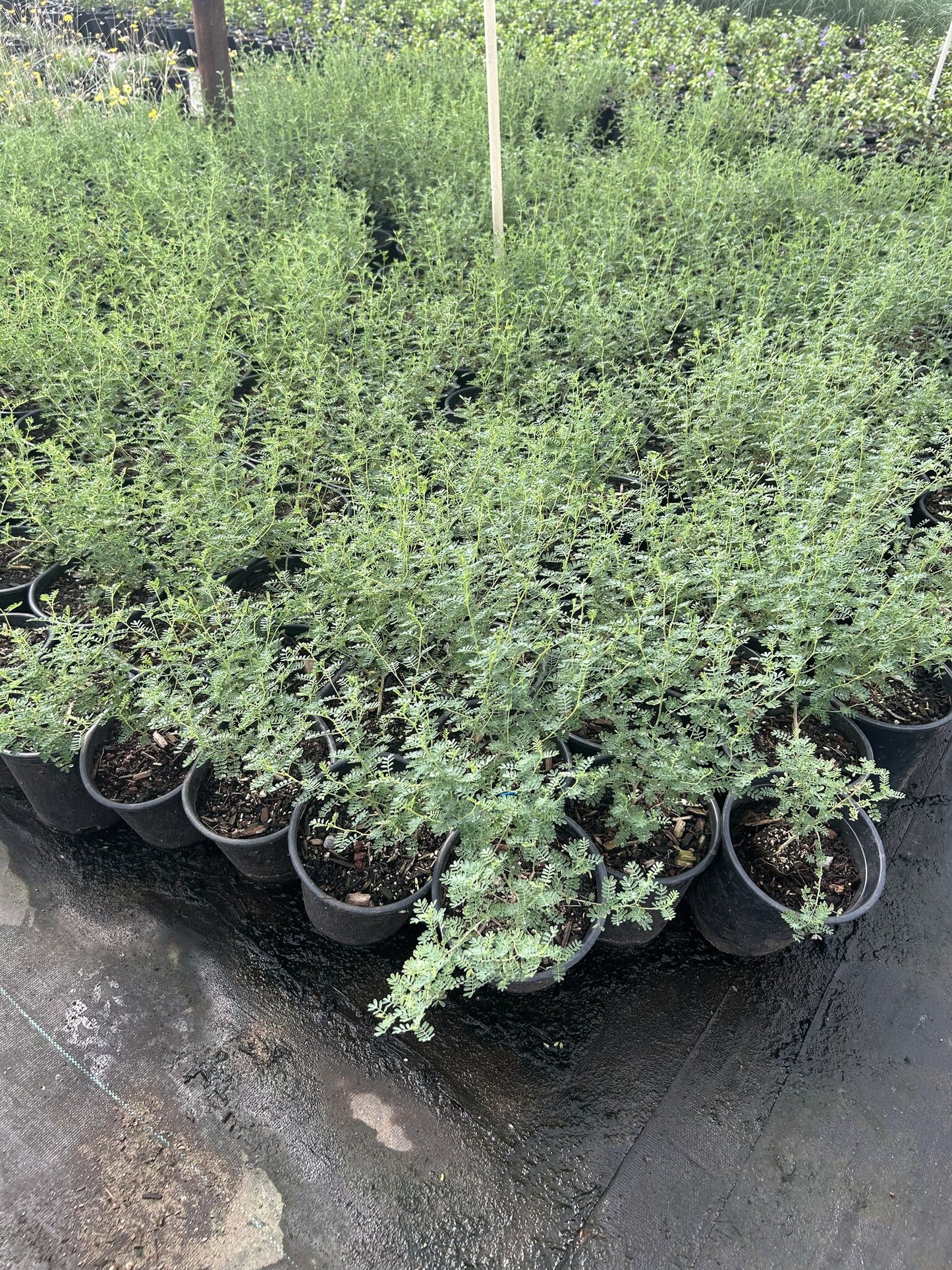


Black Dalea
Black Dalea
Couldn't load pickup availability
Phoenix's Best Purple-Blooming Native Shrub — Black Dalea
Black Dalea (Dalea frutescens) is one of the most stunning compact native shrubs available for Phoenix Valley landscapes. Growing 2–3 feet tall and 3–4 feet wide, it produces a profusion of deep purple to violet blooms from late summer through fall — filling the garden with color just as most plants fade. Extremely drought-tolerant and built for full sun, Black Dalea thrives whether you're designing a low-water border in Scottsdale, creating a pollinator garden in Chandler, or adding fall color in Gilbert.
Black Dalea Plant Details
| Attribute | Detail |
|---|---|
| Scientific Name | Dalea frutescens |
| Common Names | Black Dalea, Black Prairie Clover |
| Mature Height | 2–3 feet |
| Mature Width | 3–4 feet |
| Growth Rate | Moderate — establishes well within 1–2 seasons in Phoenix |
| Sun | Full sun (6+ hrs). Handles reflected heat from walls and pavement. |
| Water | Very low once established. Highly drought-tolerant. |
| USDA Zones | 6–10 (Phoenix is Zone 9b–10a) |
| Soil | Well-draining. Adapts to rocky, sandy, and Arizona caliche soils. |
| Foliage | Fine-textured, gray-green semi-evergreen foliage |
| Bloom Color | Deep purple to violet |
| Bloom Season | Late summer through fall (Aug–Nov in Phoenix) |
| Native | Yes — Chihuahuan Desert, native to Texas and northern Mexico |
Black Dalea Uses in Phoenix Landscapes
Fall-Color Focal Plant
Black Dalea's deep purple blooms appear in late summer and fall, exactly when most Phoenix plants are done blooming. This makes it invaluable for extending color season in Peoria, Mesa, and Tempe landscapes. Use it as a mid-border focal plant surrounded by lower-growing Trailing Indigo or Damianita, with taller Desert Bird of Paradise or Yellow Dalea as a backdrop.
Pollinator and Butterfly Gardens
The purple blooms of Black Dalea are a magnet for butterflies, native bees, and other pollinators throughout the late-season bloom period. Plant drifts of 3–5 plants alongside Autumn Sage, Chuparosa, and Globemallow to create a multi-season pollinator garden that's active from spring through fall. For a 20-foot butterfly garden border — use 5–6 Black Dalea plants spaced 4 feet apart.
Low-Water Borders and Xeriscape
At 2–3 feet tall with a naturally rounded form, Black Dalea is a perfect mid-border shrub in xeriscape designs. Its fine-textured gray-green foliage provides year-round interest, and the late-season purple blooms make it a standout in otherwise monochromatic fall landscapes throughout Scottsdale and Chandler.
Slope and Erosion Control
Black Dalea's deep root system and drought tolerance make it a practical choice for stabilizing slopes and berms in Phoenix landscapes. Plant 3–4 feet apart for full slope coverage within 2 seasons.
Best Time to Plant Black Dalea in Phoenix
Fall (October–November) is the best planting window — warm soil encourages root development while cooler air temperatures reduce transplant stress. Plants get 6–8 months to establish before their first Phoenix summer and will reward you with blooms in their first full fall season. Spring (February–April) also works well. Avoid planting in peak summer if possible.
How to Plant Black Dalea
- Dig wide, not deep — 2–3x the root ball width, same depth as the container.
- Check for caliche — break through any hardpan layer to ensure proper drainage.
- Backfill with native soil — minimal amendment needed; Black Dalea prefers lean, well-draining soil.
- Spacing — 3–4 feet apart for borders; 4–5 feet for specimen plants.
- Water basin — build a 3-inch berm around each plant to direct irrigation to the root zone.
- Mulch — apply 2–3 inches of gravel or decomposed granite; avoid bark mulch which retains too much moisture.
Watering Black Dalea in Phoenix
First Year Watering Schedule
- Weeks 1–2: Every 1–2 days, deep and slow (15–20 minutes per session)
- Months 1–2: Every 3–4 days
- Months 3–6: Every 7–10 days (every 5–7 days during peak summer)
- After Year 1: Every 2–4 weeks in summer; rely on natural rainfall in fall and winter
Drip Irrigation
Use 1 GPH emitters for 1-gallon plants and 2 GPH for 5-gallon plants, placed 12–15 inches from the plant crown. Once established, Black Dalea is extremely self-sufficient and thrives on minimal supplemental irrigation — a key advantage in Phoenix's water-conscious landscaping environment.
When does Black Dalea bloom in Phoenix?
Black Dalea blooms from late summer through fall in Phoenix — typically August through November — making it one of the most valuable late-season bloomers available. This bloom timing is particularly strategic because it fills the color gap when spring bloomers have finished and before the cooler-season plants begin.
Is Black Dalea the same as Yellow Dalea?
No — Black Dalea (Dalea frutescens) and Yellow Dalea (Dalea capitata) are different species. Black Dalea blooms in deep purple-violet in late summer and fall, while Yellow Dalea produces golden-yellow blooms in fall and winter. Both are excellent low-water native shrubs that pair beautifully together in the same planting.
Does Black Dalea need pruning?
Black Dalea benefits from a light shearing in late winter or early spring before new growth begins. This keeps the plant compact and encourages a full, dense bloom in the following fall season. Avoid heavy pruning in summer — only prune lightly in spring before new growth emerges.
You May Also Like
- Yellow Dalea — The perfect companion to Black Dalea, with golden-yellow fall blooms that contrast beautifully with Black Dalea's purple flowers.
- Trailing Indigo — A spreading groundcover with purple blooms that pairs naturally with Black Dalea's upright habit in xeriscape borders.
- Autumn Sage — A compact native shrub with red or pink blooms that extends the late-season color palette alongside Black Dalea.
- Globemallow — A native perennial with orange, red, or yellow blooms that provides spring and summer color before Black Dalea's fall show begins.
- Desert Ruellia — A spreading purple-blooming perennial that complements Black Dalea's upright mounding form in mixed native borders.
How Many Black Dalea Do I Need?
At a mature width of 3 to 4 feet, space Black Dalea about 4 feet apart for a continuous low border, or cluster in odd-numbered drifts of 3 to 5 for a fuller pollinator patch. Use this table to estimate plant count for a border:
| Border Length | Plants Needed (4 ft spacing) |
|---|---|
| 12 ft | 3 plants |
| 20 ft | 5 plants |
| 30 ft | 8 plants |
| 40 ft | 10 plants |
Black Dalea Season-by-Season in Phoenix
- Spring (Feb–Apr): Fine gray-green foliage flushes after a light late-winter shearing. A good second planting window. Little to no bloom yet, this is a fall bloomer.
- Summer (May–Sep): Handles extreme heat and reflected warmth with ease on very little water. Bloom begins building in late summer, and monsoon rains (Jul–Sep) help trigger the heavy flower show.
- Fall (Oct–Nov): Peak season. Deep purple to violet blooms cover the plant and pull in butterflies and native bees just as most Valley plants finish. Prime planting window too.
- Winter (Dec–Jan): Semi-evergreen and very cold-hardy for the Valley, shrugging off normal Phoenix frost. Shear lightly in late winter to keep it compact for the next bloom.
At a Glance
✔ Pollinator-Friendly ✔ Drought-Tolerant ✔ Heat-Loving (Reflected-Heat Tolerant) ✔ Low-Maintenance ✔ Cold-Hardy to 0°F
Plant It With
- Autumn Sage: red blooms that extend color through spring and summer before the dalea's fall show.
- Desert Ruellia: a spreading purple bloomer that echoes the dalea's color in a lower, mounding form.
- Brittlebush: silver foliage and yellow spring daisies that contrast the dalea's purple and gray-green.
- Red Yucca: a low-water accent that adds vertical flower spikes and brings in hummingbirds.
Is Black Dalea Right for Your Yard?
Black Dalea is a fit for full sun with at least 6 hours of light, lean fast-draining soil, and low water once established, and it shines as a late-season bloomer when little else is in flower. Break through caliche at planting and skip the bark mulch in favor of gravel. It is not a fit for shady spots or rich, frequently watered beds, where the open form flops and bloom drops off.
Customer Reviews
Plants look great! Delivery smooth!
Share