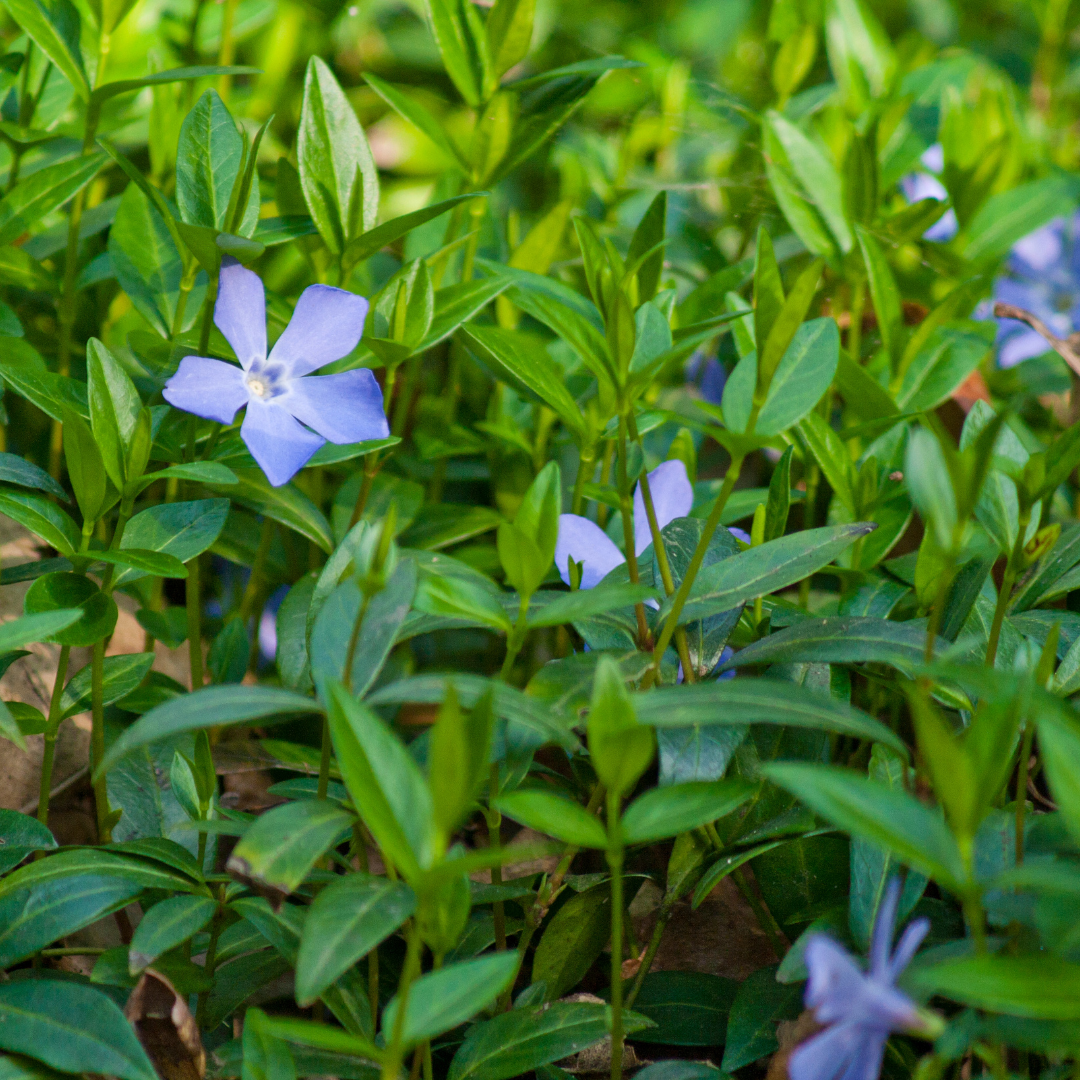

Bigleaf Periwinkle
Bigleaf Periwinkle
Couldn't load pickup availability
The Best Shade Ground Cover for Phoenix Gardens — Lush, Purple & Evergreen
Bigleaf Periwinkle (Vinca major) is the go-to ground cover for shady spots in Phoenix Valley landscapes where grass won't grow and bare soil needs a beautiful, low-maintenance solution. Its glossy, dark green leaves spread quickly to form a dense, weed-suppressing carpet, and from spring through fall it's dotted with cheerful violet-blue flowers. Whether you're covering a shady slope in Scottsdale, filling under-tree beds in Mesa, or creating a lush border along a north-facing wall in Chandler — Bigleaf Periwinkle gets the job done with minimal effort.
Bigleaf Periwinkle Plant Details
| Attribute | Detail |
|---|---|
| Scientific Name | Vinca major |
| Common Names | Bigleaf Periwinkle, Greater Periwinkle, Large Periwinkle |
| Mature Height | 6–18 inches |
| Mature Width | Spreads indefinitely via trailing stems |
| Growth Rate | Fast — fills in quickly once established |
| Sun | Partial shade to full shade. Tolerates morning sun. |
| Water | Low to moderate once established. More drought-tolerant than most ground covers. |
| USDA Zones | 7–11 (Phoenix is Zone 9b–10a) |
| Soil | Adaptable. Handles Arizona caliche soils with decent drainage. |
| Foliage | Evergreen — glossy dark green leaves year-round |
| Bloom Color | Violet-blue to purple — spring through fall |
| Deer Resistant | Yes |
Bigleaf Periwinkle Uses in Phoenix Landscapes
Shade Ground Cover
Bigleaf Periwinkle excels in the shady spots where other plants struggle — under trees, along north-facing walls, and beneath patio overhangs. It forms a dense, weed-suppressing mat that eliminates bare soil and adds a lush, green feel to otherwise challenging areas. Plant 12–18 inches apart for quick coverage.
Slope & Erosion Control
The trailing, rooting stems make Bigleaf Periwinkle an effective erosion control plant for shaded slopes and embankments. Once established, the dense root network holds soil in place while the leafy canopy protects against rain splash and runoff. A 20-foot slope needs about 15–20 plants at 12-inch spacing.
Under-Tree Planting
Tired of bare dirt under your shade trees? Bigleaf Periwinkle thrives in the dappled shade beneath mesquites, palo verdes, and other desert trees. Its shallow root system won't compete aggressively with tree roots, and the violet-blue flowers add color to an otherwise dark area.
Border & Edge Planting
Use Bigleaf Periwinkle as a trailing border along walkways, raised beds, and retaining walls. The cascading stems soften hard edges and add a flowing, natural look. Pair with ferns, Ruellia, or shade-tolerant ornamental grasses for a lush, layered effect.
Best Time to Plant Bigleaf Periwinkle in Phoenix
Fall (October–November) is the ideal planting window — cooler temperatures reduce transplant stress and give roots time to establish before summer. Spring (February–April) is also excellent. Avoid planting in peak summer unless you can provide consistent shade and moisture during establishment.
How to Plant Bigleaf Periwinkle
- Prepare the bed — loosen soil 6–8 inches deep and mix in 20–30% compost for best results.
- Check for caliche — break through any hardpan layer so water drains through the root zone.
- Spacing — 12–18 inches apart for ground cover; closer spacing fills in faster.
- Planting depth — set at same level as the nursery container. Don't bury the crown.
- Water basin — for individual plants, build a small ring to contain water during establishment.
- Mulch — 2 inches of organic mulch between plants to retain moisture until they fill in.
Watering Bigleaf Periwinkle in Phoenix
First Year Watering Schedule
- Weeks 1–2: Every 1–2 days, light but consistent
- Month 1–2: Every 2–3 days
- Month 3–6: Every 4–7 days (every 3–4 days in peak summer)
- After Year 1: Every 7–14 days in summer; every 2–3 weeks in winter
Drip Irrigation
For ground cover beds, inline drip tubing spaced 12 inches apart works best. Alternatively, place 0.5-GPH emitters at each plant during establishment, then rely on the tubing system once plants fill in. Bigleaf Periwinkle is more drought-tolerant than it looks once established, but performs best with consistent moisture in shaded areas.
How fast does Bigleaf Periwinkle spread?
Very fast. Trailing stems root at the nodes wherever they touch soil, quickly filling gaps. Expect a single plant to cover 2–3 square feet within the first growing season in Phoenix.
Does it need shade in Phoenix?
Yes — Bigleaf Periwinkle performs best in partial to full shade in the Phoenix Valley. It can tolerate morning sun but will scorch in hot afternoon sun, especially against south- or west-facing walls. North-facing exposures and under-tree spots are ideal.
Is Bigleaf Periwinkle invasive?
It spreads vigorously by trailing stems. In garden beds, this is a benefit — it fills in quickly. Contain it with edging or borders if you don't want it spreading into adjacent areas. In the dry Phoenix climate, it's easier to manage than in humid regions.
Does it bloom in Phoenix?
Yes. Bigleaf Periwinkle produces violet-blue flowers from spring through fall. Blooms are heaviest in spring and can continue sporadically into late fall with adequate moisture.
You May Also Like
- Ruellia — A purple-flowering perennial that handles both sun and shade, great companion for Periwinkle.
- AZ Ice Plant — A sun-loving succulent ground cover for areas where Periwinkle won't work.
- Asian Jasmine — Another evergreen ground cover option for shady Phoenix landscapes.
- Trailing Lantana — A sun-loving ground cover with colorful blooms for brighter spots nearby.
Share