

Barbara Karst Bougainvillea-Staked
Barbara Karst Bougainvillea-Staked
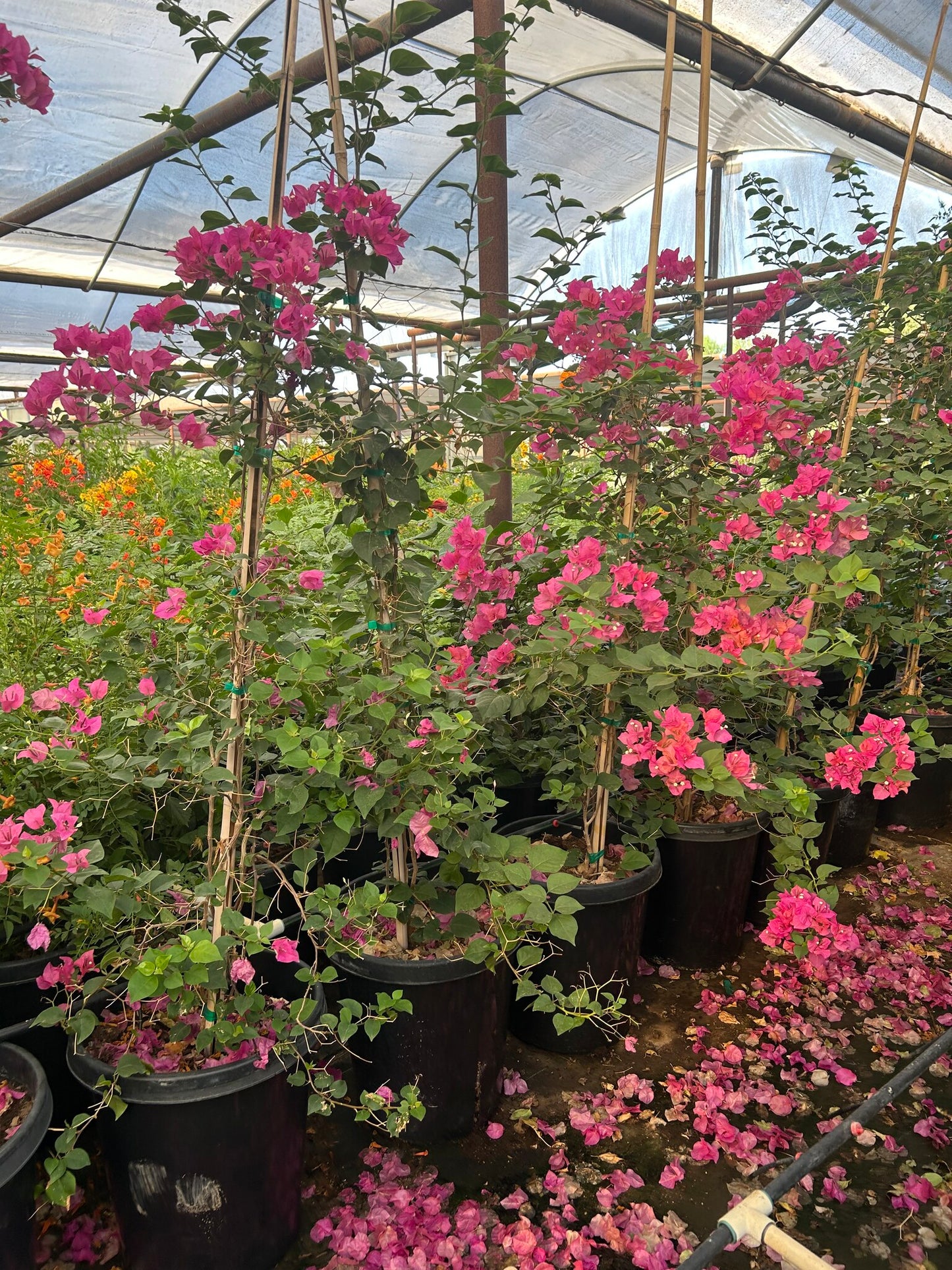
Staked bougainvillea with brilliant crimson color
Couldn't load pickup availability
Phoenix's #1 Climbing Bougainvillea — Barbara Karst for Walls, Fences & Arbors
Barbara Karst Bougainvillea (Bougainvillea 'Barbara Karst') is the most iconic and beloved climbing vine in Phoenix — a powerhouse of blazing magenta color that transforms walls, fences, arbors, and pergolas into breathtaking floral displays. Fast-growing, heat-loving, and remarkably drought-tolerant once established, Barbara Karst is the go-to bougainvillea for Phoenix homeowners who want maximum color impact with minimum maintenance. Our plants come pre-staked, making training and transplanting significantly easier — your new bougainvillea is ready to climb from day one. Whether you're covering a block wall in Scottsdale, dressing a pergola in Chandler, creating a blazing color screen in Mesa, or adding vertical drama to a Gilbert backyard — Barbara Karst Bougainvillea delivers unmatched color and impact in the Phoenix climate.
Barbara Karst Bougainvillea Plant Details
| Attribute | Detail |
|---|---|
| Scientific Name | Bougainvillea 'Barbara Karst' |
| Common Names | Barbara Karst Bougainvillea, Magenta Bougainvillea, Red Bougainvillea |
| Mature Height | 20–30 feet (as a climber with support) |
| Mature Width | 6–10 feet |
| Growth Rate | Fast — 3–6 feet per year in Phoenix |
| Sun | Full sun (6+ hrs). Thrives in reflected heat from walls and pavers. |
| Water | Low once established. Highly drought-tolerant. |
| USDA Zones | 9–11 (Phoenix is Zone 9b–10a) |
| Soil | Well-draining. Adapts to Arizona caliche soils. |
| Foliage | Semi-evergreen — may drop some leaves in cold winters |
| Bloom Color | Deep magenta / red-violet bracts, spring through fall |
| Sold As | Pre-staked — trained on a stake for easy planting and training |
Barbara Karst Bougainvillea Uses in Phoenix Landscapes
Wall & Fence Coverage
Barbara Karst is the definitive wall-covering vine for Phoenix. Its vigorous climbing habit allows it to cover large block walls, privacy fences, and cinderblock structures with a solid curtain of blazing magenta color. Within 3–4 years, a single plant can cover a 15–20 foot section of wall. Plant one plant every 10–12 feet along a wall for complete coverage over time. For a 20 ft wall: 2 plants; for a 40 ft wall: 3–4 plants. The pre-staked form makes it easy to position and begin training against the wall immediately after planting.
Arbor, Pergola & Overhead Structure
Few sights in the Phoenix landscape rival a mature Barbara Karst in full bloom cascading over a pergola or arched gate. The vigorous vines readily climb overhead structures and create a stunning canopy effect covered in magenta bracts. Train stems up support posts and across overhead beams — within 3–5 years, you'll have a show-stopping floral canopy. This approach is extremely popular for covered patio areas in Scottsdale and Tempe, where bougainvillea arbors create a dramatic, resort-style outdoor living experience.
Privacy Screen & Color Hedge
Trained along a wire or chain-link fence, Barbara Karst creates an impenetrable, beautiful privacy screen covered in blazing color. The thorny stems provide a natural security deterrent while the magenta blooms create an extraordinary visual impact. Plant 8–10 feet apart along a fence line with simple wire supports. For a 20 ft fence: 2–3 plants; for a 40 ft fence: 4–5 plants. A mature privacy screen of Barbara Karst in full bloom is one of the most dramatic landscape features available in the Phoenix Valley.
Pool & Patio Focal Point
Barbara Karst planted against a pool wall or trained over a pool-side pergola creates a spectacular backdrop that transforms any Phoenix backyard into a tropical oasis. The bracts are papery and lightweight — easily skimmed from pool surfaces. Plant 6–8 feet from the pool edge against a sunny wall, and guide stems onto a simple wire system to direct growth where you want it. The intense magenta color against blue pool water and desert stone creates the iconic Phoenix luxury backyard aesthetic seen throughout Peoria and Gilbert.
Best Time to Plant Barbara Karst Bougainvillea in Phoenix
Spring (March–May) is the ideal planting window for bougainvillea in Phoenix. Warm, rising soil temperatures trigger rapid root establishment and encourage the first flush of blooms. Fall (October–November) is the second-best option — cooler air reduces transplant stress while warm soil allows roots to establish through the off-season. Avoid planting in peak summer (July–August) when combined heat and transplant stress can cause severe setback. The pre-staked form of our plants makes spring planting particularly rewarding — the established stake system allows immediate training against your wall or trellis from day one.
How to Plant Barbara Karst Bougainvillea
- Install support first — attach wire guides, a trellis system, or screw in vine hooks to your wall before planting. Having the support system ready lets you begin training immediately without disturbing roots later.
- Dig wide, not deep — excavate a hole 2–3x the width of the root ball at the same depth as the container. Bougainvillea roots spread wide and resent deep planting.
- Check for caliche — break through any caliche hardpan with a pick or breaker bar to ensure drainage below the root zone.
- Backfill with native soil — a light 10–20% organic amendment is beneficial but avoid heavy mixes that retain moisture.
- Position plant close to wall — plant 12–18 inches from the base of your wall or support structure. Gently untie stems from the nursery stake and guide them toward your wall support.
- Mulch well — apply 2–3 inches of decomposed granite or bark mulch to conserve moisture and moderate soil temperature through Phoenix summers.
Watering Barbara Karst Bougainvillea in Phoenix
First Year Watering Schedule
Weeks 1–2: Water every 1–2 days, deep and slow (20–30 minutes per session). Months 1–2: Every 3–4 days. Months 3–6: Every 7–10 days (every 5–7 days during peak summer heat). After Year 1: Every 10–14 days in summer; every 3–4 weeks in winter. Key tip: bougainvillea actually blooms MORE when slightly water-stressed — slightly dry soil between waterings encourages the plant to put energy into blooms rather than foliage growth.
Drip Irrigation for Barbara Karst
Place drip emitters 18–24 inches from the base of the plant. Use 1–2 GPH emitters for the first year; 0.5–1 GPH is typically sufficient for established plants. Run irrigation in early morning for maximum absorption and minimum evaporation. After the first full year, Barbara Karst can go 2–3 weeks without irrigation in winter and 10–14 days in summer — it is one of Phoenix's most drought-tolerant flowering vines.
How fast does Barbara Karst Bougainvillea grow in Phoenix?
Barbara Karst is one of Phoenix's fastest-growing climbing vines — expect 3–6 feet of new growth per year in good conditions. A 5-gallon plant can cover an 8–10 foot wall section within 2–3 years. A 10/15-gallon plant will cover the same area within 1–2 years. Its speed combined with heat tolerance makes it the most popular choice for quickly covering walls and structures in the Phoenix Valley.
What's the difference between Barbara Karst and Torch Glow Bougainvillea?
Both produce magenta blooms but are very different in form. Barbara Karst is a vigorous climbing vine that reaches 20–30 feet and needs a wall, trellis, or support structure. Torch Glow is a compact, self-supporting shrub that stays 6–8 feet tall and grows in a contained upright form — perfect for pots and small spaces. For covering walls, fences, and arbors, Barbara Karst is the choice; for patios, containers, and tight spaces, Torch Glow is the better option.
Why does my Barbara Karst have lots of leaves but few blooms?
Overwatering and over-fertilizing are the two most common causes of poor blooming in Phoenix bougainvillea. Bougainvillea blooms best when slightly water-stressed — reduce watering frequency and let soil dry out between sessions. Avoid high-nitrogen fertilizers that push foliage over flowers. Full sun (6+ hours) is also essential — shade dramatically reduces bloom production. Pruning after each bloom flush stimulates the next wave of color.
Is Barbara Karst cold-hardy in Phoenix?
Yes — it's rated for USDA Zones 9–11, and Phoenix (Zone 9b–10a) is within its comfortable range. During an unusually cold Phoenix winter, it may drop leaves and show tip damage below 32°F, but rebounds vigorously in spring. Cut back any frost-damaged growth in early February and new stems will emerge rapidly as temperatures warm. Established plants 3+ years old are significantly more cold-tolerant than newly planted specimens.
Why buy the staked version?
Our Barbara Karst plants come pre-staked — the main stem has already been trained upright on a bamboo or wooden stake during the nursery growing phase. This gives the plant a head start in vertical growth, makes positioning against a wall much easier, and means you can begin training the vine toward your support structure immediately after planting — without having to coax a young plant off the ground from scratch.
You May Also Like
Torch Glow Bougainvillea — The compact, self-supporting bougainvillea for Phoenix patios and pots — same magenta color in a contained, no-trellis-needed form.
Bougainvillea White — A stunning white-bract climbing bougainvillea for a softer, more refined look on Phoenix walls and arbors.
Lilac Vine (Hardenbergia violacea) — A delicate purple-blooming climber that pairs beautifully with Barbara Karst on Phoenix trellises and fences for a two-color display.
Yellow Hibiscus — A bold yellow tropical shrub that creates a stunning color complement to Barbara Karst's magenta in Phoenix landscape beds.
Texas Sage (Leucophyllum frutescens) — A silvery desert native with purple blooms that creates a beautiful desert-meets-tropical color combination with Barbara Karst in Phoenix landscapes.
How Many Barbara Karst Bougainvillea (Staked) Do I Need?
This pre-staked form is meant to be trained up a wall, fence, or trellis. Space plants about 8 to 10 feet apart along the run you want to cover. Use the table below to estimate plant count for a continuous color curtain:
| Wall / Fence Run | Plants Needed (8–10 ft spacing) |
|---|---|
| 10 ft | 1 plant |
| 20 ft | 2 plants |
| 40 ft | 4 plants |
| 60 ft | 6 plants |
For a single arbor, gate, or pillar accent, one staked plant trained up each post is plenty. Space wider (10 to 12 ft) if you are patient and want fewer plants; space tighter (8 ft) for faster solid coverage.
Barbara Karst Bougainvillea Season-by-Season in Phoenix
- Spring (Feb–Apr): New growth flushes as nights warm, and the first heavy bloom cycle of magenta bracts begins. Prime planting and training window. Cut back any winter tip damage in early February to push fresh growth.
- Summer (May–Sep): Peak performance. Barbara Karst loves reflected heat off block walls and pavers and blooms hardest in the hottest months. Monsoon humidity (Jul–Sep) can trigger extra foliage, so keep water lean to favor color over leaves.
- Fall (Oct–Nov): A strong second bloom flush as temperatures ease. Excellent secondary planting window while soil is still warm.
- Winter (Dec–Jan): Growth slows and some leaves may drop. Expect tip damage if temperatures fall below about 32°F. Cover young plants on hard frost nights; established plants rebound vigorously in spring. Hold off on heavy pruning until February.
At a Glance
✔ Heat-Loving (Reflected-Heat Tolerant) ✔ Drought-Tolerant ✔ Low-Maintenance ✔ Hummingbird-Friendly
Plant It With
- California Gold Bougainvillea: pair golden-yellow bracts with the magenta for a two-tone wall display.
- Bougainvillea White: softens the intense magenta with crisp white bracts on the same fence or arbor.
- La Jolla Bougainvillea: a more compact bougainvillea for the base of the wall beneath the climber.
- Red Yucca: a tough, drought-tough accent at the foot of the vine that draws the same hummingbirds.
Is Barbara Karst Bougainvillea (Staked) Right for Your Yard?
This staked bougainvillea thrives in full sun with at least 6 hours of direct light, loves the reflected heat off south and west walls, and asks only for fast-draining soil (break through caliche at planting) and lean watering once established. Give it a wall, fence, trellis, or arbor to climb and room for a 6 to 10 foot spread. It is not a fit if you want a tidy, thornless, low-litter plant right at a pool edge or walkway: the stems carry thorns and the papery bracts drop as they fade, and it can show frost damage in a hard Valley winter.
Share