

Desert Ruellia
Desert Ruellia
Evergreen shrub with purple blooms that never quit
Couldn't load pickup availability
Phoenix's Best Low-Maintenance Purple Bloomer — Desert Ruellia
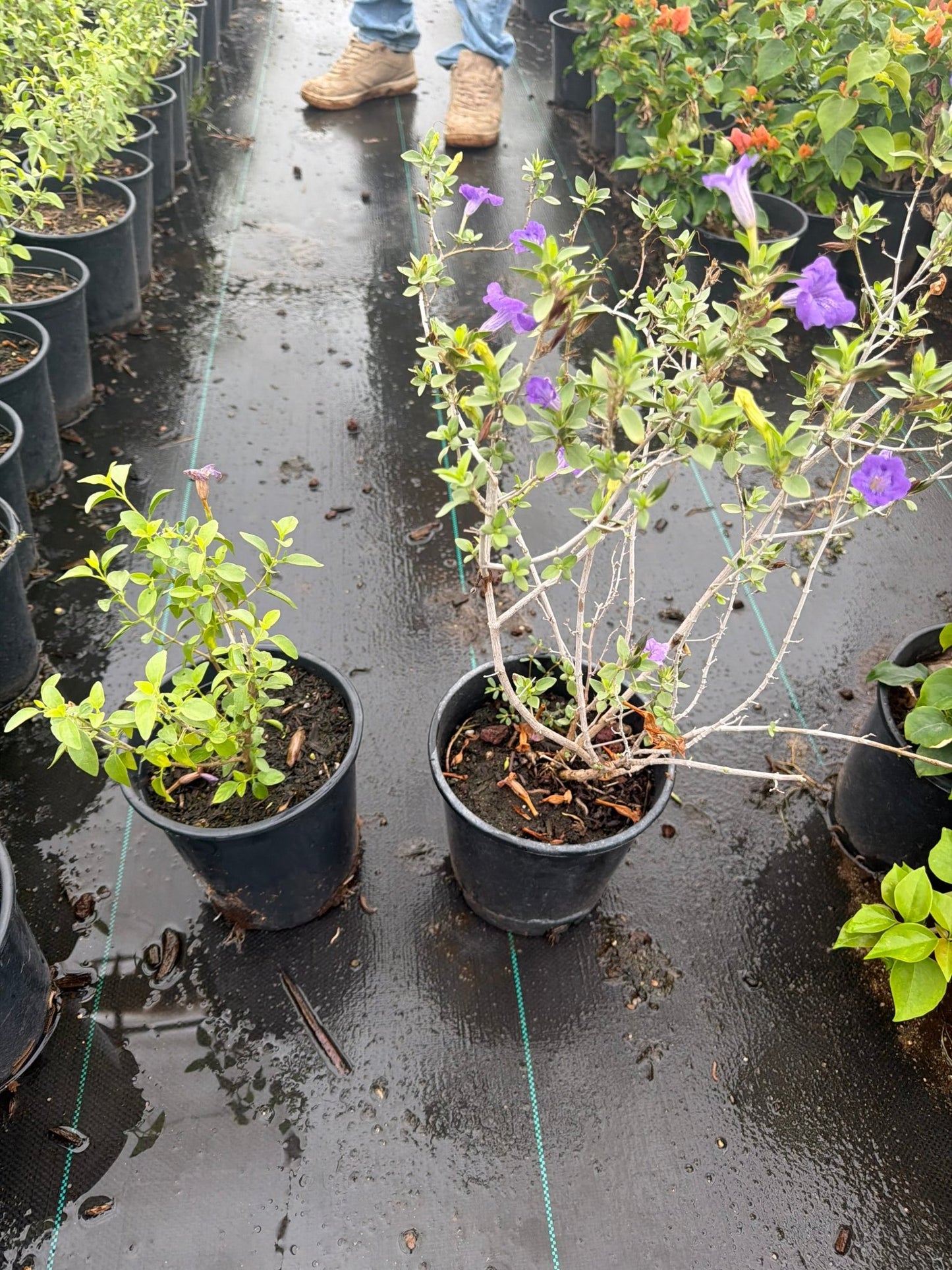
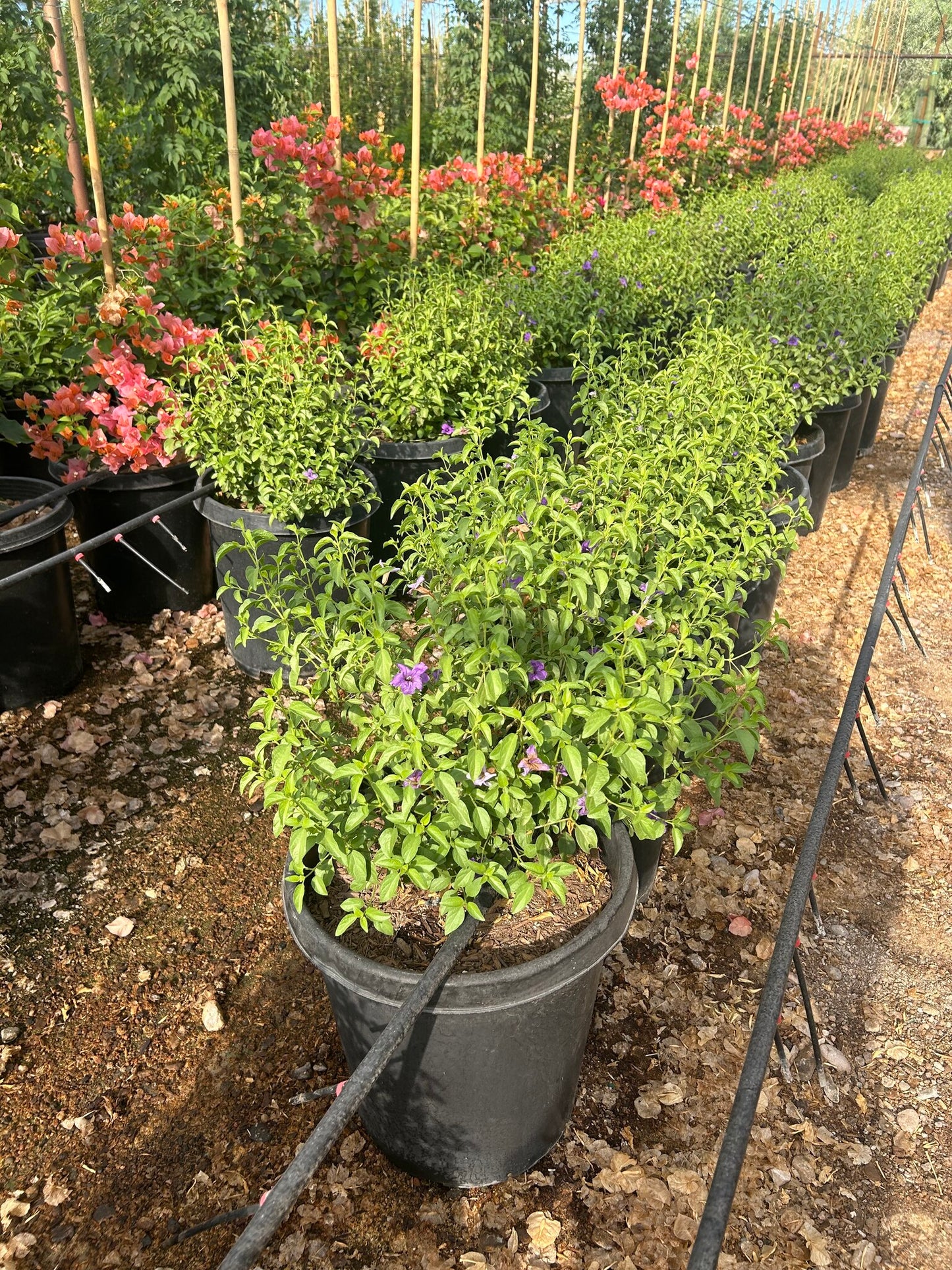
Desert Ruellia (Ruellia peninsularis) is one of the Southwest's most reliable and colorful low-water shrubs, beloved by Phoenix Valley landscapers for its vibrant purple flowers, evergreen foliage, and near-zero maintenance needs. Growing 3–4 feet tall and 2–3 feet wide, it thrives in full sun and handles reflected desert heat with ease. Whether you're adding color to a Scottsdale xeriscape, creating a pollinator-friendly border in Mesa, or brightening up a low-water landscape in Chandler, Gilbert, or Peoria — Desert Ruellia delivers season after season without complaint.
Desert Ruellia Plant Details
| Attribute | Detail |
|---|---|
| Scientific Name | Ruellia peninsularis |
| Common Names | Desert Ruellia, Baja Ruellia, Baja California Ruellia |
| Mature Height | 3–4 feet |
| Mature Width | 2–3 feet |
| Growth Rate | Moderate — 1–2 feet per year in Phoenix |
| Sun | Full sun to partial shade. Handles reflected heat from walls and paving. |
| Water | Low once established. Highly drought-tolerant. |
| USDA Zones | 9–11 (Phoenix is Zone 9b–10a) |
| Soil | Well-draining. Adapts easily to Arizona caliche soils. |
| Foliage | Evergreen — stays green and lush year-round in Phoenix |
| Flower Color | Rich purple-violet tubular blooms, spring through fall |
| Wildlife Value | Attracts hummingbirds, bees, and butterflies |
Desert Ruellia Uses in Phoenix Landscapes
Colorful Low-Water Border Plant
Desert Ruellia excels as a front-of-border accent in desert landscapes. Its compact form and vibrant purple blooms contrast beautifully against tan gravel, red decomposed granite, or white rock. Plant in groups of 3–5 for a dramatic color sweep without any irrigation guilt. Pair it with Yellow Bells or Texas Sage for a multicolor, all-low-water border that blooms from spring through fall.
Pollinator Garden Anchor
Few plants in the Phoenix Valley attract as many pollinators as Desert Ruellia. Hummingbirds are particularly drawn to its tubular purple flowers, and the plant serves as a host plant for certain butterfly species. Pair with Autumn Sage, Chuparosa, or Desert Milkweed to create a complete pollinator haven in Tempe, Glendale, or Avondale.
Pool-Friendly Landscape Color
Desert Ruellia is an excellent choice around pool decks and water features. It drops minimal debris, doesn't produce seeds that clog filters, and its roots are non-invasive. Plant 3 feet back from pool edges for a lush, colorful surround that requires minimal cleanup. Works well alongside Desert Spoon and Smooth Agave for a tidy, resort-style desert look.
HOA and Streetscape Planting
Desert Ruellia is a staple in HOA-approved low-water landscape plans across Scottsdale, Queen Creek, and Surprise. Its tidy growth habit, lack of thorns, and continuous blooms make it ideal for community medians, entry features, and streetscape plantings. Space plants 3 feet apart for a continuous color hedge effect — a 30-foot run needs about 10 plants.
Best Time to Plant Desert Ruellia in Phoenix
Fall (October–November) is the ideal planting window. Warm soil encourages root establishment while cooler air temperatures reduce transplant stress. Plants put in the ground in fall get 6–8 months of root development before their first Phoenix summer. Spring (February–April) is the second-best window. Avoid planting in June through August if possible — the combination of high heat and transplant stress is hard on new plants.
How to Plant Desert Ruellia
- Dig wide, not deep — excavate a hole 2–3 times the root ball width and the same depth as the container.
- Check for caliche — if you hit a hard white layer, break through it with a breaker bar for proper drainage.
- Backfill with native soil — a light 20% organic compost blend is fine; avoid over-amending desert soils.
- Spacing — plant 3 feet apart for a color border or hedge; 4–5 feet apart for individual specimens.
- Build a water basin — form a 3–4 inch ring of soil around the drip line to direct irrigation to the roots.
- Mulch — apply 2–3 inches of bark mulch or gravel to retain soil moisture and moderate root temperature.
Watering Desert Ruellia in Phoenix
First Year Watering Schedule
Weeks 1–2: Water every 1–2 days, deep and slow (20–30 minutes per session). Month 1–2: Reduce to every 3–4 days. Month 3–6: Water every 7–10 days (every 5–7 days during peak summer heat). After Year 1: Every 10–14 days in summer; every 3–4 weeks in winter. Desert Ruellia is remarkably forgiving and will signal stress with slightly wilted leaves — a quick deep watering brings it right back.
Drip Irrigation
Place drip emitters 18–24 inches from the base of the plant. A 1–2 GPH emitter is sufficient for established plants. Run drip for 45–60 minutes per session. Once fully established (after year 1–2 in Phoenix), Desert Ruellia survives on rainfall alone in most winters and needs only occasional supplemental summer irrigation.
Does Desert Ruellia come back every year in Phoenix? Yes — Desert Ruellia is evergreen in Phoenix's Zone 9b–10a climate and does not die back in winter. It may slow its growth during the coolest months of December and January but maintains green foliage year-round.
How fast does Desert Ruellia grow in Phoenix? Expect 1–2 feet of new growth per year under normal conditions. With consistent summer irrigation and fertilization, it can grow up to 2 feet in a season.
Is Desert Ruellia drought-tolerant once established? Yes — it is one of the most drought-tolerant flowering shrubs available for Phoenix landscapes. After year one, it survives on minimal supplemental irrigation and thrives on natural rainfall during the monsoon season.
What's the difference between Desert Ruellia and Purple Ruellia? Desert Ruellia (Ruellia peninsularis) is native to Baja California and is the variety most commonly used in Phoenix landscaping. It tends to be slightly more compact and cold-hardy than some other Ruellia species. Both produce similar purple blooms.
Does Desert Ruellia attract hummingbirds? Absolutely — the tubular purple flowers are a favorite of Anna's Hummingbirds, which are year-round residents of the Phoenix Valley. It also attracts queen butterflies and native bees throughout the blooming season.
You May Also Like
Autumn Sage — Another prolific Phoenix bloomer with red, pink, or white flowers that pairs beautifully with Desert Ruellia in pollinator gardens.
Texas Sage (Purple Sage) — A taller, silver-leaved shrub that produces stunning purple flowers after monsoon rains and complements Ruellia's violet tones.
Chuparosa — A hummingbird magnet with tubular red or yellow flowers that extends the wildlife value of any Desert Ruellia planting.
Desert Cassia — A fast-growing yellow-flowering shrub that provides bold color contrast alongside Desert Ruellia's purple blooms.
Green Desert Spoon — A structural accent plant that creates a beautiful foil for Desert Ruellia's soft, colorful blooms in modern desert designs.
How Many Desert Ruellia Do I Need?
At a mature width of 2 to 3 feet, space Desert Ruellia about 3 feet on center for a continuous color border or low informal hedge. Use this guide to estimate plant counts:
| Border / hedge run | Plants needed (3 ft spacing) |
|---|---|
| 6 ft | 2 to 3 plants |
| 12 ft | 4 to 5 plants |
| 20 ft | 7 plants |
| 30 ft | 10 plants |
For a fuller sweep of color, plant in odd-numbered groups of 3 to 5 spaced about 2.5 feet apart. As single accents near a pool or entry, give each plant 4 to 5 feet of room.
Desert Ruellia Season-by-Season in Phoenix
- Spring (Feb to Apr): Heavy flush of purple-violet blooms and fresh growth. Strong second planting window once nights warm.
- Summer (May to Sep): Peak performer. Holds and reblooms through extreme and reflected heat, and the monsoon (Jul to Sep) pushes another wave of flowers with very little supplemental water.
- Fall (Oct to Nov): Top planting season in Phoenix and continued bloom into the cooler weeks.
- Winter (Dec to Jan): Stays evergreen and tidy in most Valley winters. Hardy to roughly 25°F. A hard frost can nip the tips or cause partial freeze-back: trim damaged growth in late February and it flushes back fast.
At a Glance
✔ Pollinator-Friendly ✔ Hummingbird-Friendly ✔ Heat-Loving (Reflected-Heat Tolerant) ✔ Drought-Tolerant ✔ Pool-Friendly (Low-Litter) ✔ Evergreen ✔ Low-Maintenance ✔ Cold-Hardy to 25°F
Plant It With
- Texas Sage: silver-leaved shrub whose monsoon-triggered purple flowers echo Ruellia's violet tones.
- Autumn Sage Red: low red-flowering sage that adds contrast and extends pollinator value.
- Chuparosa - Red: native hummingbird shrub with red tubular blooms for a wildlife-rich border.
- Desert Spoon: architectural rosette that anchors the soft Ruellia color with bold structure.
Is Desert Ruellia Right for Your Yard?
Desert Ruellia is an easy win for a full-sun or lightly shaded bed, including reflected-heat spots and poolside, as long as the soil drains and water does not pool at the roots. It is thornless, low-litter, and nearly carefree once established. Not a fit if you need a tall screen or a strictly evergreen plant through a hard-freeze winter: in a sharp cold snap it can freeze back at the tips and look rough until spring trimming.
Customer Reviews
I couldn't locate a desert Ruellia in the stores so I found this one and several other desert tolerant plants at 3 Timbers..so far it is doing fine in part shade part full sun. all the plants are so far doing fine planted and irrigated but some of them had few roots so I am taking special care to water and protect from too much sun sith shade cloth for now.
Share