

Arizona Cypress
Arizona Cypress
Couldn't load pickup availability
Arizona's Native Evergreen Privacy Giant — Arizona Cypress
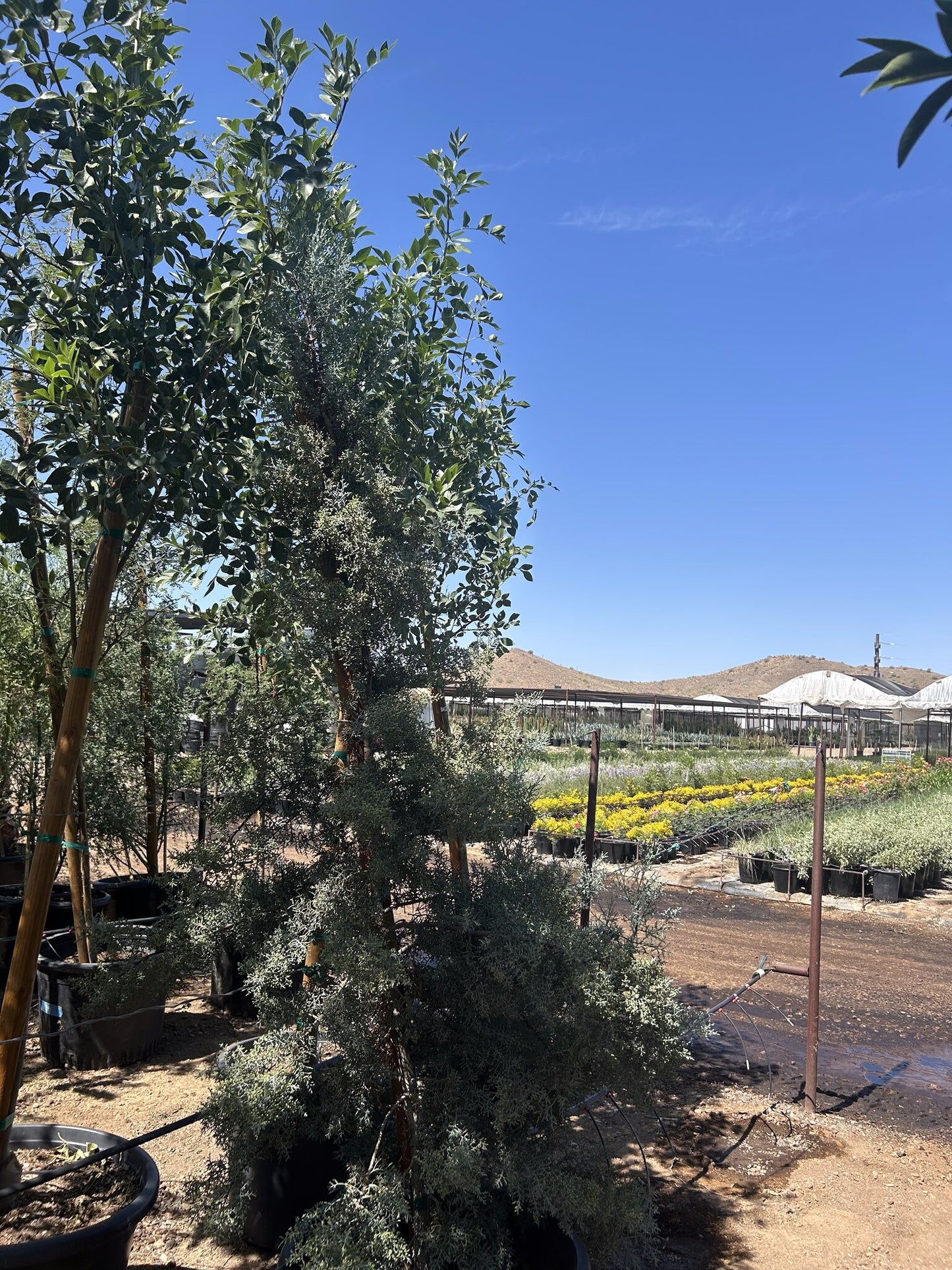
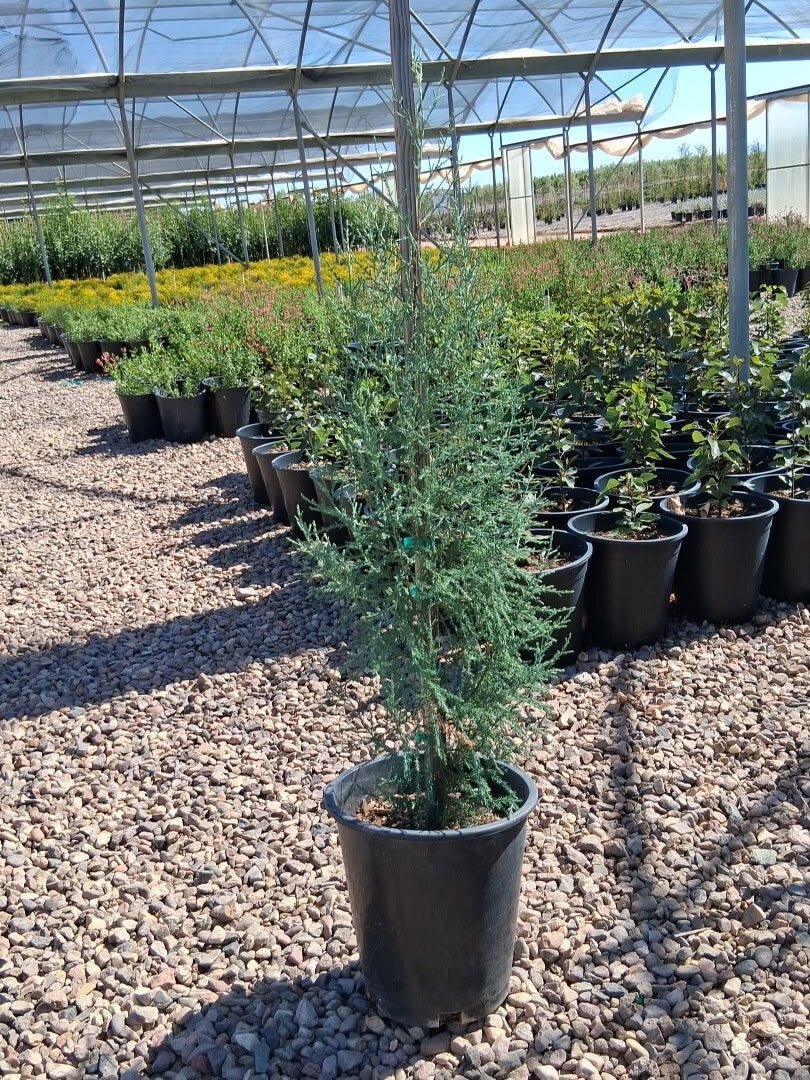
Arizona Cypress (Cupressus arizonica) is the ultimate native evergreen privacy screen for Phoenix Valley landscapes. Born and bred in the Arizona highlands, this rugged conifer thrives where other evergreens fail — in full desert sun, caliche-laced soils, and severe drought conditions — while maintaining its striking silvery blue-green canopy year-round. With a naturally pyramidal form that can tower 40–50 feet at maturity, Arizona Cypress creates one of the tallest, densest, most permanent privacy screens available to Phoenix homeowners. Whether you're building a tall windbreak in Peoria, planting a native privacy wall in Scottsdale, screening out neighbors in Gilbert or Chandler, or anchoring a desert-adapted landscape in Mesa — Arizona Cypress is the most low-maintenance evergreen screen tree for the Valley.
Arizona Cypress Plant Details
| Attribute | Detail |
|---|---|
| Scientific Name | Cupressus arizonica (syn. Hesperocyparis arizonica) |
| Common Names | Arizona Cypress, Smooth Arizona Cypress, Blue Arizona Cypress |
| Mature Height | 40–50 feet (up to 70 ft in ideal conditions) |
| Mature Width | 20–30 feet |
| Growth Rate | Fast — 3–5 feet per year when young in Phoenix |
| Sun | Full sun (6+ hrs). Handles reflected heat from walls. |
| Water | Very low once established. One of the most drought-tolerant conifers. |
| USDA Zones | 7–11 (Phoenix is Zone 9b–10a) |
| Soil | Well-draining. Excellent tolerance for Arizona caliche soils and rocky ground. |
| Foliage | Evergreen — silvery blue-green year-round; aromatic when crushed |
| Native Status | Native to Arizona — thrives without amendment in local conditions |
| Pet Friendly | Non-toxic to dogs and cats |
Arizona Cypress Uses in Phoenix Landscapes
Tall Evergreen Privacy Screen
Arizona Cypress is the go-to choice for creating a tall, permanent privacy wall. Its fast growth and dense, columnar form create an impenetrable screen within just a few years. For a solid privacy hedge, plant 8–10 feet apart. For a 30-foot fence line, use 3–4 plants; for a 60-foot fence line, use 6–8 plants. Pair with Italian Cypress for a formal alternating pattern, or combine with Ironwood for a natural, layered native screen.
Windbreak for Phoenix Valley Properties
Few trees match Arizona Cypress for windbreak performance in the desert. Its dense, sturdy branching from the ground up deflects prevailing winds and monsoon gusts effectively, protecting outdoor living areas, pools, and gardens. Plant in a double staggered row at 10–12 feet on center for maximum wind reduction in exposed Peoria, Surprise, or West Valley properties.
Native Desert Landscape Anchor
Arizona Cypress is one of the few large evergreen trees native to Arizona, making it ideal for water-wise, low-maintenance landscapes. It pairs beautifully with other desert-adapted plants — Desert Spoon, Agave, Palo Verde, and native bunch grasses — to create a landscape that looks right at home in the Sonoran Desert while providing year-round structure and shade.
Pool-Friendly Privacy Tree
Unlike broadleaf trees, Arizona Cypress sheds minimal debris into pools, making it one of the better conifer options for poolside privacy screening. Plant beyond the pool deck at 6+ feet from the water to allow clearance while still providing effective screening. Its non-toxic nature makes it safe around families and pets enjoying the pool area.
Best Time to Plant Arizona Cypress in Phoenix
Fall (October–November) is the ideal planting window. Warm soil supports rapid root establishment, and cooler air temperatures eliminate transplant stress — giving plants 6–8 months to anchor before their first Phoenix summer. Spring (February–April) is the second-best window. Avoid summer planting when possible, as Arizona Cypress transplants can struggle with intense heat before establishing. If summer planting is unavoidable, shade cloth and daily deep watering for the first 3–4 weeks is essential.
How to Plant Arizona Cypress
- Dig wide, not deep — excavate 2–3x the root ball width at the same depth as the container.
- Check for caliche — break through any hardpan layer to ensure proper drainage and deep root penetration.
- Backfill with native soil — Arizona Cypress prefers minimal amendment; native soil is ideal, or a light 10% organic blend is acceptable.
- Spacing — 8–10 feet apart for a privacy windbreak; 12–15 feet apart for individual specimens.
- Water basin — build a 3–4 inch berm around the planting hole to direct irrigation water directly to the root zone.
- Mulch — apply 2–3 inches of bark or gravel mulch to retain moisture and regulate soil temperature.
Watering Arizona Cypress in Phoenix
First Year Watering Schedule
- Weeks 1–2: Every 1–2 days, deep and slow (20–30 minutes per session)
- Month 1–2: Every 3–4 days
- Month 3–6: Every 7–10 days (every 5–7 days in peak summer)
- After Year 1: Every 14–21 days in summer; rainfall alone is often sufficient in winter
Drip Irrigation
Place drip emitters 18–24 inches from the trunk and use a 1–2 GPH emitter per tree. Run for 45–60 minutes per session to ensure deep penetration. Arizona Cypress is one of the most drought-tolerant conifers available — established trees often require no supplemental irrigation from October through April in the Phoenix Valley.
How fast does Arizona Cypress grow in Phoenix?
In Phoenix's warm climate, Arizona Cypress grows 3–5 feet per year during its first 5–10 years, slowing to 1–2 feet per year at maturity. A 5-gallon plant can reach 15–20 feet within 5–6 years in ideal full-sun conditions with adequate establishment watering.
Is Arizona Cypress truly drought-tolerant once established?
Yes — Arizona Cypress is one of the most drought-tolerant evergreen trees you can plant in Phoenix. Once established (12–18 months), most trees in the Phoenix Valley require only minimal supplemental irrigation during the hottest summer months, making it an outstanding choice for water-wise landscapes.
What's the difference between Arizona Cypress and Italian Cypress?
Italian Cypress (Cupressus sempervirens) is narrow and columnar, growing 40–70 ft tall but only 3–6 ft wide — ideal for tight spots. Arizona Cypress is broader (20–30 ft wide) with a pyramidal shape and silvery blue-green foliage, providing much better wind protection and a more natural look. Arizona Cypress is also more drought-tolerant and native to the region.
Is Arizona Cypress pet-friendly?
Yes — Arizona Cypress is considered non-toxic to dogs and cats, making it one of the safer large privacy tree options for pet-owning households. Always supervise pets around newly planted trees and check with your vet if a pet ingests plant material.
Can Arizona Cypress handle full desert sun and reflected heat?
Absolutely. Arizona Cypress evolved in Arizona's harsh conditions and actively thrives in full sun, high temperatures, and reflected heat. Unlike many conifers that burn or die in Phoenix's summer heat, Arizona Cypress is one of the rare species that actually prefers these conditions once established.
You May Also Like
If you love Arizona Cypress for its tall, dense privacy screen capability, explore these other great options from Three Timbers:
- Italian Cypress — Tall and narrow columnar form for tight spaces; excellent formal privacy screen partner with Arizona Cypress.
- Ironwood — Arizona native shade and privacy tree; dense canopy with beautiful purple spring blooms and extreme drought tolerance.
- Mondell Pine — Fast-growing evergreen pine with feathery soft texture; creates a softer, more informal privacy screen alongside Arizona Cypress.
- Texas Ebony — Dense, thorny native evergreen for an impenetrable privacy screen; pairs beautifully with Arizona Cypress in a mixed hedge.
- Mastic Tree — Fire-resistant, dense evergreen canopy; excellent medium-sized companion to Arizona Cypress for layered screening.
How Many Arizona Cypress Do I Need?
Arizona Cypress matures at 20 to 30 feet wide, but for a solid privacy screen or windbreak it is planted much tighter so the canopies knit into a continuous wall. Use 8 to 10 feet on center for screening. For a denser, faster windbreak, drop to a double staggered row at 10 to 12 feet on center.
| Run Length | Plants Needed (single row, 9 ft spacing) |
|---|---|
| 30 ft | 4 plants |
| 50 ft | 6 plants |
| 75 ft | 9 plants |
| 100 ft | 12 plants |
For a single specimen or windbreak anchor, give each tree 12 to 15 feet of clearance so the full pyramidal form can develop.
Arizona Cypress Season-by-Season in Phoenix
- Spring (Feb–Apr): Strong new-growth flush; the silvery blue-green foliage brightens. Best second planting window after fall, with months to root before summer.
- Summer (May–Sep): Thrives in extreme heat and reflected heat off walls. Monsoon humidity and rain are welcome; keep first-year trees on deep weekly water through the hottest stretch.
- Fall (Oct–Nov): Prime planting season in the Valley. Warm soil plus mild air drives fast root establishment.
- Winter (Dec–Jan): Fully evergreen and cold-hardy. As a highland native it shrugs off Valley frost, holding its color and dense structure straight through winter.
At a Glance
✔ Arizona Native ✔ Heat-Loving (Reflected-Heat Tolerant) ✔ Drought-Tolerant ✔ Evergreen ✔ Low-Maintenance ✔ Pool-Friendly (Low-Litter) ✔ Cold-Hardy to 0°F
Plant It With
- Italian Cypress: Narrow columnar partner for a formal alternating screen along the same fence line.
- Ironwood: Arizona native shade tree that layers a natural canopy in front of the cypress wall.
- Desert Spoon: Sculptural native accent that softens the base of a tall evergreen screen.
- Red Yucca: Low-water flowering accent for color at the foot of the screen, drawing hummingbirds.
Is Arizona Cypress Right for Your Yard?
Arizona Cypress thrives in full sun and reflected heat, tolerates caliche and rocky ground, and asks for very little water once established, making it one of the best tall evergreen screens and windbreaks for the Valley. It needs room: plan for a 20 to 30 foot mature spread and keep it well back from foundations, pool decks, and septic lines. It is not a fit if you only have a narrow side yard (choose Italian Cypress instead) or if your soil stays wet, since soggy ground invites root rot.
Share