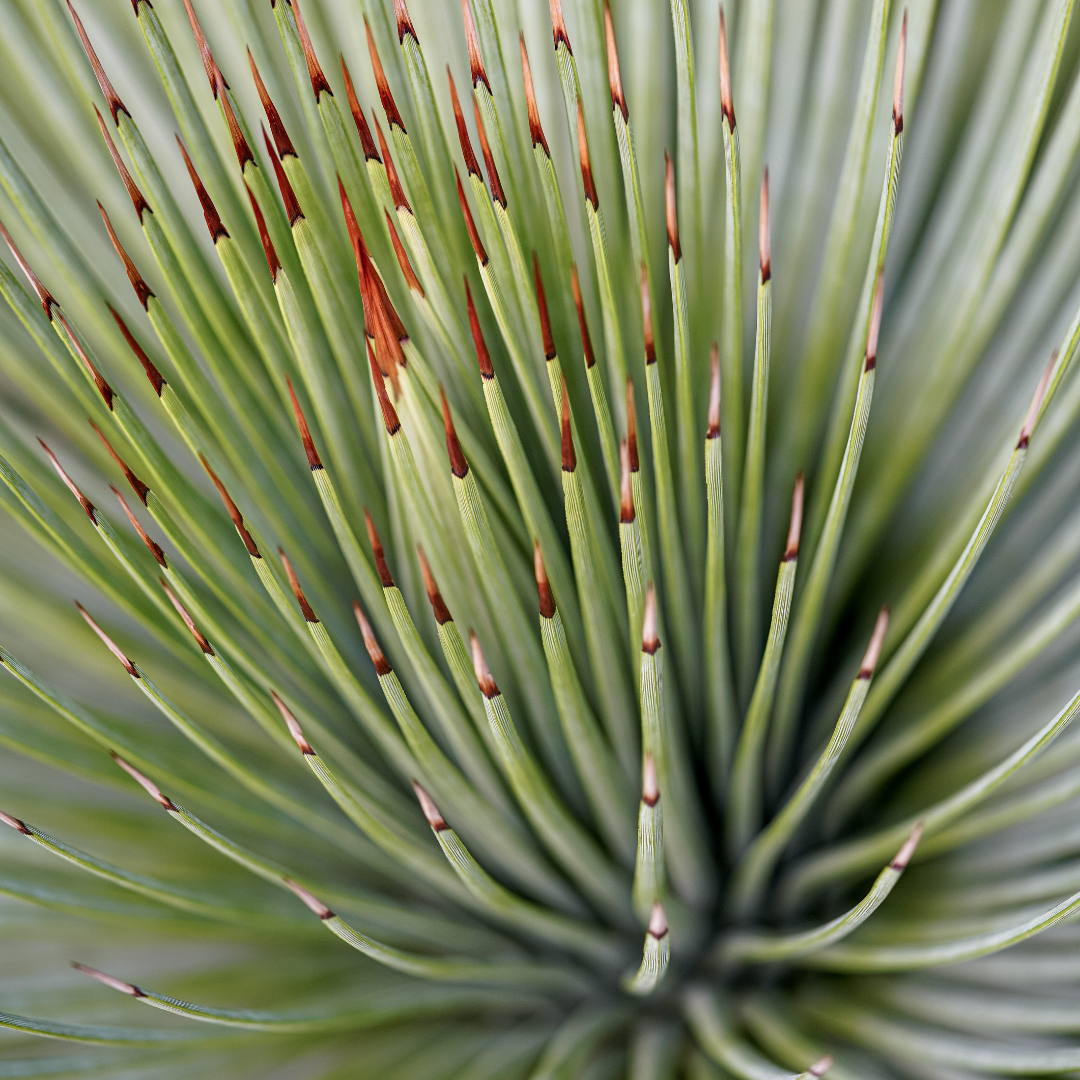

Agave Striata
Agave Striata
Couldn't load pickup availability
The Best Spiky Urchin-Like Agave for Phoenix Desert Gardens
Agave striata is a compact, fine-textured agave that forms a dense, spherical rosette of narrow, rigid leaves — resembling a desert sea urchin. Its unique form and fine texture make it one of the most versatile agaves for modern and traditional desert designs alike. Extremely heat-tolerant and drought-hardy, it thrives across Scottsdale, Mesa, Chandler, Gilbert, and Tempe with virtually no maintenance once established. Whether you're adding textural contrast to a rock garden in Paradise Valley, lining a walkway in Peoria, or building a minimalist desert composition in Glendale — Agave Striata brings refined form and zero-fuss toughness.
Agave Striata Plant Details
| Attribute | Detail |
|---|---|
| Scientific Name | Agave striata |
| Common Names | Agave Striata, Narrow-Leaf Agave, Hedgehog Agave |
| Mature Height | 1–2 feet |
| Mature Width | 2–3 feet |
| Growth Rate | Slow to moderate — reaches full size in 4–6 years in Phoenix |
| Sun | Full sun (6+ hrs). Handles reflected heat from walls and pavement. Tolerates partial shade. |
| Water | Very low once established. Extremely drought-tolerant. |
| USDA Zones | 7–11 (Phoenix is Zone 9b–10a) |
| Soil | Well-draining required. Thrives in Arizona caliche and rocky native soils. |
| Foliage | Evergreen — narrow, rigid gray-green leaves forming a dense spherical rosette |
| Bloom | Creamy-white to pale yellow flower spike (monocarpic — blooms once after many years) |
Agave Striata Uses in Phoenix Landscapes
Textural Contrast in Desert Gardens
Agave Striata's fine, needle-like foliage contrasts beautifully with broad-leaved agaves, paddle cacti, and barrel cacti. Plant it alongside Agave Marmorata, Agave Celsii, or prickly pear for a dynamic desert composition with varied leaf shapes and textures.
Walkway & Path Borders
Its compact, spherical form makes it ideal for lining pathways, entry walks, and garden borders. Space plants 2–3 feet apart for a rhythmic, architectural hedge effect. The narrow leaves are stiff but not as dangerously toothed as broader agaves, making it relatively walkway-friendly.
Rock Garden & Container Display
Tuck Agave Striata between boulders for a natural desert look, or plant it in a wide decorative pot for a patio accent. Its urchin-like form adds sculptural interest at any scale and looks especially striking in modern planters against clean hardscape.
Best Time to Plant Agave Striata in Phoenix
Fall (October–November) is ideal. Warm soil encourages root growth while cooler air reduces transplant stress, giving the plant 6–8 months to establish before its first Phoenix summer. Spring (February–April) is the second-best window. Avoid planting in peak summer if possible.
How to Plant Agave Striata
- Dig wide, not deep — 2–3x the root ball width, same depth as the container.
- Check for caliche — break through any hardpan layer for drainage.
- Backfill with native soil — no amendments needed; this agave prefers lean, well-drained soil.
- Spacing — 2–3 feet apart for borders; give single specimens at least 3 feet of clearance.
- Water basin — build a 3–4 inch soil ring to direct water to the root zone.
- Mulch — 2–3 inches of decomposed granite or decorative gravel.
Watering Agave Striata in Phoenix
First Year Watering Schedule
Weeks 1–2: Every 2–3 days, deep and slow (10–15 min). Month 1–3: Every 5–7 days. Month 3–6: Every 10–14 days. After Year 1: Every 3–4 weeks in summer; little to no water in winter.
Drip Irrigation
Place one 1–2 GPH emitter 12 inches from the base. Established plants need very little supplemental water — overwatering is the most common cause of agave death in Phoenix.
How fast does Agave Striata grow in Phoenix?
It grows at a slow to moderate rate, reaching its full 2–3 foot spread in about 4–6 years. Even young plants display the characteristic dense, spherical form.
Is Agave Striata cold-hardy?
Very. It tolerates temperatures down to about 0°F, making it one of the most cold-tolerant agaves available. Phoenix winters are no problem at all.
Does it produce pups?
Yes, it can produce offsets around the base over time, gradually forming attractive clusters. Pups can be divided and replanted if desired.
How does it compare to Agave ocahui?
Both have narrow leaves, but Agave Striata forms a denser, more spherical rosette with stiffer, more needle-like foliage. Agave ocahui has smoother, slightly wider leaves with a more open form. Both are excellent choices for fine-textured desert contrast.
You May Also Like
- Agave ocahui — Sleek, narrow-leaved agave with a symmetrical open rosette.
- Agave Lechuguilla — Compact native agave with fierce terminal spines.
- Desert Spoon (Dasylirion wheeleri) — Silvery native with fine-textured leaves for contrast.
- Red Yucca (Hesperaloe parviflora) — Grass-like desert plant with coral flower spikes.
Share