
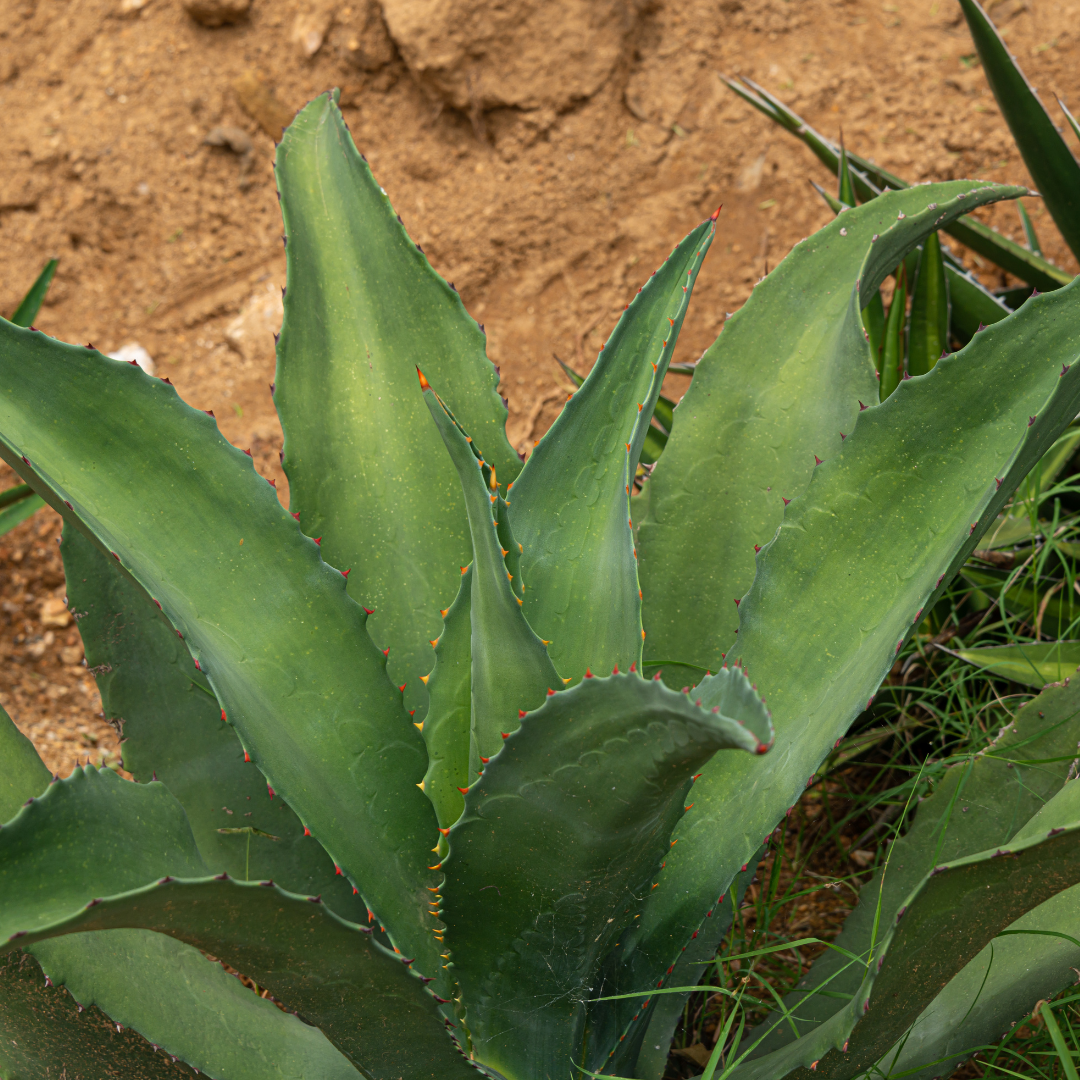
Agave Marmorata
Agave Marmorata
Couldn't load pickup availability
Phoenix's Boldest Large Sculptural Agave for Statement Landscapes
Agave marmorata is one of the largest and most dramatic agaves you can grow in the Phoenix Valley. Its massive rosettes of wide, marbled gray-green leaves — often marked with unique banding and rough textures — create an unforgettable architectural statement in any landscape. Extremely drought-tolerant and heat-hardy, this agave thrives across Scottsdale, Mesa, Chandler, Gilbert, and Tempe with virtually zero care once established. Whether you're anchoring a large xeriscape bed in Paradise Valley, creating a bold entrance statement in Peoria, or building a collector's agave garden in Glendale — Agave Marmorata commands attention like no other plant.
Agave Marmorata Plant Details
| Attribute | Detail |
|---|---|
| Scientific Name | Agave marmorata |
| Common Names | Agave Marmorata, Marbled Agave |
| Mature Height | 4–6 feet |
| Mature Width | 6–10 feet |
| Growth Rate | Slow to moderate — reaches full size in 8–12 years in Phoenix |
| Sun | Full sun (6+ hrs). Handles reflected heat from walls and pavement without issue. |
| Water | Very low once established. Extremely drought-tolerant. |
| USDA Zones | 9–11 (Phoenix is Zone 9b–10a) |
| Soil | Well-draining required. Thrives in Arizona caliche and rocky native soils. |
| Foliage | Evergreen — wide, rough-textured gray-green leaves with unique marbled markings |
| Bloom | Yellow flower spike up to 20 feet tall (monocarpic — blooms once after many years) |
Agave Marmorata Uses in Phoenix Landscapes
Grand Focal Point & Entrance Statement
With a mature spread of up to 10 feet, Agave Marmorata is a natural centerpiece for large desert landscapes. Plant a single specimen at the entrance to a driveway, in a roundabout, or at the center of a front yard desert bed for maximum impact. Its sheer size and marbled texture guarantee it will be the first thing visitors notice.
Large Xeriscape & Commercial Landscapes
This agave is ideal for commercial properties, HOA common areas, and large residential lots where scale matters. It thrives in medians, parking lot islands, and resort-style landscapes throughout the Phoenix metro area. Once established, it needs no supplemental irrigation.
Collector's Desert Garden
Agave Marmorata is highly prized by collectors for its unique marbled leaf patterns — no two plants look exactly alike. Pair it with smaller agaves like Agave Titanota and Agave Celsii for dramatic scale contrast, or with Desert Spoon and ocotillo for a curated desert composition.
Best Time to Plant Agave Marmorata in Phoenix
Fall (October–November) is ideal. Warm soil promotes root establishment while cooler air reduces transplant stress, giving the plant 6–8 months to settle before its first Phoenix summer. Spring (February–April) is the second-best window. Avoid planting in peak summer if possible — especially important for larger container sizes.
How to Plant Agave Marmorata
- Dig wide, not deep — 2–3x the root ball width, same depth as the container.
- Check for caliche — break through any hardpan layer for proper drainage.
- Backfill with native soil — a light 20% pumice or gravel amendment helps in heavy clay.
- Spacing — give each plant at least 8–10 feet of clearance to accommodate its massive mature spread.
- Water basin — build a 4–5 inch soil ring to direct water to the root zone during establishment.
- Mulch — 3–4 inches of decorative gravel or decomposed granite around the base.
Watering Agave Marmorata in Phoenix
First Year Watering Schedule
Weeks 1–2: Every 2–3 days, deep and slow (20–30 min for larger sizes). Month 1–3: Every 5–7 days. Month 3–6: Every 10–14 days. After Year 1: Every 3–4 weeks in summer; little to no water in winter.
Drip Irrigation
Place two 2 GPH emitters 18–24 inches from the base on opposite sides. Established plants need very little supplemental water — overwatering causes root rot.
How big does Agave Marmorata get in Phoenix?
It's one of the largest agaves in cultivation, reaching 4–6 feet tall and 6–10 feet wide at maturity. Plan for its full size when choosing a planting location — it needs room to spread.
What do the marbled markings look like?
Each leaf shows unique rough-textured patterns of light and dark gray-green, almost like natural stone. The markings become more pronounced as the plant ages, making mature specimens especially striking.
Is Agave Marmorata drought tolerant?
Extremely. Once established after the first year, it thrives on Phoenix rainfall alone and handles extended dry periods without any stress.
Does it produce pups?
Agave Marmorata typically does not produce offsets, so each plant remains a solitary rosette. This makes it especially valuable as a standalone focal point.
You May Also Like
- Agave Guadalajarana — Another wide, blue-gray sculptural agave with bold desert presence.
- Agave Guinengola — Large blue-gray rosette agave perfect for focal points.
- Desert Spoon (Dasylirion wheeleri) — Silvery native plant that pairs beautifully with large agaves.
- Agave Titanota — Compact collector's agave for textural contrast in mixed plantings.
Share


