

Blue Flame Agave
Blue Flame Agave
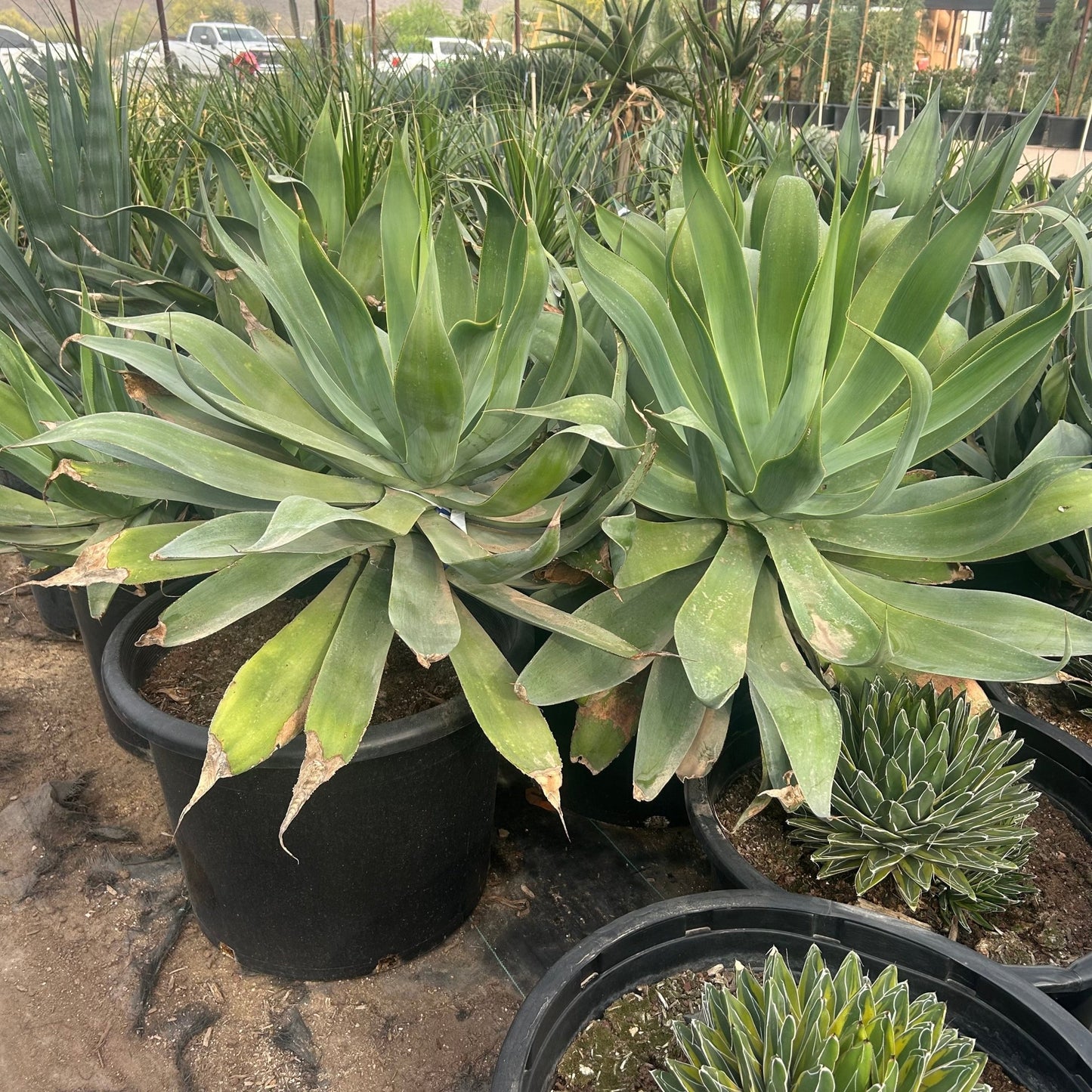
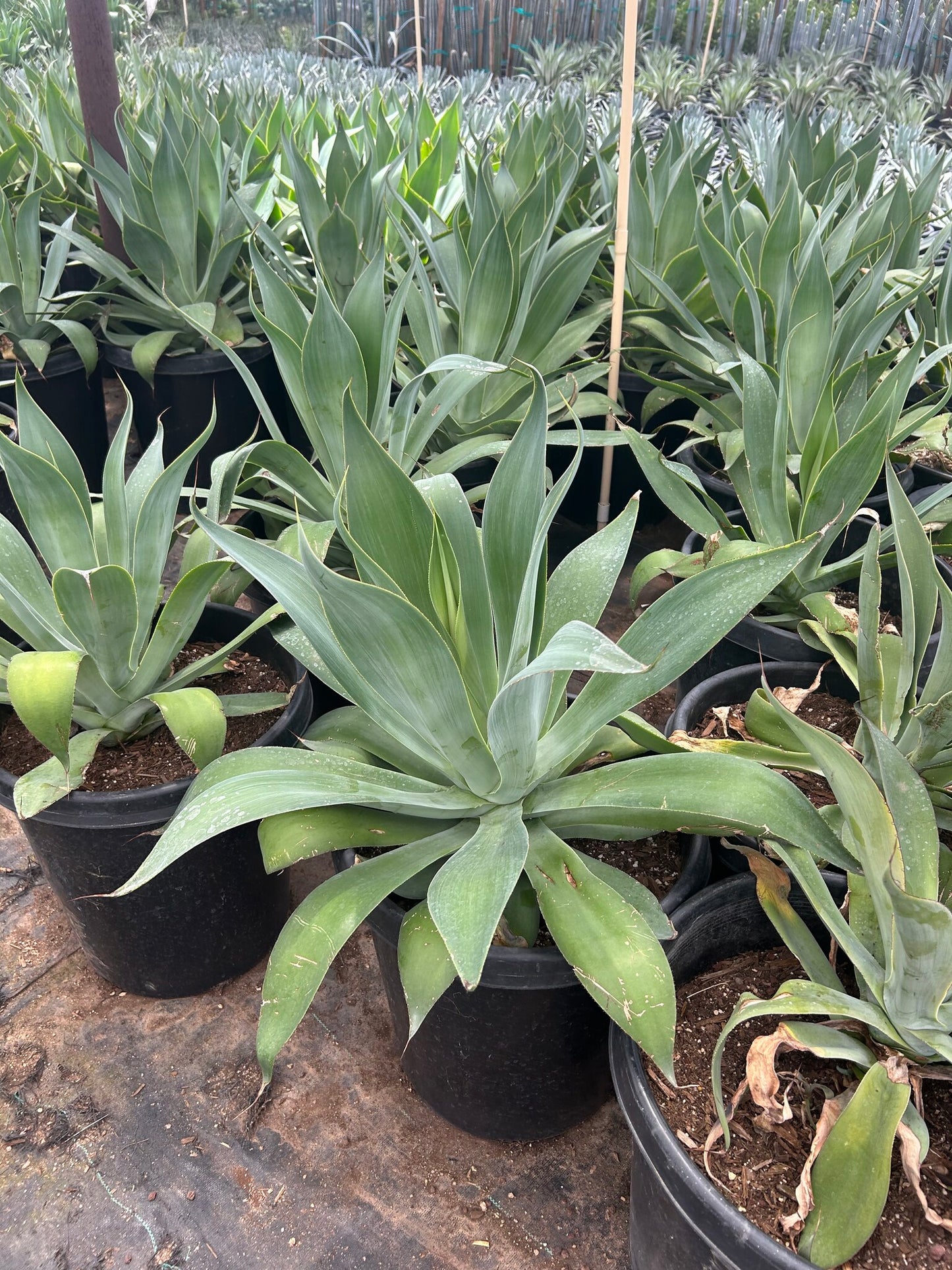
Soft blue rosette with flame-like arching leaves
Couldn't load pickup availability
Blue Flame Agave: Bold Blue-Grey Statement Plant for Phoenix Landscapes
Blue Flame Agave (Agave 'Blue Flame') is one of the most visually commanding hybrid agaves available for Phoenix Valley landscapes. Its wide, arching blue-grey leaves sweep outward in a dramatic fountain-like form, reaching 3–5 feet tall and up to 5–7 feet wide at maturity. The sheer presence of a well-established Blue Flame makes it an instant focal point in xeriscape gardens, resort-style estates, and modern desert landscapes. Once established, it thrives on minimal water and extreme heat — making it a standout performer for homeowners in Scottsdale, Chandler, Mesa, Paradise Valley, and throughout the greater Phoenix area.
Blue Flame Agave Plant Details
| Attribute | Detail |
|---|---|
| Scientific Name | Agave 'Blue Flame' |
| Common Names | Blue Flame Agave, Blue Flame Century Plant |
| Mature Height | 3–5 feet |
| Mature Width | 5–7 feet |
| Growth Rate | Moderate — 6–12 inches per year in Phoenix with adequate water during establishment |
| Sun | Full sun to partial shade. Tolerates intense reflected heat from walls and pavers. |
| Water | Low once established. Highly drought-tolerant after first growing season. |
| USDA Zones | 9–11 (Phoenix is Zone 9b–10a) |
| Soil | Well-draining. Adapts to Arizona caliche soils; break through hardpan at planting. |
| Foliage | Evergreen — blue-grey, arching leaves year-round |
| Flower Color | Yellowish-green bloom spike; monocarpic (blooms once at maturity) |
Blue Flame Agave Uses in Phoenix Landscapes
Statement Specimen Planting
Few plants command attention the way Blue Flame Agave does at full maturity. Its sweeping, fountain-like blue-grey rosette becomes the centerpiece of any landscape it's placed in. Use it as a solo specimen surrounded by decomposed granite, or anchor a large garden bed with multiple Blue Flames spaced 8–10 feet apart for a dramatic, cohesive mass. This is the go-to focal plant for resort-style and modern estate landscapes across Scottsdale and Paradise Valley.
Xeriscape and Water-Wise Landscaping
Blue Flame Agave is tailor-made for Arizona's water-conscious homeowners. Once established, it thrives on Phoenix's sporadic rainfall with minimal supplemental irrigation — dramatically reducing water bills compared to traditional shrub plantings. Pair it with Penstemon, Desert Marigold, and Mexican Feather Grass for a layered xeriscape that delivers year-round color and texture without irrigation dependency.
Large Desert Border
At 5–7 feet wide, Blue Flame Agave works as a bold back-of-border anchor in large desert planting beds. Combine with Desert Spoon, Saguaro, and Texas Sage for a naturalistic Southwest plant community. Spacing: 8 feet apart for a hedge effect; 10–12 feet for individual specimens with room to fully spread.
Pool and Courtyard Accent
Blue Flame Agave's open, spreading form is a natural fit for pool gardens and courtyard spaces where its sculptural silhouette can be appreciated from multiple angles. Plant at least 5–6 feet from pool coping to allow for mature spread. Its low litter makes it far preferable to flowering trees in pool environments.
Best Time to Plant Blue Flame Agave in Phoenix
Fall (October through November) is the ideal planting window. Warm soil temperature and cooling air allow Blue Flame Agave to establish roots before its first full Phoenix summer. A fall-planted specimen gets 6–8 months of root development before facing extreme summer heat. Spring planting (February through April) is a solid alternative. Avoid planting in July or August when heat stress can overwhelm a newly transplanted agave.
How to Plant Blue Flame Agave
- Dig wide, not deep — excavate 2–3 times the root ball width at the same depth as the root ball.
- Check for caliche — break through any hardpan layer to ensure water drainage away from the crown.
- Backfill with native soil — light 20% organic amendment is fine; avoid heavy fertilizers or compost around the base.
- Spacing — 8–10 feet apart to allow for full mature spread; don't underestimate its eventual width.
- Water basin — build a 4–6 inch berm around the root zone to focus irrigation water at the roots.
- Mulch — 2–3 inches of gravel or decomposed granite to retain moisture and regulate soil temperature.
Watering Blue Flame Agave in Phoenix
First Year Watering Schedule
- Weeks 1–2: Every 1–2 days, deep and slow (30–45 minutes per session)
- Months 1–2: Every 3–4 days
- Months 3–6: Every 7–10 days (every 5–7 days during peak summer heat)
- After Year 1: Every 10–14 days in summer; every 3–4 weeks in winter
Drip Irrigation
Use 2 GPH drip emitters placed 18–24 inches from the base, on opposite sides of the plant. Once established, Blue Flame Agave is remarkably self-sufficient and rarely needs supplemental winter irrigation in the Phoenix area. Overwatering is the primary risk — always let soil dry completely between deep watering sessions.
How fast does Blue Flame Agave grow in Phoenix?
Blue Flame Agave is a moderate grower, typically adding 6–12 inches of spread per year during establishment with regular deep watering. Once established, growth slows but remains consistent in Phoenix's warm climate.
Is Blue Flame Agave the same as Century Plant?
Blue Flame Agave is a hybrid agave, not the classic Century Plant (Agave americana). It shares the monocarpic blooming habit — flowering once at maturity before the main rosette dies — but is more compact and refined than the true Century Plant.
How much sun does Blue Flame Agave need?
Blue Flame Agave thrives in full sun and handles Phoenix's intense reflected heat without issue. It tolerates partial shade but produces its best blue-grey coloring and most compact form in full sun exposures.
Will Blue Flame Agave produce pups?
Yes — Blue Flame Agave typically produces offsets (pups) around the base of the main rosette. These can be removed and replanted to propagate the plant, giving you additional specimens for your landscape at no cost.
Is Blue Flame Agave safe around pets and children?
Blue Flame Agave has terminal leaf spines that can cause injury. Plant it away from high-traffic walkways, play areas, and pool edges where accidental contact is likely. Keep children and pets away from the leaf tips.
You May Also Like
Whale's Tongue Agave — A dramatically wide, strap-leafed specimen agave for the boldest statement plantings in Phoenix landscapes.
Majestic Agave — Phoenix's largest silver-blue agave, reaching 8 feet tall and commanding presence in any estate landscape.
Parry's Agave — A symmetrical, powdery silver-blue rosette with a bold architectural form for medium-scale accent plantings.
Sisal Agave — A large, upright agave with classic green-blue coloring and an impressive bloom spike; great for structural landscape use.
Sharkskin Agave — A uniquely textured blue-green agave with a sculptural, contemporary appearance ideal for modern Phoenix gardens.
How Many Blue Flame Agave Do I Need?
This is a big, fountain-shaped specimen: at 5 to 7 ft wide it earns plenty of open space. Plant it as a solo focal point or in widely spaced groups so each rosette can arch out fully:
| Placement | Spacing | Plants |
|---|---|---|
| Single statement specimen | n/a | 1 |
| Cohesive mass / informal screen, per 24 ft of run | 8 ft on center | 3 to 4 |
| Odd-numbered estate grouping | 10 ft apart | 3 to 5 |
| Large bed mass, per 400 sq ft | 9 to 10 ft on center | 4 to 5 |
Plan around the full 5 to 7 ft spread and keep the spined leaf tips 5 to 6 ft back from walkways, patios, and pool coping.
Blue Flame Agave Season-by-Season in Phoenix
- Spring (Feb to Apr): New leaves push from the center and the blue-grey color brightens. A strong second planting window.
- Summer (May to Sep): Peak performance in full sun and reflected heat. Monsoon rains usually meet its water needs: pause drip after a soaking storm so the crown dries.
- Fall (Oct to Nov): Prime planting season. Roots get months to settle before the next summer.
- Winter (Dec to Jan): Stays evergreen and sculptural. As a soft blue hybrid it can scar in a hard freeze, so on nights forecast below the mid-20s F, cover it and keep it dry.
At a Glance
✔ Heat-Loving (Reflected-Heat Tolerant) ✔ Drought-Tolerant ✔ Evergreen ✔ Low-Maintenance ✔ Deer & Rabbit-Resistant
Plant It With
- Century Plant: a giant blue agave that matches Blue Flame's scale at the back of a bed.
- Green Giant Agave: bold green form for color and texture contrast in a large grouping.
- Desert Spoon: fine silvery foliage fills the lower layer between specimens.
- Texas Sage: purple bloom flushes soften the planting and read well against blue-grey leaves.
Is Blue Flame Agave Right for Your Yard?
Blue Flame is a fit for open, full-sun beds with fast-draining soil where you want a big sculptural focal point that lives on rainfall once established. It is not a fit for tight beds or spots close to walkways and play areas: it grows 5 to 7 ft wide with sharp leaf tips, so it needs real room and clearance, and it wants frost-cloth cover on the Valley's hardest freeze nights.
Share