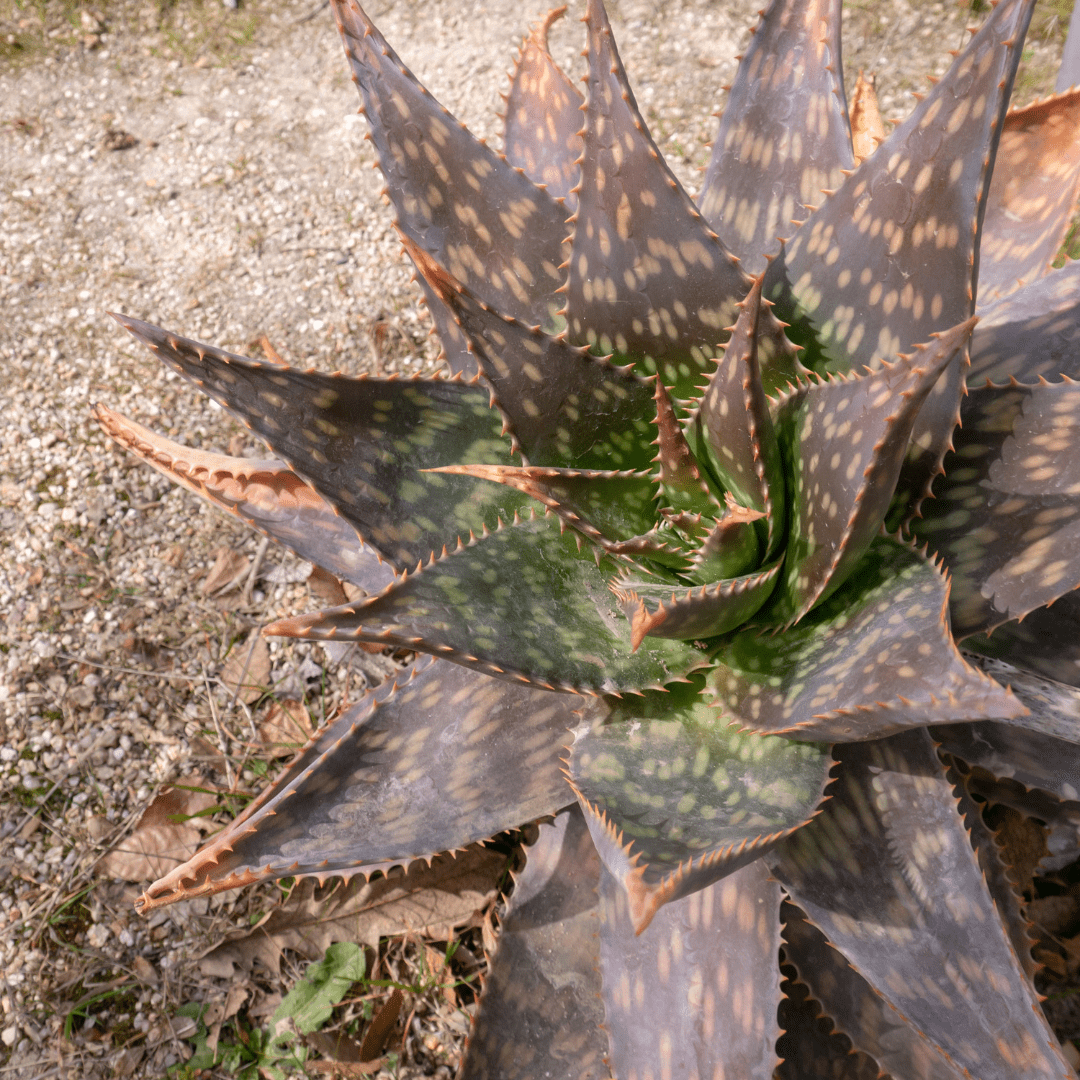


African/Tiger Aloe
African/Tiger Aloe
Couldn't load pickup availability
A Compact Striped Succulent That Thrives on Neglect in Phoenix
Tiger Aloe (Aloe variegata), also known as African Aloe, is one of the most visually striking compact succulents you can add to a Phoenix Valley landscape. Its thick, triangular leaves are stacked in a tight rosette and covered with bold white horizontal bands that give this plant its "tiger" name. In late winter to early spring, it sends up a slender stalk topped with coral to orange-red tubular flowers that attract hummingbirds. At just 12–18 inches tall, it fits perfectly in rock gardens, containers, and tight spaces. Whether you're building a succulent collection in Scottsdale, adding textural interest to a patio in Mesa, or filling a shaded rock garden in Chandler — Tiger Aloe delivers dramatic looks year-round with virtually zero effort.
Tiger Aloe Plant Details
| Attribute | Detail |
|---|---|
| Scientific Name | Aloe variegata |
| Common Names | Tiger Aloe, African Aloe, Partridge-Breast Aloe |
| Mature Height | 12–18 inches |
| Mature Width | 18–24 inches (with offsets) |
| Growth Rate | Slow to moderate — forms offsets over 2–3 years |
| Sun | Full sun to partial shade. Benefits from afternoon shade in peak Phoenix summer. |
| Water | Very low once established. Extremely drought-tolerant. |
| USDA Zones | 9–11 (Phoenix is Zone 9b–10a) |
| Soil | Well-draining required. Thrives in Arizona caliche, rocky, and sandy soils. |
| Foliage | Evergreen — thick, triangular leaves with white horizontal banding |
| Bloom Season | Late winter to early spring (February–April in Phoenix) |
Tiger Aloe Uses in Phoenix Landscapes
Rock Gardens & Succulent Collections
Tiger Aloe is a rock garden essential. Its compact rosette form and bold striped pattern create instant visual impact nestled among boulders, decomposed granite, and complementary succulents. Group 3–5 plants at varying sizes for a naturalistic desert vignette. It pairs beautifully with Agave, Euphorbia, and other Three Timbers succulents for a low-water collection that looks museum-quality.
Container & Patio Planting
The manageable size and architectural form make Tiger Aloe ideal for containers, window boxes, and tabletop planters. Use a well-draining cactus mix and a pot with drainage holes. It thrives on covered patios where it gets bright light but protection from intense afternoon summer sun — perfect for adding living sculpture to outdoor seating areas.
Shaded Rock Garden & Understory Planting
Unlike many succulents, Tiger Aloe tolerates and even prefers partial shade, making it a rare succulent option for north-facing garden walls, under palo verde trees, or in the dappled shade of courtyards. This shade tolerance sets it apart from most aloes available in the Phoenix market.
Best Time to Plant Tiger Aloe in Phoenix
Fall (October–November) is the ideal planting window. Warm soil promotes root growth while cooler air reduces stress, giving the plant a full cool season to establish before summer. Spring (February–April) is a strong second choice. Avoid planting in peak summer — while Tiger Aloe is heat-tolerant once established, transplant shock in extreme heat can damage the shallow root system.
How to Plant Tiger Aloe
- Dig wide, not deep — hole should be 2x the root ball width, same depth as the container.
- Check for caliche — break through any hardpan layer. Tiger Aloe will rot in standing water.
- Backfill with native soil — mix in perlite or pumice if soil is heavy clay. No rich compost needed.
- Spacing — 18–24 inches apart for groupings; accounts for offset spread over time.
- Water basin — build a shallow 2-inch soil ring for initial watering, then remove after establishment.
- Mulch — 2 inches of gravel or decomposed granite. Never use bark mulch that holds moisture against the rosette.
Watering Tiger Aloe in Phoenix
First Year Watering Schedule
Weeks 1–2: Every 3–4 days, deep and slow. Month 1–2: Every 5–7 days. Month 3–6: Every 10–14 days. After Year 1: Every 2–3 weeks in summer; monthly or less in winter. Established Tiger Aloe stores water in its thick leaves and needs very little supplemental irrigation.
Drip Irrigation
Place one 0.5-GPH emitter 6–8 inches from the plant base. For groupings, a single emitter between two plants is often sufficient. Overwatering is the #1 killer — always err on the side of too dry rather than too wet.
How fast does Tiger Aloe grow in Phoenix?
Tiger Aloe grows slowly to moderately. A 1-gallon plant will reach its full rosette size within 1–2 years and begin producing offsets (pups) by year 2–3. These offsets can be separated and replanted to expand your collection for free.
Is Tiger Aloe drought tolerant?
Extremely. Once established, Tiger Aloe can survive months without supplemental water in the Phoenix Valley. Its thick, succulent leaves store water efficiently, making it one of the most drought-proof ornamental plants available.
Can Tiger Aloe handle full Phoenix sun?
It handles full morning sun well but benefits from afternoon shade during July–August when temperatures exceed 110°F. Prolonged exposure to intense reflected heat can cause leaf burn. An east-facing exposure or the filtered shade of a desert tree is ideal.
Does Tiger Aloe spread?
Yes — it produces offsets (pups) around the base of the mother plant over time, gradually forming an attractive clump. This natural spreading is slow and controlled, not invasive. You can leave pups attached for a fuller look or separate them for new plantings.
You May Also Like
Aloe Vera — The classic medicinal aloe that thrives alongside Tiger Aloe in succulent gardens.
Desert Spoon — A larger rosette-forming succulent that provides dramatic scale contrast with compact Tiger Aloe.
Agave Celsii — Another shade-tolerant succulent that pairs perfectly with Tiger Aloe in understory plantings.
Euphorbia Tirucalli — Vertical, coral-like branches that add height and textural contrast to Tiger Aloe groupings.
Angelita Daisy — Bright yellow ground cover that fills the space between Tiger Aloe specimens with cheerful color.
How Many Tiger Aloe Do I Need?
Tiger Aloe is a compact clumping succulent (18 to 24 inches wide with offsets), so it reads best in small groups rather than as a single specimen. Plant in odd-numbered clusters of 3 to 5, spaced about 18 inches on center, so the rosettes knit into a banded mat while each one stays distinct. For filling a defined rock-garden pocket or border strip, use this coverage guide at 18-inch spacing:
| Area to Fill | Approx. Plants Needed (18 in spacing) |
|---|---|
| 10 sq ft | 5 to 6 plants |
| 25 sq ft | 11 to 13 plants |
| 50 sq ft | 22 to 26 plants |
| Single accent in a pot or boulder pocket | 1 plant (offsets will fill in) |
Tiger Aloe Season-by-Season in Phoenix
- Spring (Feb to Apr): Prime bloom season. Coral to orange-red flower spikes rise above the rosette and pull in hummingbirds. A strong second planting window once nights stay above 50°F.
- Summer (May to Sep): Handles the heat but appreciates afternoon shade once temperatures top 110°F. Reflected heat off west walls can scorch the leaves, so site it in morning sun or filtered light. Monsoon humidity is fine as long as the soil drains fast; do not let water sit in the crown.
- Fall (Oct to Nov): The best planting window of the year. Warm soil and mild air let roots establish before winter, and offsets bulk up.
- Winter (Dec to Jan): Evergreen and largely cold-hardy in the low desert, taking brief dips to about 25°F. In an unusual hard freeze, cover container plants or those in open exposure overnight to protect the leaf tips.
At a Glance
✔ Hummingbird-Friendly ✔ Heat-Loving (Reflected-Heat Tolerant) ✔ Drought-Tolerant ✔ Evergreen ✔ Low-Maintenance ✔ Deer & Rabbit-Resistant ✔ Cold-Hardy to 25°F
Plant It With
- Lace Aloe: Another compact, shade-tolerant aloe that layers beautifully in the same rock-garden pocket.
- Aloe Vera: The classic medicinal aloe with a similar care routine for a cohesive succulent grouping.
- Blue Elf Aloe: Adds blue-green color and a heavy winter-spring hummingbird bloom alongside Tiger Aloe.
- Desert Spoon: A larger silver rosette that gives dramatic scale contrast behind the compact Tiger Aloe.
Is Tiger Aloe Right for Your Yard?
Tiger Aloe thrives in bright morning sun or light afternoon shade, in fast-draining caliche, rocky, or sandy soil, and is ideal for rock gardens, containers, north-facing beds, and the dappled shade under desert trees where most succulents struggle. It shrugs off heat and drought once established and takes brief winter cold to about 25°F. It is not a fit if your only space is full unshaded western reflected heat all summer, or a low spot where irrigation or rain keeps the soil wet, since standing water rots the shallow roots.
Share